How did the Trump-Xi meeting weaken the Indian rupee?


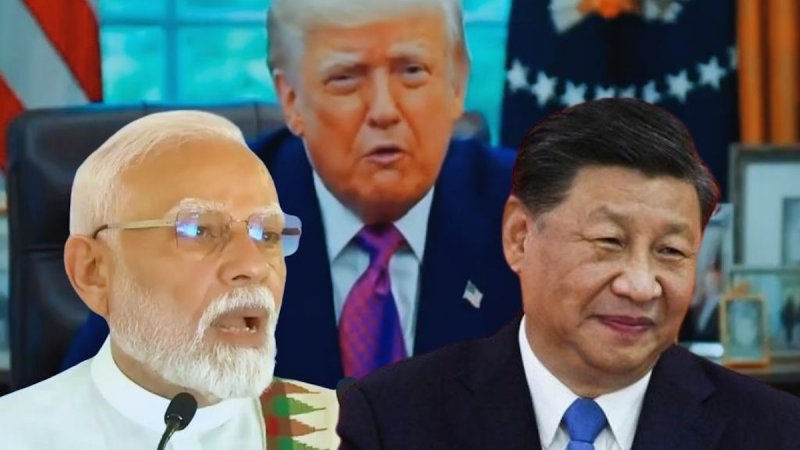
The Indian rupee is expected to remain under pressure as global oil prices stay elevated due to the ongoing Iran-related conflict and uncertainty surrounding international energy supplies. The currency has hovered near record lows against the U.S. dollar as traders and investors closely monitor geopolitical developments linked to the Middle East, particularly discussions involving U.S. President Donald Trump and Chinese President Xi Jinping.
The rupee recently weakened toward historic lows as Brent crude oil prices remained above $100 per barrel, increasing concerns about India’s import costs, inflation risks and foreign exchange pressures. Since India imports most of its crude oil requirements, rising energy prices typically place significant stress on the country’s economy and currency.
RECOMMENDED STORIES
The situation has become even more sensitive because investors are waiting to see whether the Trump Xi summit could produce any progress toward easing tensions involving Iran and restoring stable energy flows through the Strait of Hormuz.
Why is the Indian rupee weakening?
The rupee is weakening mainly because of rising global oil prices and uncertainty surrounding the Middle East conflict.
India is one of the world’s largest oil importing countries. When oil prices rise sharply, India must spend significantly more foreign currency, especially U.S. dollars, to pay for energy imports.
This increases demand for dollars and puts downward pressure on the rupee.
As oil becomes more expensive, concerns also grow about inflation, trade deficits and economic stability, making investors more cautious about emerging market currencies such as the rupee.
Why do oil prices affect the rupee so strongly?
Oil plays a central role in India’s economy because the country imports the majority of its crude oil needs from abroad.
When oil prices rise:
-
India’s import bill increases
-
More dollars are needed to buy oil
-
Inflation risks rise
-
Pressure on foreign exchange reserves increases
This combination usually weakens the rupee against the dollar.
High oil prices also increase transportation, manufacturing and energy costs across the economy, affecting businesses and consumers alike.
Why is the Iran conflict influencing oil prices?
The Iran related conflict has increased fears about possible disruptions to global oil supplies and shipping routes in the Middle East.
One of the biggest concerns involves the Strait of Hormuz, a critical maritime route through which a large portion of the world’s oil exports pass.
If tensions escalate or shipping through the strait is disrupted:
-
Global oil supplies could tighten
-
Energy prices could rise further
-
Inflation pressures could worsen globally
As a result, every major development connected to Iran, the United States or Gulf security now directly influences oil markets.
Why are investors watching the Trump Xi meeting?
Investors believe the meeting between Donald Trump and Xi Jinping could influence the future direction of the Iran conflict and global oil markets.
China maintains close economic relations with Iran and is one of the largest buyers of Iranian oil.
Some analysts believe Washington may seek Beijing’s help in encouraging Tehran to reach a diplomatic understanding that would reduce tensions and stabilize energy markets.
If the summit produces positive signals regarding Middle East stability or oil supply security, financial markets believe oil prices could ease slightly, helping support the rupee.
Why is China important in discussions involving Iran?
China plays a major role because:
-
It imports large amounts of Middle Eastern oil
-
It maintains economic ties with Iran
-
It has diplomatic influence with Tehran
-
It wants stable global energy supplies
Beijing generally supports regional stability because disruptions in oil markets hurt Chinese economic growth and manufacturing activity.
This makes China an important diplomatic player in discussions involving the Iran crisis.
How close is the rupee to record lows?
The Indian rupee recently traded near its weakest level ever against the U.S. dollar.
The currency hit a historic low close to 95.80 per dollar before slightly stabilizing.
Currency traders expect the rupee to remain volatile as long as oil prices stay elevated and geopolitical uncertainty continues.
Why is the U.S. dollar strengthening globally?
The dollar has strengthened because investors increasingly believe U.S. interest rates may remain high for longer due to inflation concerns.
Higher U.S. interest rates attract global capital into dollar assets because investors receive better returns.
During periods of geopolitical uncertainty, the dollar also benefits from its reputation as a safe haven currency.
This combination has increased pressure on many emerging market currencies, including the rupee.
How does inflation connect to the rupee’s weakness?
High oil prices contribute directly to inflation because energy affects nearly every part of the economy.
More expensive fuel increases:
-
Transportation costs
-
Manufacturing expenses
-
Food prices
-
Electricity costs
If inflation rises too quickly, investors may worry about economic stability and reduce exposure to emerging markets.
This can weaken local currencies further.
India therefore faces a difficult situation where rising oil prices create both inflationary pressure and currency weakness simultaneously.
Why did India’s prime minister urge caution on travel and imports?
The Indian government has reportedly encouraged measures aimed at conserving foreign exchange reserves during the current period of economic pressure.
Officials have expressed concerns about:
-
Non essential foreign travel
-
High gold imports
-
Rising energy costs
Gold imports are especially important because India is one of the world’s largest gold consuming countries. Large gold imports require substantial dollar spending, adding pressure on the country’s foreign exchange position.
Reducing unnecessary foreign currency outflows may help stabilize reserves and ease pressure on the rupee.
Why is gold connected to the rupee?
India imports most of its gold from abroad, meaning purchases are typically made in dollars.
When gold imports rise significantly:
-
Demand for dollars increases
-
Foreign exchange reserves face pressure
-
The rupee can weaken further
During periods of uncertainty, Indian consumers often buy more gold as a traditional safe haven asset, increasing import costs.
Could the Reserve Bank of India intervene?
The Reserve Bank of India may intervene in currency markets if volatility becomes excessive.
Central banks often use foreign exchange reserves to:
-
Support local currencies
-
Reduce market panic
-
Smooth sudden currency movements
The RBI has intervened in currency markets before during periods of heavy rupee weakness.
However, prolonged intervention can also reduce foreign exchange reserves if global pressures remain strong.
How do high oil prices affect ordinary Indians?
Higher oil prices eventually affect daily life across the economy.
Consumers may experience:
-
More expensive fuel
-
Higher transport fares
-
Rising food costs
-
Increased electricity bills
-
More expensive goods and services
Businesses also face higher operating costs, which can slow economic activity and reduce profitability.
This explains why oil prices are politically and economically sensitive in India.
Could the rupee weaken further?
Many analysts believe the rupee could remain under pressure if:
-
Oil prices continue rising
-
Middle East tensions escalate
-
Global inflation worsens
-
The dollar strengthens further
The currency’s direction will depend heavily on geopolitical developments and energy markets over the coming weeks.
Any major disruption involving the Strait of Hormuz or broader regional conflict could create additional pressure.
Could the rupee recover?
Yes. The rupee could stabilize or strengthen if:
-
Oil prices decline
-
Middle East tensions ease
-
Diplomatic progress emerges
-
Global investor confidence improves
A successful diplomatic outcome involving the Iran situation could reduce fears about energy supplies and lower crude prices, providing relief for India’s economy and currency.
Why are emerging market currencies vulnerable during crises?
Emerging market currencies often weaken during periods of global uncertainty because investors seek safer assets such as:
-
U.S. dollars
-
U.S. Treasury bonds
-
Gold
Countries that rely heavily on imports or foreign capital are especially vulnerable during geopolitical shocks.
India’s dependence on imported energy makes the rupee particularly sensitive to oil market volatility.
How important is the Strait of Hormuz for India?
The Strait of Hormuz is critically important because a large share of India’s imported oil passes through the route.
Any disruption there could:
-
Increase shipping costs
-
Delay energy supplies
-
Raise oil prices sharply
-
Pressure India’s economy further
This explains why India closely monitors developments involving Iran and Gulf security.
Why are global investors nervous right now?
Investors are balancing several major risks simultaneously:
-
The Iran conflict
-
Rising oil prices
-
Inflation concerns
-
U.S. interest rate uncertainty
-
Geopolitical tensions
At the same time, financial markets are also experiencing strong optimism linked to artificial intelligence and technology growth.
This creates a highly volatile global environment where markets can react sharply to geopolitical headlines.
What role does geopolitics now play in currency markets?
Geopolitics has become increasingly important for currencies because wars, sanctions and regional conflicts directly affect:
-
Energy prices
-
Trade routes
-
Inflation
-
Capital flows
-
Investor confidence
Currencies of oil importing countries are especially vulnerable during periods of geopolitical instability.
The rupee’s recent weakness reflects how deeply international politics now influences financial markets and economic stability.
What happens next for the rupee?
The rupee’s near term direction will likely depend on three main factors:
-
Oil prices
-
The Trump Xi meeting
-
Developments involving Iran and Middle East security
If tensions ease and energy markets stabilize, the rupee could recover some losses.
However, if oil prices remain above $100 per barrel and geopolitical uncertainty continues, pressure on the currency may persist.
For now, traders, investors and policymakers remain focused on whether diplomacy can reduce tensions and restore greater stability to global energy markets.
By Faig Mahmudov


Similar news