What is behind France’s latest warning on military preparedness?


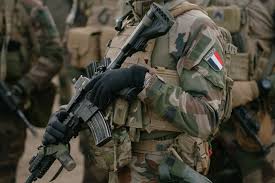
France’s top military commander has issued a stark warning about the state of the country’s armed forces, arguing that the military remains too small for the challenges it could face and that defense manufacturing is not operating at the speed required for a rapidly changing security environment.
The comments come at a time when European governments are reassessing their defense capabilities amid growing geopolitical tensions, the war in Ukraine, concerns about long-term security commitments, and increasing pressure on NATO members to strengthen military readiness, News.az reports.
France, one of Europe’s leading military powers, has invested heavily in defense in recent years, yet military leaders say further efforts may be necessary.
The warning has sparked debate about whether France and other European nations are adequately prepared for future conflicts and whether defense industries can produce weapons and equipment quickly enough in a crisis.
What did France’s army chief say?
France’s military leadership warned that the armed forces face two major challenges.
The first is the size of the military. While France maintains one of Europe’s strongest armed forces, military leaders argue that troop numbers and available resources may be insufficient for a prolonged high-intensity conflict.
The second challenge concerns industrial capacity. Defense manufacturers have increased production in recent years, but military officials say output still needs to accelerate to meet the demands of modern warfare.
The warning reflects growing concern that military planning developed during decades of counterterrorism and limited overseas operations may not fully match the requirements of large-scale interstate conflict.
Why is the size of the French military being questioned?
Modern militaries must be prepared for a wide range of missions, including territorial defense, overseas deployments, deterrence operations, cyber threats, and alliance commitments.
France has traditionally maintained highly capable armed forces, but like many Western countries, it reduced military personnel following the Cold War. Defense planning during that period was largely based on the assumption that Europe faced a lower risk of major conventional warfare.
Recent geopolitical developments have challenged that assumption.
Military planners increasingly emphasize the possibility of prolonged conflicts that require large numbers of personnel, extensive logistical support, and significant reserves of equipment and ammunition.
As a result, questions have emerged about whether current force levels are sufficient to sustain long-term military operations.
Why is defense manufacturing a concern?
Modern warfare consumes equipment, ammunition, and military supplies at a far greater rate than many analysts anticipated.
The conflict in Ukraine has demonstrated how quickly stockpiles can be depleted. Artillery shells, missiles, drones, armored vehicles, and air defense systems are often used in large quantities, creating pressure on defense industries to replenish inventories.
Military leaders across Europe have repeatedly stressed that defense production systems were designed for peacetime efficiency rather than wartime urgency.
In France, concerns focus on whether manufacturers can increase production quickly enough if demand rises significantly.
The challenge is not unique to France. Many NATO countries are grappling with similar questions about industrial readiness.
How has the war in Ukraine influenced these concerns?
The war in Ukraine has become a key reference point for military planners throughout Europe.
The conflict has highlighted several realities:
• High-intensity warfare remains possible in Europe.
• Large stockpiles of ammunition are essential.
• Defense industries must be capable of rapid expansion.
• Logistics and supply chains play a critical role in military success.
• Long conflicts require sustained industrial support.
Military officials have studied lessons from the war closely and concluded that many Western countries need greater production capacity and stronger military preparedness.
France’s warning reflects these broader lessons.
Is France still considered a major military power?
Yes.
France remains one of Europe’s most capable military powers and possesses capabilities that relatively few countries can match.
These include:
• Nuclear weapons
• Advanced air forces
• Aircraft carrier capabilities
• Long-range missile systems
• Sophisticated intelligence networks
• Global military presence
France is also one of the leading military contributors within NATO and maintains defense partnerships across Europe, Africa, and the Indo-Pacific region.
The warning from military leaders does not suggest that France lacks military strength. Rather, it reflects concerns about whether existing capabilities are sufficient for future challenges.
How does France compare with other European countries?
France generally ranks among Europe’s strongest military powers alongside countries such as the United Kingdom, Germany, and Italy.
However, many European nations face similar concerns regarding military readiness.
After decades of reduced defense spending following the Cold War, numerous countries are now investing heavily in rebuilding capabilities.
Governments across Europe have announced plans to increase defense budgets, expand procurement programs, and strengthen industrial capacity.
France’s concerns therefore mirror a broader European debate about military preparedness.
What role does NATO play?
As a leading NATO member, France contributes to the alliance’s collective defense strategy.
NATO has placed increasing emphasis on readiness, deterrence, and rapid response capabilities since security conditions in Europe deteriorated.
Alliance members are under pressure to maintain capable armed forces and invest in defense modernization.
Warnings about force size and industrial production are relevant not only for France but also for NATO as a whole, since collective defense depends on the capabilities of individual member states.
Stronger national militaries contribute to stronger alliance capabilities.
Can France increase military production quickly?
Expanding defense production is possible, but it presents challenges.
Defense manufacturing involves complex supply chains, specialized labor, regulatory requirements, and long production timelines.
Companies may need to invest in:
• New facilities
• Additional workers
• Expanded supplier networks
• Increased raw material procurement
• Advanced manufacturing technologies
Governments can support these efforts through long-term contracts and funding commitments.
However, significant industrial expansion typically takes time.
This is why military leaders are calling for action before a crisis occurs rather than after one has already begun.
What are the economic implications?
Increasing military spending can have substantial economic effects.
Higher defense investment may create jobs, stimulate manufacturing, and support technological innovation.
France already has one of the world's most advanced defense industries, producing aircraft, naval vessels, missiles, electronics, and military equipment.
Greater production could strengthen these sectors and generate economic activity.
At the same time, governments must balance defense spending against other priorities such as healthcare, education, infrastructure, and social programs.
This balance remains a central political debate in many countries.
Could France expand its military personnel?
Expanding troop numbers is possible, but recruitment and retention can be challenging.
Many Western militaries face competition from private-sector employers and demographic trends that affect recruitment pools.
Increasing force size may require:
• Higher recruitment targets
• Improved benefits
• Enhanced training programs
• Better retention policies
• Expanded reserve forces
Military leaders often stress that personnel growth requires long-term planning rather than quick fixes.
What does this mean for European security?
The warning reflects a broader shift in European security thinking.
For many years, policymakers focused on crisis management, peacekeeping missions, and counterterrorism operations.
Today, greater attention is being given to deterrence, territorial defense, and preparedness for high-intensity conflict.
European governments increasingly view military readiness as an essential component of national security.
As a result, discussions about force size, industrial capacity, and defense spending are likely to remain central policy issues in the coming years.
Could other countries face the same problem?
Yes.
Defense experts have noted similar challenges across Europe and North America.
Many countries are reassessing whether their armed forces have enough personnel, equipment, ammunition, and industrial support to sustain major operations.
The concerns raised by France's military leadership are therefore part of a wider international conversation about readiness and resilience.
The issues extend beyond military strategy and touch on economic planning, industrial policy, workforce development, and national security.
What happens next?
France is expected to continue investing in defense modernization and industrial expansion.
Government officials and military planners will likely examine options to increase production capacity, strengthen military readiness, and ensure that the armed forces can meet future challenges.
At the same time, European governments will continue coordinating defense initiatives through NATO and other security frameworks.
The debate is likely to focus on how quickly capabilities can be expanded and how much investment will be required.
The bottom line
France’s army chief has delivered a warning that resonates far beyond the country’s borders. The concern is not that France lacks military power, but that modern security challenges may require larger forces and faster industrial production than currently available.
The war in Ukraine has demonstrated the importance of preparedness, stockpiles, and manufacturing capacity in modern conflict. As a result, France and many of its allies are reassessing assumptions that shaped defense planning for decades.
Whether through increased spending, industrial expansion, or force modernization, the response to these concerns could help shape the future of European security and military readiness for years to come.
By Faig Mahmudov


Similar news