How Hyundai and Kia boosted U.S. sales in 2025 – and why hybrids led


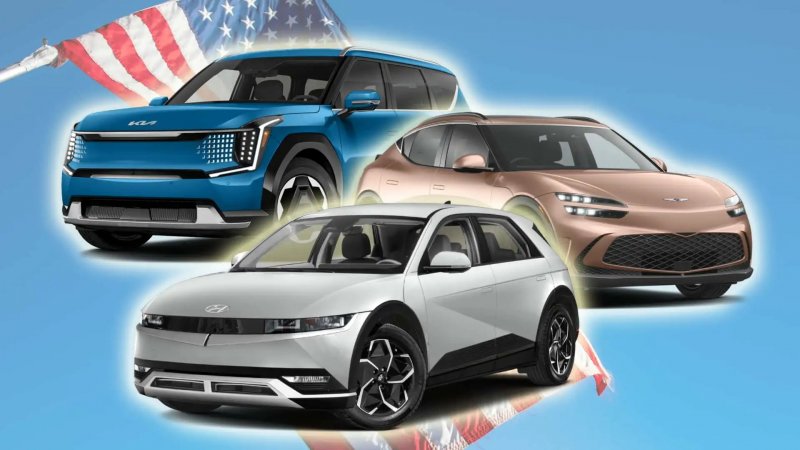
Hyundai and Kia ended 2025 on a strong note in the United States, reporting a combined 7.5 percent increase in sales compared with the previous year, News.Az reports.
Behind this growth sits a major story about changing consumer preferences, rising interest in hybrids, and a cooling appetite for fully electric vehicles.
This FAQ explainer breaks down what the numbers really show, why Hyundai and Kia outperformed the broader market, and what this may signal for the future of the auto industry in the United States.
What did Hyundai and Kia report about their U.S. sales in 2025?
Hyundai Motor Group, which includes Hyundai Motor, Genesis, and Kia, announced that their combined U.S. sales rose by 7.5 percent in 2025 compared with 2024. In raw volume, their sales increased from roughly 1.71 million vehicles to about 1.84 million vehicles. Both Hyundai and Kia individually recorded record-breaking retail performance in the United States during the year.
Hyundai’s U.S. sales rose by close to 8 percent, while Kia posted growth of about 7 percent. This was the fifth consecutive year Hyundai recorded record U.S. retail sales and the third straight record-breaking year for Kia.
Their performance significantly outpaced the broader U.S. auto market, where overall new vehicle sales grew only modestly in 2025.
What was the main driver of their sales growth?
Hybrid demand was the single largest factor.
Hyundai and Kia reported that sales of their hybrid and other “eco-friendly” vehicles grew sharply across the U.S. during 2025. Their combined hybrid and electrified vehicle sales rose by more than a quarter, while their fully electric vehicle sales actually declined compared with 2024.
The companies highlighted strong demand for hybrid SUVs and crossovers in particular. These vehicles have become attractive to U.S. buyers who want improved fuel economy and lower running costs, but are still hesitant about switching fully to electric vehicles because of price, charging, and infrastructure concerns.
How does their performance compare with the broader U.S. auto market?
The overall U.S. market experienced relatively slow growth in 2025. New-vehicle sales rose only slightly as high financing costs, elevated monthly payments, and economic uncertainty limited demand. Many automakers reported flat or weakening sales during the second half of the year.
Against this backdrop, Hyundai and Kia’s 7.5 percent combined growth stands out. It means they gained market share at a time when the industry as a whole was far more subdued. Their strategy of leaning heavily into fuel-efficient hybrids appears to have positioned them well relative to several competitors that had invested more aggressively in full electric offerings.
Which Hyundai and Kia models helped drive U.S. sales growth?
Hyundai and Kia did not attribute their growth to a single model, but several categories clearly played major roles.
SUVs remained the backbone of their U.S. business. Popular models such as the Kia Telluride, Sportage, Sorento and Seltos, along with Hyundai’s Tucson, Santa Fe and Palisade, continued to generate strong retail demand. Many of these vehicles now offer hybrid or electrified versions, giving price-sensitive customers more choices within familiar, mainstream segments.
Sedans and compact vehicles also contributed, particularly newer models that blend affordability with technology and efficiency. But the consistent theme across the lineup was this: vehicles that deliver strong fuel economy without requiring drivers to fully transition to electric power.
Why are hybrids performing better than electric vehicles right now?
The Hyundai and Kia sales story mirrors a broader national trend. Hybrid demand is climbing sharply while full EV demand has slowed.
Several factors are at play. First, affordability remains a major concern. Vehicle prices have risen significantly in recent years, and higher interest rates are pushing monthly payments to record levels. Hybrids tend to cost less than EVs and often require a much smaller price premium compared with gasoline-only cars.
Second, uncertainty around EV incentives and eligibility has made purchasing decisions more complicated. Some models no longer qualify for tax credits, while others only qualify under specific circumstances.
Third, charging infrastructure remains uneven across many parts of the United States. Range anxiety, long charging times, and lack of reliable public charging stations continue to discourage some buyers.
Hybrids avoid many of these problems. They still deliver meaningful reductions in fuel consumption and emissions, but they can be refueled just like gasoline cars. For many Americans, they represent a comfortable middle step in the gradual transition toward electrification.
How do Hyundai and Kia rank in the hybrid market compared with Toyota?
Toyota remains the clear leader in hybrid technology and hybrid market share in the United States. However, Hyundai and Kia are rapidly growing players in this field. They are expanding hybrid options across key vehicle classes and positioning hybrid powertrains as mainstream rather than niche.
Their aggressive move into the hybrid market has helped them win over value-oriented customers who may previously have defaulted to Toyota or Honda when shopping for efficient, reliable vehicles.
Did tariffs or trade policy affect their U.S. performance?
The companies acknowledged that they faced continued tariff and trade headwinds in 2025. Higher import taxes and evolving U.S. trade rules have increased costs for vehicles and components shipped from overseas.
In response, Hyundai has publicly stated that it aims to produce the majority of its U.S.-market vehicles inside the United States by the end of the decade. More local production helps reduce tariff exposure and aligns with U.S. policy preferences that favor domestic manufacturing. It also supports job creation and supply-chain stability.
Kia is also tailoring its production footprint and sales strategy to manage trade impacts while staying competitive on price.
Does this sales performance reveal anything about the future of electric vehicles in the U.S.?
Yes. Hyundai and Kia’s 2025 performance suggests the EV adoption curve in the United States may be slower and more uneven than once predicted.
Electric vehicles still represent an important technology shift, and EV sales remain significantly higher than they were just a few years ago. But the momentum that drove rapid EV growth earlier in the decade has clearly cooled.
For now, the U.S. mass market appears to be favoring hybrids as a practical, lower-risk way to cut emissions and fuel costs. Full EV adoption may continue, but at a steadier, more gradual pace rather than a sudden market revolution.
What are Hyundai and Kia planning for 2026 and beyond?
Hyundai and Kia together sold more than 7 million vehicles globally in 2025 and are targeting further growth in 2026. Their strategies include continuing to expand hybrid and electrified models worldwide while also investing in new EV platforms and production facilities.
They are not abandoning EVs. Instead, they are pursuing a dual-track strategy: growing hybrid sales where demand is strongest while preparing for a longer-term EV future as technology improves and infrastructure becomes more widespread.
The U.S. market will remain central to both companies. Hyundai has said that nearly 40 percent of its total revenue comes from the United States, which explains why it is prioritizing American manufacturing and hybrid availability.
What does this mean for U.S. car buyers?
For American consumers, Hyundai and Kia’s success brings several likely outcomes.
First, they will continue to introduce more hybrid options across price points and vehicle classes. Buyers can expect hybrid versions of popular SUVs, sedans, and crossovers to become increasingly common.
Second, competition is likely to intensify. As Hyundai and Kia gain share, other automakers will expand their own hybrid offerings and sharpen pricing. This could help moderate prices and increase incentives in some segments.
Third, the market will likely remain fragmented for some time. Gasoline vehicles, hybrids, plug-in hybrids, and EVs will coexist as buyers select the technology that best fits their lifestyle, location, and budget.
What risks could challenge Hyundai and Kia in 2026?
Despite strong momentum, the companies face several challenges.
High vehicle prices and expensive financing may continue to strain household budgets, potentially slowing demand. Trade tensions, tariffs, or regulatory shifts could affect pricing or production planning. Competition in hybrids will increase as rivals move more aggressively into that space. And if economic growth slows, big-ticket purchases like new vehicles may decline.
Even with these risks, Hyundai and Kia benefit from having a diversified lineup that spans gasoline, hybrid, and EV offerings, allowing them to pivot as market conditions evolve.
What is the biggest takeaway from Hyundai and Kia’s 2025 U.S. sales growth?
The central takeaway is clear: the American auto market is not turning away from electrification, but it is transitioning on its own terms. For many buyers, hybrids currently represent the ideal balance between technology, cost, convenience, and environmental benefit.
Hyundai and Kia recognized that reality early and shifted their strategy accordingly. Their strong U.S. performance shows that aligning product mix with real-world consumer behavior can deliver meaningful growth even in a challenging economic climate.
In simple terms, the 7.5 percent U.S. sales jump in 2025 is more than a good year for two automakers. It reflects a broader reset in the direction of the U.S. car market, where efficiency matters, but practicality still reigns.


Similar news