How real is the risk of world war III? The world's major conflict hotspots


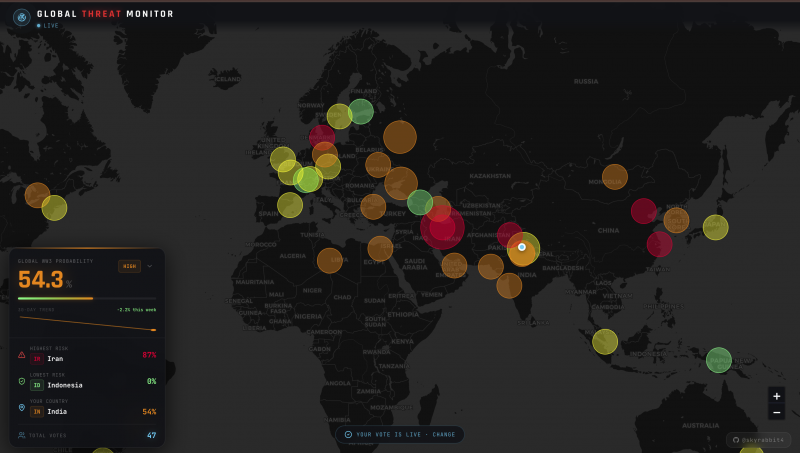
For decades after the end of the Cold War, many analysts believed that the possibility of a global conflict involving the world's major powers had become increasingly remote.
Yet in recent years, geopolitical tensions, regional wars, military buildups, and strategic rivalries have revived a question that was once largely confined to history books:
RECOMMENDED STORIES
Could the world be heading toward World War III?
The phrase "World War III" is often used in political debates, media reports, and social media discussions whenever a major international crisis emerges. However, what would actually constitute a third world war, and how realistic is such a scenario in the 21st century?
While most experts agree that a global war involving multiple major powers remains unlikely in the near term, they also warn that several conflict hotspots around the world have the potential to trigger wider confrontations if miscalculations, accidents, or escalation occur.
What Would Qualify as World War III?
Historically, world wars involved numerous countries fighting across multiple regions and continents. Unlike regional conflicts, a world war would likely involve major military powers such as the United States, China, Russia, and their allies becoming directly engaged in large-scale combat operations.
Modern warfare would differ significantly from the conflicts of the twentieth century. A future world war could include:
-
Conventional military operations
-
Cyber warfare
-
Space-based military activities
-
Economic warfare and sanctions
-
Drone and autonomous weapon systems
-
Information warfare
-
Potential nuclear escalation
Because modern economies are deeply interconnected, even a limited conflict between major powers could have global consequences.
Why Experts Are Concerned
Several factors have increased international security concerns in recent years.
First, competition among major powers has intensified. The United States and China are engaged in strategic rivalry across economic, technological, military, and geopolitical domains.
Second, Russia's confrontation with Western countries has reached its highest level since the Cold War.
Third, regional conflicts in the Middle East, Asia, and Eastern Europe increasingly involve external powers, creating opportunities for broader escalation.
Finally, advances in military technology have shortened decision-making timelines, increasing the risk of miscalculation during crises.
The World's Major Conflict Hotspots
Ukraine and Eastern Europe
The war in Ukraine remains one of the most significant security crises in Europe since World War II.
The conflict has heightened tensions between Russia and NATO members, raising concerns about possible escalation beyond Ukraine's borders. Although both Russia and NATO have sought to avoid direct military confrontation, the risk of accidental escalation remains a key concern for policymakers.
Any incident involving NATO territory could dramatically alter the security landscape.
Taiwan Strait
Many analysts consider Taiwan one of the most dangerous geopolitical flashpoints in the world.
China regards Taiwan as part of its territory and has repeatedly stated that reunification remains a national objective. Taiwan, meanwhile, maintains its own government, military, and democratic political system.
The United States provides military support to Taiwan and has indicated that stability in the Taiwan Strait is a major strategic interest.
A military confrontation involving Taiwan could potentially draw in several regional and global powers.
South China Sea
The South China Sea remains a major source of tension in Asia.
Multiple countries claim parts of the strategically important waterway, including China, the Philippines, Vietnam, Malaysia, and Brunei.
The region contains critical shipping lanes through which trillions of dollars in global trade pass annually.
Military encounters between naval forces operating in disputed areas could potentially trigger broader regional crises.
The Korean Peninsula
Despite periods of diplomacy, tensions between North Korea and South Korea remain unresolved.
North Korea continues to expand its missile and nuclear capabilities, while South Korea and the United States maintain extensive military cooperation.
Any military confrontation on the Korean Peninsula would carry significant risks due to the concentration of military forces and the potential involvement of neighboring powers.
The Middle East
The Middle East has long been one of the world's most volatile regions.
Several interconnected disputes continue to shape regional security:
-
Israel-Palestinian conflict
-
Israel-Hezbollah tensions
-
Iran-Israel rivalry
-
Conflicts in Syria
-
Maritime security in the Persian Gulf
-
Competition among regional powers
Because numerous international actors maintain military forces or strategic interests in the region, escalation in one conflict can quickly affect others.
India-Pakistan
India and Pakistan have fought multiple wars since their independence and both possess nuclear weapons.
The disputed region of Kashmir remains a persistent source of tension.
Although both governments generally seek to avoid major conflict, periodic border incidents and militant attacks continue to create risks.
The Arctic
The Arctic is emerging as a new geopolitical arena.
Climate change is opening access to previously inaccessible shipping routes and natural resources. Russia, the United States, Canada, Norway, and several other countries have strategic interests in the region.
While conflict remains unlikely, military activity and competition are increasing.
Could Nuclear Weapons Prevent World War III?
Many scholars argue that nuclear deterrence has been one of the primary reasons major powers have avoided direct war since 1945.
The principle of mutually assured destruction means that a nuclear conflict would result in catastrophic consequences for all parties involved.
As a result, nuclear-armed states generally seek to avoid direct military confrontation.
However, deterrence does not eliminate risk entirely. Miscalculations, accidents, technological failures, or unauthorized actions could still create dangerous situations.
The Role of Cyber Warfare
Future conflicts may begin not with tanks or missiles but with keyboards.
Cyberattacks can target:
-
Power grids
-
Financial institutions
-
Telecommunications networks
-
Government systems
-
Transportation infrastructure
Because attributing cyberattacks can be difficult, misunderstandings could contribute to escalation during periods of tension.
Many experts believe cyber warfare will play a central role in any future major conflict.
Why a Global War Remains Unlikely
Despite numerous risks, most international security experts do not believe World War III is imminent.
Several factors reduce the likelihood of a global conflict:
Economic Interdependence
Major economies are deeply connected through trade, investment, and supply chains.
A large-scale war would inflict enormous economic damage on all participants.
Nuclear Deterrence
The devastating consequences of nuclear war continue to discourage direct military confrontation between major powers.
Diplomatic Institutions
Organizations such as the United Nations and numerous regional forums provide channels for crisis management and conflict resolution.
Public Pressure
Modern societies are generally less willing to accept the human and economic costs associated with major wars.
Warning Signs to Watch
Analysts often monitor several indicators when assessing global security risks:
-
Military mobilizations
-
Large-scale military exercises
-
Breakdown of diplomatic communication
-
Increased cyberattacks
-
Arms races
-
Escalating territorial disputes
-
Nuclear threats
-
Economic warfare measures
While none of these signs guarantee conflict, they can indicate rising tensions.
Conclusion
The risk of World War III remains relatively low, but it cannot be dismissed entirely. Today's international environment is characterized by intense strategic competition, regional conflicts, technological disruption, and growing geopolitical uncertainty.
The most likely threats do not stem from a deliberate attempt to start a global war, but from miscalculations, accidents, or escalation in existing conflict hotspots such as Ukraine, Taiwan, the Middle East, and the Korean Peninsula.
History has repeatedly shown that crises can evolve in unexpected ways. Maintaining diplomatic dialogue, strengthening international institutions, and managing geopolitical rivalries responsibly remain essential to preventing regional conflicts from becoming global catastrophes.
In the coming decade, the world's ability to navigate these challenges may determine whether geopolitical competition remains manageable—or develops into something far more dangerous.
By Faig Mahmudov


Similar news