How Tesla regained the EV lead from BYD in Q1 2026?


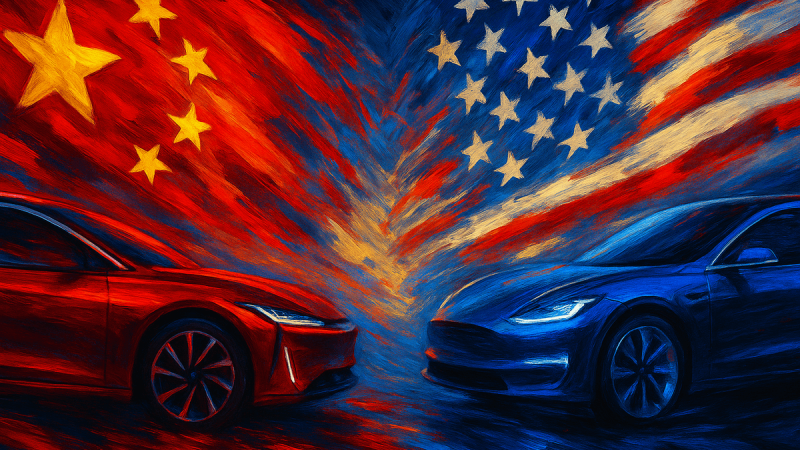
The global electric vehicle market witnessed another major shift at the beginning of 2026, as Tesla once again overtook BYD in quarterly battery electric vehicle sales.
After losing its leadership position in 2025, Tesla returned to the top spot in Q1, signaling a renewed phase in one of the most closely watched rivalries in the automotive industry.
RECOMMENDED STORIES
Tesla delivered over 350 thousand vehicles in the first quarter, while BYD’s fully electric vehicle sales fell noticeably below that level. The difference between the two companies was enough to reverse the ranking and place Tesla back at number one in the BEV segment.
This development is significant not only because of the numbers involved, but also because it reflects deeper structural changes within the EV market. The leadership shift highlights how volatile the industry has become, with quarterly performance now heavily influenced by regional trends, policy shifts, and strategic decisions.
Why did BYD lose its EV sales lead?
BYD’s loss of leadership in Q1 can be explained by several overlapping factors that affected both supply and demand.
One of the most important reasons is seasonal weakness in the Chinese market. The first quarter typically includes the Lunar New Year period, which disrupts manufacturing schedules and reduces consumer activity. Since BYD is heavily dependent on China for its sales, it is more exposed to this seasonal slowdown than competitors with broader global reach.
Another key factor is a noticeable decline in BYD’s battery electric vehicle sales. This decline is not necessarily a sign of long term weakness, but rather a reflection of shifting strategy and market conditions. BYD has increasingly prioritized plug in hybrid vehicles, which offer a combination of electric efficiency and fuel flexibility. As a result, some of the company’s growth has shifted away from pure electric vehicles and into hybrid models.
In addition, competition within China has intensified dramatically. Numerous domestic manufacturers are offering competitive pricing, innovative features, and aggressive marketing strategies. This has made it more difficult for BYD to maintain its previous pace of growth in the BEV segment.
Finally, regulatory changes have also played a role. Adjustments to government incentives and policies aimed at stabilizing the market have reduced short term demand, particularly in price sensitive segments.
How did Tesla manage to reclaim the lead?
Tesla’s return to the top was driven more by consistency than by rapid expansion. While the company did not experience explosive growth, it maintained stable delivery volumes at a time when competitors faced greater fluctuations.
One of Tesla’s key strengths remains its focus on a limited number of high volume models. The Model 3 and Model Y continue to dominate global sales due to their balance of price, performance, and availability. This focus allows Tesla to optimize production efficiency and maintain steady output.
Another important advantage is Tesla’s global footprint. Unlike BYD, which relies heavily on China, Tesla operates across multiple regions including North America, Europe, and Asia. This diversification helps buffer the company against localized downturns and seasonal effects.
Tesla’s operational efficiency also plays a crucial role. Its manufacturing systems are designed for scale, allowing it to maintain production levels even during periods of market uncertainty. This efficiency helps Tesla remain competitive on pricing while preserving margins.
Does Tesla’s lead mean it now dominates the EV market again?
The answer is more complex than it might appear. While Tesla leads in battery electric vehicle sales, it does not dominate the broader market for electrified vehicles.
BYD continues to outperform Tesla when all electrified vehicles are considered, including plug in hybrids. In fact, BYD’s total vehicle output in this category is significantly higher, reflecting its broader product strategy.
This distinction is critical for understanding the competitive landscape. Tesla has chosen to focus exclusively on fully electric vehicles, positioning itself as a pure EV brand. BYD, on the other hand, has adopted a more diversified approach, offering both fully electric and hybrid solutions.
As a result, Tesla’s leadership in BEVs does not necessarily translate into overall dominance in the wider electrified vehicle market.
Why are hybrid vehicles gaining importance?
The growing role of hybrid vehicles is one of the most important trends shaping the EV market today. Consumers are increasingly seeking flexibility, especially in regions where charging infrastructure is still developing.
Hybrids address several key concerns. They reduce range anxiety by allowing drivers to switch to fuel when needed. They are often more affordable than fully electric vehicles, making them accessible to a wider range of buyers. They also provide a transitional solution for consumers who are not yet ready to fully commit to electric mobility.
BYD has capitalized on this trend by expanding its hybrid lineup. This strategy has supported overall sales growth, even as its BEV numbers have declined.
Why is the EV market becoming more volatile?
The frequent shifts in leadership between Tesla and BYD reflect a broader transformation within the EV industry. The market is no longer in its early expansion phase, where growth was relatively predictable. Instead, it is entering a more mature and competitive stage.
Several factors contribute to this volatility. Consumer preferences are evolving, with greater emphasis on price, practicality, and infrastructure. Government policies are changing, affecting incentives and regulations. Competition is intensifying, particularly in major markets like China.
As a result, quarterly performance can vary significantly, and leadership positions are more fluid than before.
How important is China in the global EV race?
China remains the most important market for electric vehicles. It accounts for a large share of global demand and plays a central role in shaping industry trends.
For BYD, China is the foundation of its success. The company’s dominance in the domestic market has allowed it to scale rapidly and compete globally.
For Tesla, China is equally critical. Its Shanghai factory is one of its most important production hubs, and its performance in China has a direct impact on global results.
However, the Chinese market is also the most competitive. Local manufacturers are constantly innovating, and price competition is intense. This creates both opportunities and challenges for all players.
What role do global economic factors play in EV sales?
The EV market is increasingly influenced by global economic conditions. Factors such as energy prices, inflation, and supply chain disruptions all affect demand and production.
Higher fuel prices can encourage consumers to switch to electric vehicles, while economic uncertainty can reduce overall spending on new cars. Supply chain challenges, particularly related to battery materials, can impact production capacity and costs.
Geopolitical tensions also play a role, especially when they affect energy markets or trade relations.
Why are analysts cautious about Tesla’s performance?
Despite regaining the top position, Tesla’s performance has raised some concerns. Its growth remains relatively modest, and in some areas it has fallen short of expectations.
Inventory levels have increased, suggesting that supply may be outpacing demand in certain markets. This could lead to pricing pressure or the need for incentives to stimulate sales.
In addition, Tesla’s strategic focus is expanding beyond electric vehicles. Investments in artificial intelligence, autonomous driving, and robotics are seen as future growth areas, but they also divert attention from its core automotive business.
Why is BYD still a strong long term competitor?
BYD’s Q1 decline does not diminish its long term potential. The company remains one of the most powerful players in the global EV market.
Its strengths include large scale production, strong battery technology, and a diversified product portfolio. It is also expanding rapidly into international markets, increasing its global presence.
Most importantly, BYD’s hybrid strategy provides resilience. By offering multiple types of electrified vehicles, it can adapt to changing consumer preferences and market conditions.
Could Tesla maintain its lead throughout 2026?
It is too early to determine whether Tesla will maintain its lead for the entire year. Several factors will influence the outcome.
BYD is likely to recover in the following quarters, as seasonal effects fade and demand rebounds. The overall trajectory of the EV market will also play a role, particularly if growth slows further.
Technological developments, pricing strategies, and policy changes will all shape the competitive landscape. Given these variables, the leadership position could shift again before the end of the year.
What does this mean for the future of the EV industry?
The competition between Tesla and BYD is driving rapid innovation and shaping the future of mobility. Consumers are benefiting from better technology, lower prices, and a wider range of choices.
At the same time, the industry is becoming more complex. Companies must balance growth with profitability, innovation with efficiency, and global expansion with local adaptation.
The shift in Q1 2026 is not just about who leads in sales. It is a reflection of a market that is evolving quickly and becoming more competitive.
Conclusion
Tesla’s return to the top of the EV market in Q1 2026 marks an important moment in its ongoing rivalry with BYD. However, the broader picture remains dynamic and uncertain.
BYD’s decline is influenced by temporary and strategic factors, while Tesla’s lead is based on stability rather than rapid growth. The competition between the two companies is likely to continue, with leadership shifting as market conditions change.
Ultimately, the global EV race is no longer defined by a single winner. It is shaped by a complex interplay of technology, policy, and consumer behavior, making it one of the most dynamic industries in the world today.
By Faig Mahmudov


Similar news