How trade routes are shifting Central Asia from landlocked to linked


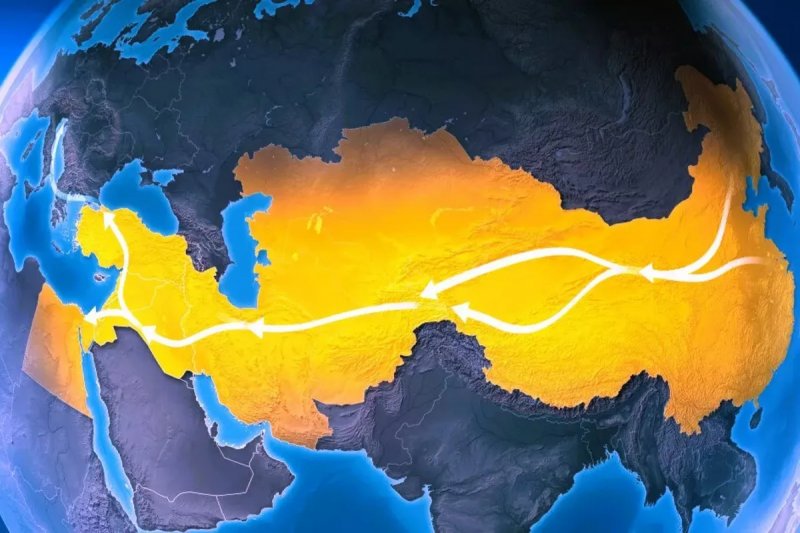
Central Asia is undergoing a profound transformation driven by connectivity transport corridors and trade routes, News.Az reports.
For decades the region was often described as landlocked and distant from global markets. Today it is increasingly defined as land linked and strategically positioned at the intersection of Europe East Asia South Asia and the Middle East. This shift in perception is not rhetorical. It reflects tangible investments policy reforms and geopolitical recalculations that place connectivity at the center of regional development.
The renewed focus on transport and trade is rooted in structural realities. Central Asian economies depend heavily on external markets for exports imports and investment. Efficient corridors reduce costs increase competitiveness and expand strategic options. As global supply chains adjust to new risks and diversification pressures Central Asia is emerging as a viable transit and production space rather than a marginal passage.
Historical context of trade routes
Connectivity is not a new concept for Central Asia. Historically the region served as a vital crossroads of the Silk Road linking civilizations economies and cultures. Caravans moved goods ideas and technologies across what is now Kazakhstan Uzbekistan Turkmenistan Kyrgyzstan and Tajikistan. That legacy shapes contemporary narratives and policy language around modern corridors.
The difference today lies in scale technology and governance. Railways ports highways and digital systems replace caravans while state led planning and international financing drive projects. Modern connectivity seeks to revive the regions historic role in a form adapted to twenty first century trade logistics and regulatory standards.
Strategic corridors and diversification of routes
One of the most discussed developments is the Trans Caspian Middle Corridor which links Central Asia with Europe through the Caspian Sea and the South Caucasus. This route connects rail networks in Central Asia to ports on the Caspian then onward through Azerbaijan Georgia and Türkiye into European markets. For regional governments the corridor represents diversification away from single transit dependencies.
Kazakhstan plays a central role in this architecture. Its rail network ports and logistics zones are designed to handle increased east west freight volumes. Uzbekistan also views corridor participation as a means to overcome its double landlocked geography by accessing multiple external routes. Turkmenistan emphasizes Caspian port infrastructure as a gateway for regional trade flows.
Connectivity through the Middle Corridor is not only about transit fees. It encourages industrial clustering logistics services and value added processing. Over time these effects can reshape national economic structures and employment patterns.
China and continental connectivity
The role of China in shaping Central Asian connectivity is substantial. Through the Belt and Road Initiative rail links highways and dry ports have expanded across the region. These projects connect Chinese manufacturing centers with European and Middle Eastern markets while integrating Central Asia into continental supply chains.
For Central Asian states cooperation with China offers access to capital technology and large scale markets. Rail routes linking western China with Kazakhstan and onward to Europe have already reduced transit times compared to maritime shipping. This efficiency strengthens the economic logic of overland corridors.
At the same time governments emphasize the importance of national ownership and balanced participation. Connectivity strategies increasingly stress interoperability among different routes rather than exclusive reliance on any single framework.
Southward routes and access to new markets
Beyond east west corridors Central Asia is actively exploring southward connectivity toward South Asia and the Indian Ocean. Routes through Afghanistan to Pakistan and Iran are frequently discussed as long term strategic options. These corridors promise access to large consumer markets and seaports reducing transport distances for exports.
Uzbekistan has been particularly vocal in promoting regional rail projects toward South Asia. The rationale is both economic and political. Improved southward connectivity could enhance regional stability through trade integration while opening new avenues for diversification.
These projects face complex challenges including security financing and regulatory harmonization. Nevertheless they remain central to long term connectivity visions across the region.
Caspian Sea as a logistical pivot
The Caspian Sea occupies a unique position in Central Asian connectivity strategies. It functions as a maritime bridge linking inland rail networks with the South Caucasus and beyond. Investments in ports ferries and digital customs systems aim to reduce bottlenecks and improve reliability.
Kazakhstan and Turkmenistan have expanded port capacities while Azerbaijan has modernized logistics infrastructure on the western shore. Coordinated development across the Caspian basin is essential for the efficiency of transregional corridors. As a result multilateral dialogue on maritime standards and scheduling has intensified.
The Caspian dimension also underscores the interdependence of Central Asia with neighboring regions. Successful connectivity requires coordination across multiple sovereign jurisdictions.
Trade facilitation and regulatory reform
Infrastructure alone does not guarantee connectivity. Trade facilitation regulatory alignment and customs modernization are equally important. Central Asian governments increasingly focus on reducing non physical barriers to trade including border delays paperwork and inconsistent standards.
Digitalization of customs procedures single window systems and harmonized transit rules are key policy priorities. Regional cooperation frameworks support these efforts by encouraging shared norms and technical assistance.
Improved trade facilitation enhances the credibility of Central Asia as a reliable transit region. Predictability and transparency are critical for attracting logistics operators and multinational companies.
Economic transformation through logistics
Connectivity has implications beyond transit revenue. Logistics hubs industrial parks and free economic zones are emerging along major corridors. These nodes attract manufacturing assembly and service activities that benefit from proximity to transport infrastructure.
Kazakhstan has invested in dry ports and logistics centers that integrate rail road and warehousing functions. Uzbekistan promotes industrial zones linked to export corridors as part of its economic reform agenda. Such initiatives aim to move economies up the value chain.
Over time logistics driven development can diversify income sources reduce commodity dependence and support inclusive growth. Connectivity thus becomes a tool of structural transformation rather than a narrow transport policy.
Geopolitics of corridors
Trade routes are inherently geopolitical. Competing visions of connectivity reflect broader strategic interests. External actors including the European Union China and regional powers engage with Central Asia through infrastructure financing and partnership frameworks.
Central Asian states navigate these dynamics by emphasizing openness inclusivity and multivector engagement. Corridor strategies are framed as complementary rather than exclusive. This approach aligns with broader foreign policy principles centered on balance and sovereignty.
The geopolitics of connectivity also reinforces the importance of regional unity. Coordinated positions enhance negotiating leverage and reduce vulnerability to external pressures.
Sustainability and future orientation
Sustainable connectivity is gaining prominence in policy discussions. Environmental standards energy efficiency and climate resilience increasingly shape infrastructure planning. Rail based transport is promoted as a lower emission alternative to road freight.
International partners support green logistics and climate aligned investment. Central Asian governments recognize that long term competitiveness depends on sustainable practices that meet global standards.
Future connectivity will also integrate digital infrastructure including data corridors and smart logistics systems. These developments will further embed Central Asia into global economic networks.
A lasting structural shift
Connectivity transport corridors and trade routes represent one of the most enduring transformations in Central Asia. They redefine geography economics and geopolitics simultaneously. The region is no longer seen as isolated but as interconnected and strategically indispensable.
This shift is structural rather than temporary. As global trade patterns evolve Central Asia stands to benefit from its proactive investment in connectivity. Success will depend on coordination governance and sustained commitment to openness and balance.
The emergence of Central Asia as a hub of continental connectivity marks a new chapter in its modern history. It positions the region not at the margins but at the center of Eurasian exchange.
If you approve I will continue with the third theme on energy security and green transition in the same evergreen format and length.
By Faig Mahmudov


Similar news