Iran and IAEA plan to establish new cooperation framework


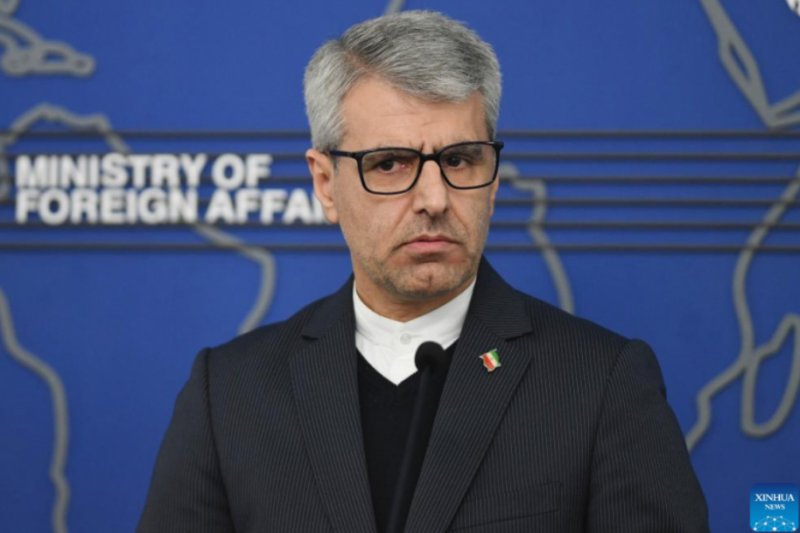
Iran and the International Atomic Energy Agency (IAEA) are preparing to launch discussions on a new cooperation framework following escalating tensions surrounding Tehran’s nuclear activities and recent Western military actions.
According to Foreign Ministry Spokesperson Esmaeil Baghaei, the IAEA’s Deputy Director General is expected to visit Tehran in the near future to lead these talks. The proposed discussions come at a time of renewed diplomatic activity, with Iranian and European officials holding a second round of nuclear talks in Istanbul just days earlier, News.Az reports, Iranian media.
Baghaei described the Istanbul talks—held between Iran and the European trio of the UK, France, and Germany—as a critical opportunity for Europe to reassess and correct what he called its “damaging and unconstructive” stance on Iran’s nuclear program. He argued that European support for recent U.S. and Israeli military actions against Iranian nuclear facilities has not only undermined diplomatic credibility but also violated international norms and UN Security Council Resolution 2231, which endorses the 2015 Joint Comprehensive Plan of Action (JCPOA).
Iran’s frustration centers largely on what it views as repeated breaches of the nuclear deal by both the United States and the European signatories. Baghaei emphasized that Iran’s decision to reduce cooperation with the IAEA stemmed directly from these violations and the failure of Europe to fulfill its JCPOA commitments after Washington’s withdrawal from the deal in 2018. He warned that the European countries now lack both legal and ethical standing to invoke the JCPOA’s “snapback” mechanism, which would reimpose UN sanctions on Iran.
Moreover, Baghaei condemned the possibility of extending Resolution 2231 or reimposing sanctions, calling such efforts “legally baseless and politically motivated.” He also dismissed European concerns over Iran’s nuclear activity, asserting that Iran’s retaliatory measures—including limiting inspections and enrichment acceleration—remain within the bounds of the JCPOA framework as a response to violations by the West.
Iran continues to assert that its nuclear program is peaceful and in line with its obligations under the Non-Proliferation Treaty (NPT) and the Comprehensive Safeguards Agreement. However, Baghaei clarified that any current or future cooperation with the IAEA will now be governed by a parliamentary law that requires coordination with Iran’s Supreme National Security Council. He made it clear that no IAEA inspection visits will take place at Iranian nuclear facilities that were recently damaged in what Iran considers illegal attacks by the U.S. and Israel.
In a pointed critique of Israeli influence over Western diplomacy, Baghaei accused the Israeli government of manipulating the narrative surrounding Iran’s nuclear program and pressuring European governments into taking confrontational stances. He questioned whether the UK, France, and Germany would continue sacrificing their diplomatic credibility for “the sinister ambitions of the Israeli regime,” which he described as the “main driver” behind U.S. withdrawal from the JCPOA.
Ultimately, Iran’s message remains defiant but cautiously open to diplomacy. The upcoming visit by the IAEA’s deputy chief could mark a turning point—either a step toward renewed technical engagement or another diplomatic dead end in an already fragile nuclear deal landscape. With regional tensions simmering and international stakeholders growing more divided, the outcome of these upcoming discussions may prove pivotal in determining whether the JCPOA can still be salvaged or will dissolve under the weight of mutual distrust.


Similar news