Iran expresses willingness for nuclear talks, but rejects intimidation


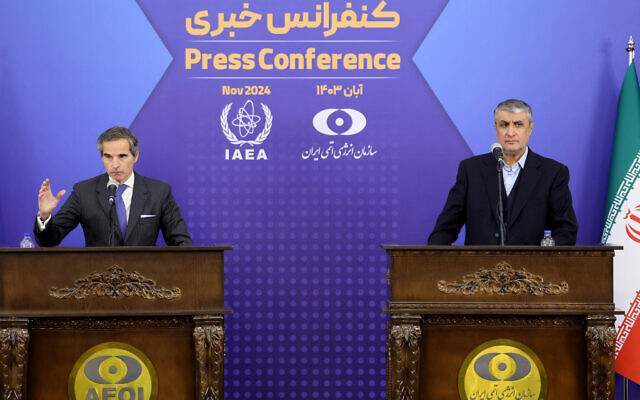
Iran's head of the Atomic Energy Organization Mohammad Eslami (R) and the United Nations nuclear chief Rafael Grossi give a joint press conference in Tehran on November 14, 2024. ( ATTA KENARE / AFP)
Iran stated on Thursday that it is open to nuclear talks with world powers but will not engage in negotiations "under pressure and intimidation," as International Atomic Energy Agency chief Rafael Grossi met with the country's top diplomat, News.Az reports citing The Times of Israel.
Iran’s Foreign Minister Abbas Araghchi said Tehran was “willing to negotiate” based on the “national interest” and “inalienable rights.”Grossi, who arrived in Tehran late on Wednesday, was expected to negotiate with the country’s top nuclear and political officials, according to Iran’s official IRNA news agency.
The IAEA chief also said there should be no attacks on Iranian nuclear installations and urged diplomacy to resolve compliance issues the UN watchdog has with the Iranians as he met with officials in Tehran.
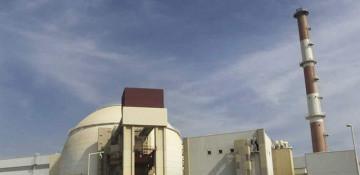
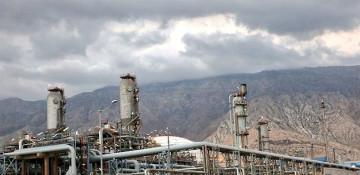
“I say this with regards to Iran… nuclear installations should not be attacked,” Grossi told a news conference, days after Israel’s Defense Minister Israel Katz said that Iran was “more exposed than ever to strikes on its nuclear facilities.”
Israel is believed to have destroyed parts of Iran’s air defenses in a series of strikes last month in retaliation for a massive Iranian ballistic missile attack on Israel.
Israel reportedly considered but ruled out potential attacks on Iranian nuclear sites during the strikes, at least partly due to pressure from the Biden administration, though US President-elect Donald Trump may give Israel freer rein after he takes office in January. The Jewish state views Iran’s nuclear program as an existential threat.
Iran twice fired missiles directly at Israeli territory this year, prompting Israel to retaliate, most recently on October 26 when the Israeli Air Force hit Iranian military facilities. Iran has pledged to strike back, while Israel has threatened major consequences against Tehran if it does.
Grossi described his meeting with the Iranian foreign minister as “indispensable” in a post on X. Araghchi was a key negotiator in the talks that led to a landmark 2015 nuclear deal with major powers, abandoned three years later by Trump.
For his part, Araghchi said the meeting was “important & straightforward,” and renewed Iran’s commitment to the nuclear Non-Proliferation Treaty (NPT).
“We agreed to proceed with courage and goodwill. Iran has never left the negotiation table on its peaceful nuclear program,” he said in the X post.
Grossi also met the head of Iran’s Atomic Energy Organization, Mohammad Eslami, and was expected to meet Iranian President Masoud Pezeshkian later on Thursday.
Grossi was visiting Tehran in an effort to restore inspectors’ access to Iran’s program and answer still-outstanding questions over it, as he has on previous trips, with limited success, since Trump unilaterally withdrew the US from the deal, leading to its collapse.
Israel and other countries have long accused Iran of seeking to acquire nuclear weapons, a claim Tehran denies.


Similar news