Is Georgia turning its back on the EU?


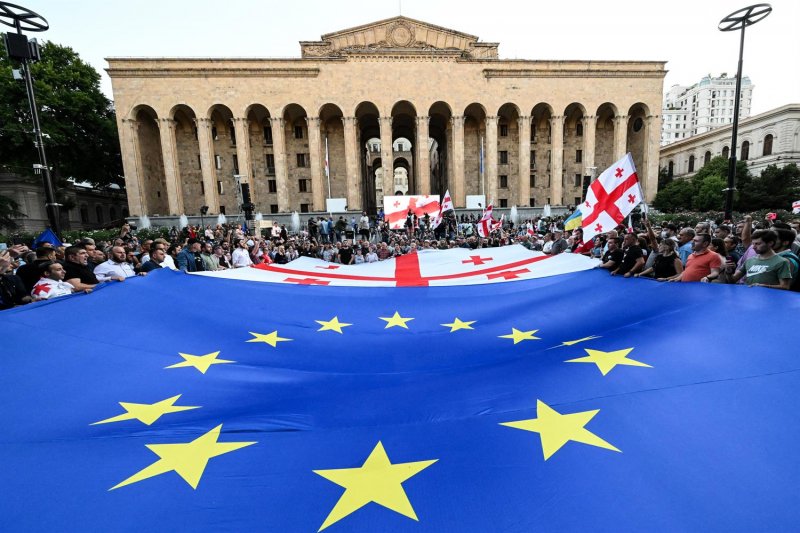
In a recent statement, the Speaker of the Georgian Parliament, Shalva Papuashvili, criticized the sanctions imposed by Estonia, Latvia, and Lithuania on Georgian officials, describing them as "unjustified" and part of an attempt to pressure the Georgian government. Papuashvili argued that certain Western nations are using the pretext of democracy to undermine stability in Georgia rather than support it.
This provocative rhetoric raises a pressing question: Does Papuashvili’s stance signal a deliberate pivot in Georgia's foreign policy away from the European Union and closer to Russia? To unpack this issue, News.Az sought insights from prominent Georgian political experts.
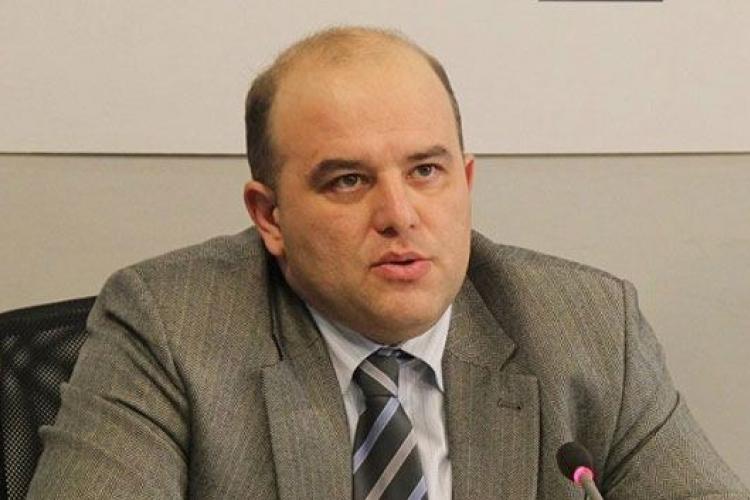
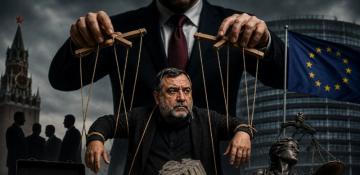
Political scientist Vakhtang Maisaia was unequivocal in his assessment of Papuashvili's influence, dismissing the Speaker's comments as inconsequential. "Papuashvili’s words mean nothing because he is essentially a puppet," Maisaia remarked, drawing an analogy to the French comedy The Toy. According to him, the real power in Georgia lies with those pulling the strings behind the scenes.
Maisaia emphasized that Georgia’s strategic partnership with the Baltic States remains intact despite the inflammatory remarks. "The Baltic States are strategic partners and friends of Georgia. This will in no way affect the development of interstate relations," he stated, adding that the Georgian populace overwhelmingly supports a pro-Western foreign policy, including maintaining strong ties with the Baltic nations.
The political scientist did not mince words when discussing the current administration’s alignment. "The present government is essentially pro-Russian," Maisaia claimed, suggesting that Tbilisi is gradually reverting to its geopolitical posture from the 1990s, when Georgia was considered a pro-Russian state. However, he was quick to point out that the Georgian public consistently demonstrates its support for democratic and pro-European values, which serves as a counterbalance to the government's apparent drift towards Moscow.
Maisaia's closing statement was blunt: "The so-called speaker is just a puppet."

Political expert Gela Vasadze offered a similarly grim outlook, accusing Papuashvili of directly contributing to the deterioration of relations with the European Union. "Papuashvili himself did everything to spoil Georgia's relations with the EU," Vasadze asserted, criticizing the government's decision to halt negotiations with Brussels as a self-inflicted wound. He highlighted the violent suppression of protesters and the mass arrests that followed as evidence of Georgia's democratic backsliding.
Vasadze argued that the current administration, led by the ruling party Georgian Dream, has effectively paved the way for Russian influence in the South Caucasus. "Georgian Dream has widely opened the doors to Russia in the South Caucasus, and now it depends on Moscow. This is a new geopolitical reality that needs to be understood," he stressed.
According to Vasadze, this shift is not just a temporary detour but a fundamental realignment that risks trapping Georgia in a geopolitical quandary. The expert warned of the long-term implications of Georgia's growing dependence on Russia, which could erode the country's sovereignty and its aspirations for European integration.
The remarks by both experts paint a picture of a Georgian government that is increasingly at odds with the aspirations of its people and its historical allies in the West. As the geopolitical chess game between Russia and the West continues to unfold in the South Caucasus, Georgia finds itself at a crossroads, with its foreign policy direction hanging in the balance.
Whether this shift is a calculated strategy or a dangerous misstep remains to be seen, but the consequences for Georgia's sovereignty and its European ambitions could be profound.


Similar news