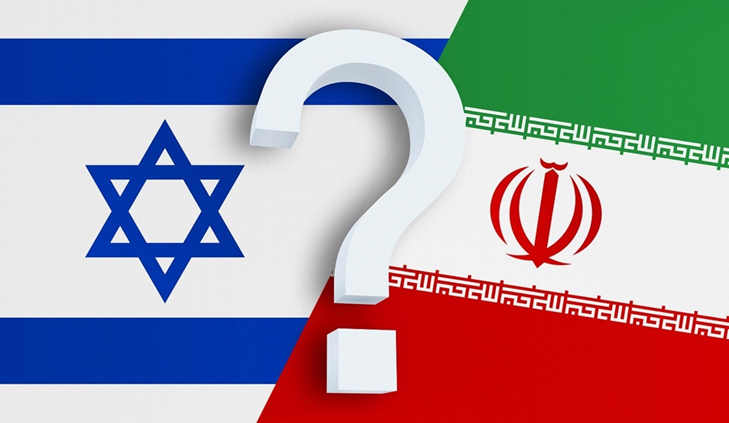
Israel-Iran: to be or not to be? – OPINION


Editor's note: Moses Becker is a special commentator on political issues for News.Az, a PhD in political science and an expert on interethnic and interreligious relations. The article expresses the personal opinion of the author and may not coincide with the view of News.Az.
On April 1, 2024, at 17:00 local time in Damascus, the capital of the Syrian Arab Republic, the Israeli Air Force carried out a missile attack on a building near the Embassy of the Islamic Republic of Iran. At the time of the attack, a meeting was taking place there involving senior representatives of the "Al-Quds" division of the Islamic Revolutionary Guard Corps, which is responsible for conducting Iranian external operations in the Middle East. Among the seven officers killed were General Mohammad Reza Zahedi and Brigadier General Mohammad Hadi Haji Rahimi.
Following this elimination, the leadership of Iran threatened to strike Israel with full force within 48 hours. Although the promised time has long passed, Israel and the United States have taken this threat seriously. As stated by United States President Joe Biden: "our commitment to ensuring Israel's security from threats posed by Iran and its proxies is ironclad. Let me say that again: ironclad."
Consequently, the 5th Fleet based in the region has been put on high alert. The serious turn of the confrontation is also indicated by a publication from the Iranian news agency Mehr, which quoted Iran's Defense Minister saying that the airspace over Tehran was closed "due to military exercises." However, the agency soon removed this message.
In this specific case, it is important to note that Iran does not share a border with Israel: the distance between the two countries is 2313 km, so the numerosity of Iranian armed forces plays no role.
Israel's missile defense system is multi-layered and considered the best in the world, which cannot be said about the air defense of the Islamic Republic. Furthermore, the Israeli Air Force and its pilots are among the best, not only in the Middle East. Notably, Israeli F-35 aircraft freely fly in the skies of Iran, undetected by the state's radars.
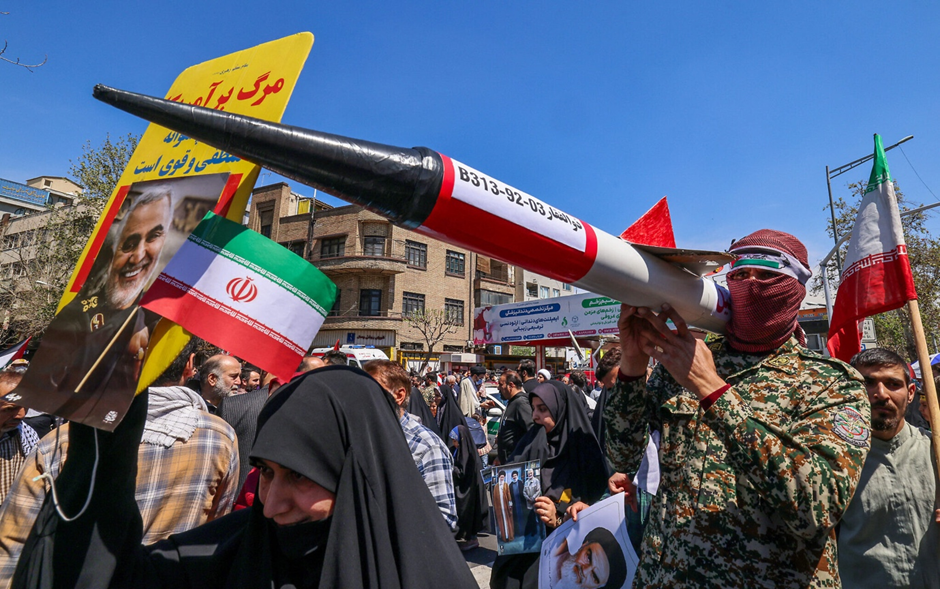
However, this does not mean that the leadership of the Islamic Republic has completely abandoned the idea of a retaliatory strike. The question of prestige and "loss of face" is still very much on the agenda. If Iran remains silent, its role in the region could be diminished to zero. Thus, the dilemma of "to be or not to be" remains relevant.
According to intelligence from the US and its allies, missile strikes or drone attacks from the Iran against Israel are inevitable. It should be noted that Iran hosts several nuclear sites, including power plants, uranium mines, and research reactors. A targeted attack on these could mark an unprecedented escalation of the Middle East conflict.
Although Israel possesses nuclear weapons and the means of delivery, it is unlikely to use them. Israel's arsenal includes equally powerful conventional weapons, the effects of which would be comparable to a nuclear strike.
Media reports suggest Tehran "does not wish to carry out a retaliatory attack on Israel" with missiles and is likely to "respond through its proxy groups." This implies that Iran, recognizing the real threat of a major regional war, is looking for other ways to strike back at Israel without leading to a missile exchange. But this puzzle is much more complicated than the theory of relativity, which is still not understood by everyone.
Additionally, Tehran is seriously considering the nature and extent of US involvement in the conflict should it arise. Currently, Iran is in a very difficult position. The regime is losing popularity domestically, and centrifugal forces are intensifying. Tensions have reached a peak in the province of Sistan and Baluchestan. The situation remains tense in Iranian Kurdistan, Southern Azerbaijan, etc. There is unrest on the borders with Afghanistan and Pakistan.
Leaks about Israel's readiness to attack Iran's nuclear sites are essentially harbingers of real Israeli strikes on these targets. Perhaps that is why Tehran has remained silent and has not launched missile strikes against Israel. Iran's response remains in question, although it has several options. First and foremost, an attack could be launched by military space forces. Additionally, Iran has the capability to launch retaliatory strikes from Lebanon or Yemen, where it has allied groups opposed to Israel.
The danger of conflict escalation between the two states lies in the fact that both Israel and Iran have nuclear sites. As stated by Israel's Foreign Minister Israel Katz, "The Israel Defense Forces will inevitably attack Iran in response to any threats."
As the world holds its breath in anticipation of possible Iranian strikes, Israel is not wasting any time. The country is ramping up preparations for a strike against key Hamas figures in Rafah, continuing to carry out bombings in Gaza. During these operations, high-ranking terrorist leaders are also being eliminated.


Similar news