Kabul format: Central Asia eyes Afghanistan as a vital transit corridor


Holding the event in Kabul itself is of great importance. After a long period in which Afghanistan was excluded from full-fledged multilateral diplomacy, Central Asian countries are effectively contributing to the reformatting of the country into an active participant in international relations.
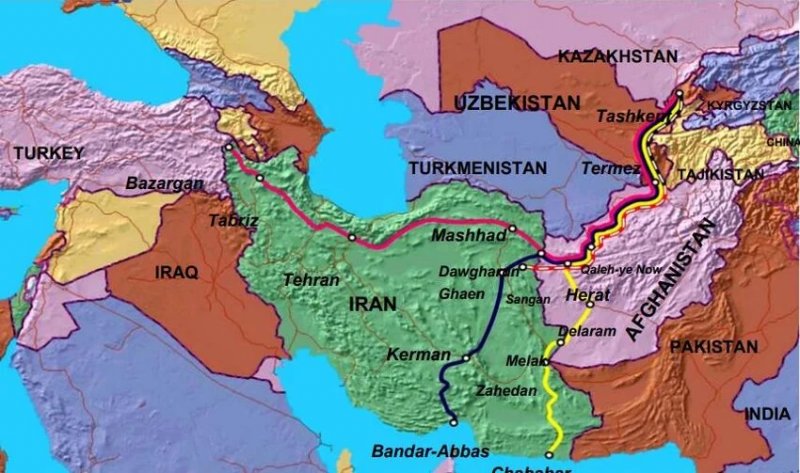
The dialogue is based on pragmatism. Central Asian states are heavily dependent on external transport routes. Against the backdrop of shifting logistics and disruptions on northern routes through Russia, Afghanistan is once again being viewed as a transit corridor to India and the ports of the Indian Ocean, News.Az reports, citing Caliber.
Therefore, the discussions focused on concrete infrastructure projects. The TAPI gas pipeline (Turkmenistan–Afghanistan–Pakistan–India), the CASA-1000 power transmission project designed to export surplus electricity produced in Kyrgyzstan and Tajikistan to Afghanistan and Pakistan, and transport routes such as the “Termez–Mazar-i-Sharif–Kabul–Peshawar” railway (the shortest route connecting Central Asia with the ports of the Arabian Sea) are shaping the foundation of future regional connectivity.
RECOMMENDED STORIES
The stated goal of raising trade turnover to $10 billion over the coming years demonstrates the region’s external economic ambitions. At the same time, the current increase to around $2.7 billion already indicates a shift toward genuine economic engagement. The structure of cooperation is also expanding. In addition to transit and raw material flows, more complex sectors are being discussed, including pharmaceuticals. Afghanistan is gradually being viewed as a promising market.
The economic agenda is closely linked to security issues. For the region, threats such as extremism, drug trafficking, and illegal migration remain significant sources of instability. Without stable guarantees in this sphere, any economic projects remain vulnerable. In this context, assurances from the Afghan leadership that the country’s territory will not be used by terrorist organisations against its neighbours are aimed at reducing one of the key concerns of Central Asian states.
The geopolitical context further amplifies the significance of these developments. Afghanistan is expanding its contacts with various centres of power while remaining under sanctions pressure.
An additional factor is the ongoing tension between Afghanistan and Pakistan. Any escalation in this direction increases risks for transit projects and regional stability. Statements from Kabul expressing readiness for dialogue with Islamabad are addressed both to neighbouring states and to potential investors.
Afghanistan is also promoting the idea of institutionalising the dialogue—transforming these meetings into a permanent mechanism. If implemented, the region would gain an additional platform for interaction that could complement organisations such as the Shanghai Cooperation Organisation, but with a more applied and practical agenda.
At the same time, experts have paid particular attention to the fact that within the emerging “Kabul format,” representatives of the Taliban did not invite the region’s traditional strategic partners—Russia and China—to the dialogue. This move may indicate Kabul’s intention to minimise the influence of major external players on strategic decisions related to economic development.
The Kabul meeting highlights a clear trend: Afghanistan is returning to regional economic and diplomatic processes, while Central Asia is building engagement with it amid ongoing uncertainty. The future trajectory will depend on the balance between economic opportunities and security risks.
By Leyla Şirinova


Similar news