Marie Curie or Sklodowska-Curie? New Euro banknote sparks Franco-Polish dispute


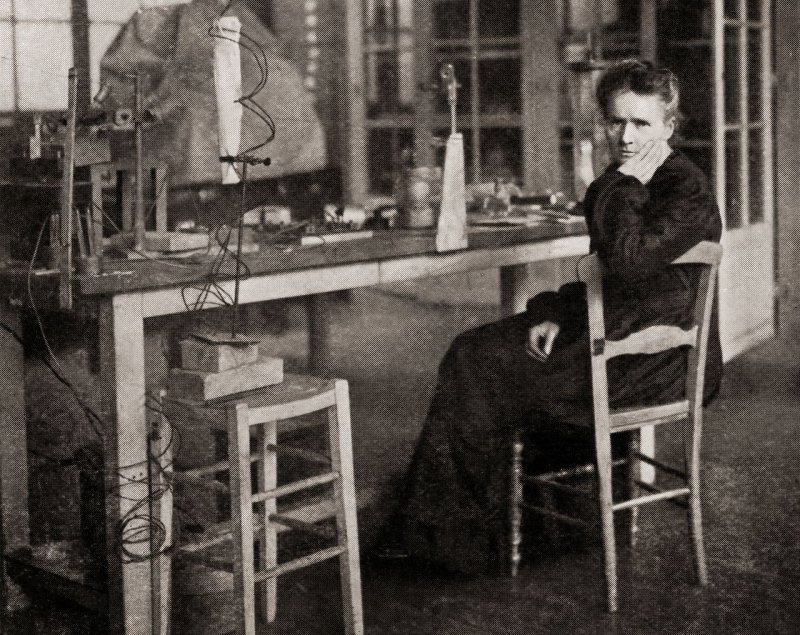
The European Central Bank’s (ECB) upcoming redesign of the €20 banknote has reignited a long-standing debate between France and Poland over the legacy of one of Europe’s most iconic scientists: Marie Sklodowska-Curie.
Curie, a two-time Nobel Prize winner known for her groundbreaking work in physics and chemistry, is being considered as one of the cultural figures to appear on the next series of euro banknotes. However, her name—specifically the omission of her Polish maiden name, Skłodowska—has stirred strong reactions in Warsaw, News.Az reports, citing Politico.
While she is widely known internationally as Marie Curie, her Polish heritage holds deep significance in her homeland. Born Maria Skłodowska in Warsaw, she adopted the surname Curie after marrying French physicist Pierre Curie in 1895. After his death, she increasingly used the double-barreled name “Marie Sklodowska-Curie,” a symbolic nod to both her identity and her independence as a scientist.
Polish officials, including central bank governor Adam Glapiński and several Members of the European Parliament (MEPs), formally urged the ECB to acknowledge the full version of her name. Their argument? The omission erases a vital part of her story—one that resonates with Poland’s broader concerns about being marginalized in European narratives.
Although Poland does not use the euro, its lobbying appears to have had an effect. The ECB has updated its official materials to refer to the scientist as “Marie Curie (born Sklodowska)”—a temporary compromise meant to recognize her dual heritage while consultations continue.
“The ECB is consulting various sources to determine the most appropriate way to refer to her,” a spokesperson confirmed. “For the time being, we will refer to her as Marie Curie (born Skłodowska) in order to acknowledge her dual identity.”
Officials are also in discussions with Curie’s descendants and the Paris-based Institut Curie to ensure any final representation is accurate and respectful.
The tug-of-war over how to credit Curie is not new. In 2014, Polish pressure successfully led to the rebranding of the European Commission’s research grants program from "Marie Curie Actions" to "Marie Skłodowska-Curie Actions"—a major symbolic win for Poland.
And yet, the story remains nuanced. Even Curie herself alternated between names throughout her life, often using “M. Curie” in academic publications long after she began signing as Skłodowska-Curie.
It’s not yet guaranteed that any historical figures will appear on the new euro banknotes at all. The ECB is still weighing alternative themes—such as birds and rivers—that may avoid the cultural and political complexities tied to human icons.
The final design decision is expected by the end of 2026, but the new banknotes won't enter circulation for several years after that.
For many in Poland, this debate is about more than nomenclature. It taps into deeper questions of identity, recognition, and the struggle of smaller nations to assert their stories on the European stage. As conservative Polish MEP Janusz Lewandowski put it, “I am very pleased that the ECB addressed Polish concerns and adjusted the design of the new €20 banknote to reflect Marie Sklodowska-Curie’s Polish heritage.”
Whether her full name ultimately appears on the note or not, one thing is clear: Marie Sklodowska-Curie remains a powerful symbol—not only of scientific achievement, but of the enduring complexity of European identity.


Similar news