McCormick Unilever deal shakes global food industry


Unilever has announced plans to merge its food division with McCormick & Company in a transaction valued at approximately $65 billion.
The deal marks one of the largest food industry tie ups in history and represents a major strategic shift for the British consumer goods giant as it seeks to streamline operations and focus on higher growth segments.
RECOMMENDED STORIES
Details of the deal structure
The transaction will be executed through a Reverse Morris Trust structure, a tax efficient mechanism often used in large corporate reorganisations. Under this arrangement, Unilever will spin off its food business and merge it with McCormick, the owner of brands such as Cholula hot sauce.
Following completion, Unilever and its shareholders will hold a 65 percent stake in the combined entity, equivalent to roughly $29.1 billion based on McCormick’s recent share price. In addition, Unilever will receive $15.7 billion in cash.
The deal values Unilever’s food division at nearly $45 billion, while McCormick is valued at about $21 billion. Certain assets, including Unilever’s food operations in India, are excluded from the agreement.
Strategic shift under new leadership
The merger is the most significant move yet by Unilever CEO Fernando Fernandez, who took the helm in March 2025. Since assuming leadership, Fernandez has prioritised simplifying the company’s portfolio and sharpening its focus on core categories such as personal care and beauty.
This follows the earlier spin off of Unilever’s ice cream business, which includes globally recognised brands like Ben & Jerry’s and Magnum.
By divesting its food division, Unilever is effectively transitioning into a more focused consumer goods company centred on higher margin and faster growing segments.
Investor reaction and market response
Despite the strategic rationale, the market reaction has been negative. Unilever shares fell by around 3 percent, hitting a near one year low, while McCormick’s stock dropped sharply by approximately 9 percent at the start of trading.
Analysts and investors have raised concerns over the structure of the deal, particularly the level of control retained by Unilever shareholders and the valuation dynamics.
One key criticism centres on the decision to exchange full ownership of well established brands for a majority stake in a larger but more complex combined entity.
Pressure from activist investors
The move also reflects years of pressure from activist investors, notably billionaire Nelson Peltz, who built a stake in Unilever in 2022.
Peltz has been widely linked to leadership changes at the company, including the departures of former CEOs Alan Jope and Hein Schumacher.
The push to divest slower growing segments such as packaged food has been a central theme of investor demands, aimed at improving overall group performance and shareholder returns.
Performance challenges in the food division
Although Unilever’s food business has historically delivered strong margins, its growth has lagged behind other segments, particularly beauty and personal care.
The division accounted for just over a quarter of Unilever’s total annual sales of 50.5 billion euros last year but has struggled to achieve the company’s targeted growth rate of 4 to 6 percent.
Changing consumer preferences have played a significant role in this slowdown, with increasing demand for fresh and healthier food options reducing reliance on packaged products.
Industry trends shaping the decision
The broader food industry has been undergoing structural changes, driven by shifting consumer habits and technological developments.
The rise of weight loss treatments, including GLP 1 drugs, has also impacted demand for processed foods. At the same time, competition from private label brands has intensified, putting additional pressure on established players.
Unilever has already begun divesting non core assets, including snack brand Graze and plant based food brand The Vegetarian Butcher, as part of its broader transformation strategy.
Implications for McCormick
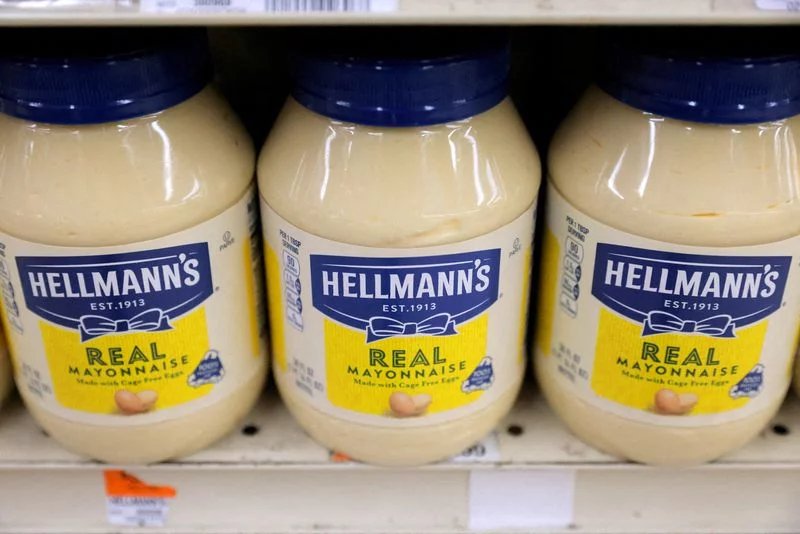
For McCormick, the deal is widely seen as transformational. The company will gain access to a significantly expanded global distribution network and a portfolio of established brands, including products like Knorr and Hellmann’s.
This could enhance McCormick’s position in the global condiments and seasonings market, providing new opportunities for growth and scale.
However, the integration of such a large business also presents operational challenges and risks, particularly in aligning supply chains and brand strategies.
Historical significance of the merger
Unilever’s roots in the food sector date back to the 19th century, when one of its founding Dutch families began trading butter. The company itself was formed in 1929 through the merger of Margarine Unie and Lever Brothers, one of Europe’s largest industrial deals at the time.
The current transaction marks a significant departure from that legacy, signalling a shift away from food and towards a more focused consumer goods model.
Cost cutting and broader strategy
The merger comes alongside an ongoing cost cutting programme launched by Unilever in 2024, aimed at saving around 800 million euros over three years.
Recent reports also indicate that the company has implemented a temporary global hiring freeze, reflecting broader economic uncertainty and the impact of geopolitical tensions.
Conclusion
The proposed merger between Unilever’s food business and McCormick represents a landmark moment in the global consumer goods industry. While the deal offers clear strategic benefits, particularly in terms of portfolio simplification and scale, it has also raised significant questions among investors.
As the transaction moves forward, its success will depend on effective integration, sustained growth in the combined entity, and Unilever’s ability to deliver stronger performance in its remaining core businesses.
By Faig Mahmudov


Similar news