Miroslav Klose: Complete story of the greatest goalscorer in FIFA World Cup history


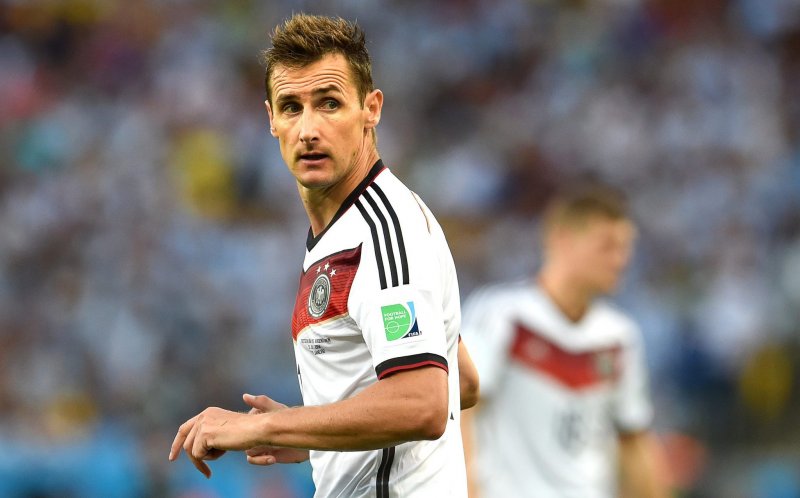
In the history of world football, only a handful of players have managed to leave a mark that transcends generations.
Names such as Pelé, Diego Maradona, Johan Cruyff, Franz Beckenbauer, Zinedine Zidane, Lionel Messi, Cristiano Ronaldo and Ronaldo Nazário are often mentioned when discussing the greatest footballers of all time, News.az reports.
RECOMMENDED STORIES
Yet among these icons stands a player whose achievements are unique and whose impact on the international game remains unmatched in one particular category.
That player is Miroslav Klose.
Klose may not have possessed the dazzling dribbling skills of Messi, the explosive athleticism of Cristiano Ronaldo or the flair of Ronaldinho, but he mastered the art of scoring goals when it mattered most. Through intelligence, discipline, positional awareness and relentless dedication, he became the highest goalscorer in FIFA World Cup history, a record that continues to define his legacy.
His story is remarkable because he was not a child prodigy destined for stardom. Unlike many modern football superstars who emerge from elite academies at a young age, Klose's path to the top was gradual and filled with challenges. He worked as a carpenter, developed later than many of his peers and only entered professional football in his twenties. Yet he went on to become Germany's all-time leading goalscorer and one of the most respected figures in football.
This is the complete story of Miroslav Klose – his childhood, rise to stardom, club career, international success, records, personality and lasting legacy.
Early Life and Family Background
Miroslav Josef Klose was born on June 9, 1978, in Opole, Poland. Sport was deeply rooted in his family. His father, Józef Klose, was a professional football player who competed in Poland and later in France. His mother, Barbara Jeż, represented the Polish national handball team and was one of the country's most accomplished athletes.
Growing up in a sporting household gave Klose an early appreciation for discipline and competition. However, his childhood was far from stable. Because of his father's football career, the family moved frequently. They initially relocated to France before eventually settling in Germany when Miroslav was eight years old.
The move to Germany was not easy. Klose struggled with the language and often felt isolated. He had to adapt to a new culture, new schools and a new way of life. These experiences helped shape the humble and resilient personality that would later become one of his defining characteristics.
Unlike many young footballers who dream solely of becoming professionals, Klose also pursued practical skills. He trained as a carpenter and completed vocational education, demonstrating the work ethic and grounded attitude that would characterize his career.
The Long Road to Professional Football
One of the most fascinating aspects of Klose's story is how unlikely his rise appeared during his teenage years.
Many football legends attract attention from scouts before reaching adulthood. Klose's development was different. He played for local clubs and progressed gradually through Germany's football system. He was not considered a generational talent or a future superstar.
At one stage, his future appeared more likely to involve a traditional profession than a football career. Yet coaches consistently noticed one important quality: his instinct for scoring goals.
Klose possessed a natural understanding of positioning inside the penalty area. He knew where to be when opportunities emerged. Combined with his height and aerial ability, this instinct allowed him to stand out despite not being the fastest or most technically gifted player on the field.
His performances eventually earned him a place at FC Homburg, where he began attracting attention from larger clubs. It was the first major step toward professional football.
Breakthrough at Kaiserslautern
Klose's move to Kaiserslautern marked a turning point in his career.
Initially playing for the club's reserve team, he quickly demonstrated his potential. His combination of physical strength, intelligent movement and finishing ability impressed coaches and supporters alike.
One of the moments that helped establish his reputation came when he celebrated goals with spectacular front flips. The celebrations became popular among fans and added to his growing profile.
More importantly, his performances on the pitch continued to improve. Klose developed into a complete striker capable of scoring with both feet and his head. His work ethic also distinguished him from many forwards. He pressed defenders, tracked back when necessary and contributed to the overall team structure.
By the early 2000s, he had become one of the Bundesliga's most promising attacking players.
Germany National Team Debut
Klose's rise at club level soon led to international recognition.
In 2001, he made his debut for Germany. The national team was searching for a new generation of players capable of restoring its status among football's elite.
Few could have predicted how important Klose would become.
His early performances suggested that Germany had discovered a special striker. He adapted quickly to international football and developed strong partnerships with experienced teammates.
The timing proved perfect. Germany was preparing for the 2002 FIFA World Cup, and Klose was about to announce himself to the world.
The 2002 FIFA World Cup
The 2002 World Cup in South Korea and Japan transformed Klose from a promising Bundesliga player into an international star.
Germany entered the tournament without being considered among the favorites. However, Klose quickly emerged as one of its key figures.
He scored five goals during the competition, all of them with his head. His aerial dominance became one of the tournament's defining stories.
Defenders struggled to contain him. His movement inside the penalty area and ability to time runs perfectly made him a constant threat.
Germany ultimately reached the final, where it lost 2-0 to Brazil. Although the team fell short of the trophy, Klose's reputation soared.
At just 24 years old, he had proven that he could perform on football's biggest stage.
Werder Bremen: Reaching Another Level
Following his World Cup success, Klose continued developing his game.
A move to Werder Bremen provided the perfect environment for growth. The club's attacking style suited his strengths and allowed him to expand his abilities.
During his years at Bremen, Klose became far more than an aerial specialist. He improved his first touch, link-up play and finishing from various positions.
His goal-scoring numbers increased significantly. He regularly ranked among the Bundesliga's top scorers and established himself as one of Europe's most effective strikers.
The period also saw him mature as a footballer. He became more tactically intelligent and learned how to adapt his game depending on opponents and match situations.
Many observers believe his years at Bremen represented the peak of his club-level performances.
The 2006 World Cup on Home Soil
The 2006 FIFA World Cup in Germany represented a special moment in Klose's career.
Playing in front of home supporters, he carried enormous expectations. Rather than succumbing to pressure, he thrived.
Klose scored five goals during the tournament and won the Golden Boot as its leading scorer.
Germany reached the semifinals before losing to Italy, eventually finishing third. Despite the disappointment of missing the final, the tournament strengthened Klose's status as one of the world's best international forwards.
By this stage, he had scored ten World Cup goals in just two tournaments, placing him among the greatest World Cup scorers in history.
Bayern Munich and Domestic Success
In 2007, Klose joined Bayern Munich, Germany's most successful football club.
The transfer represented another major step in his career. At Bayern, expectations were always high. Every season required competing for domestic titles and European success.
Klose adapted well to the environment. He won Bundesliga titles, domestic cups and regularly participated in the UEFA Champions League.
While injuries occasionally disrupted his progress, he remained a valuable member of the squad.
What impressed coaches most was his professionalism. Whether starting matches or coming off the bench, Klose always maintained the same commitment and intensity.
His attitude made him a role model for younger players.
The 2010 FIFA World Cup
South Africa hosted the 2010 World Cup, and Klose once again demonstrated his extraordinary ability to deliver on the biggest stage.
He scored four goals during the tournament, helping Germany reach the semifinals.
The German team impressed observers with its exciting style of play. Young stars such as Thomas Müller, Mesut Özil and Manuel Neuer emerged alongside experienced players like Klose.
Although Germany ultimately finished third, Klose moved closer to Ronaldo Nazário's World Cup scoring record.
His total now stood at 14 goals, just one behind the Brazilian legend's mark of 15.
Move to Lazio
In 2011, Klose left Bayern Munich and joined Lazio in Italy.
Many experts believed his best years were behind him. Instead, he enjoyed one of the most successful periods of his club career.
Italian football rewarded intelligence and positioning, two qualities Klose possessed in abundance.
He quickly became a fan favorite in Rome. Supporters admired his professionalism, work ethic and ability to score important goals.
One of his most memorable achievements came in 2013 when he scored five goals in a single Serie A match against Bologna.
The performance demonstrated that even in his mid-thirties, he remained one of Europe's most clinical strikers.
Breaking the World Cup Record
The defining moment of Klose's career arrived during the 2014 FIFA World Cup in Brazil.
Entering the tournament, he needed two goals to surpass Ronaldo Nazário's record.
He scored against Ghana to equal the Brazilian's mark of 15 goals.
Then came the historic semifinal against Brazil.
In one of the most shocking matches ever played, Germany defeated the hosts 7-1.
Klose scored Germany's second goal, bringing his World Cup total to 16 and making him the competition's all-time leading goalscorer.
The achievement secured his place in football history forever.
Winning the World Cup
The 2014 World Cup concluded with Germany facing Argentina in the final.
Although Klose did not score, his experience and leadership played an important role throughout the tournament.
Mario Götze's extra-time goal secured a 1-0 victory and delivered Germany's fourth World Cup title.
For Klose, it was the perfect ending.
After finishing runner-up in 2002 and third in both 2006 and 2010, he finally lifted football's most prestigious trophy.
Few players have concluded their international careers on such a high note.
Playing Style
Klose's playing style was built on efficiency rather than spectacle.
He excelled in several key areas:
-
Positioning
-
Heading
-
Finishing
-
Movement
-
Tactical intelligence
-
Teamwork
His greatest strength was understanding space. Klose often appeared exactly where the ball would arrive before defenders could react.
He was also one of football's finest headers of the ball. His timing, leap and technique allowed him to score numerous goals despite not being extraordinarily tall compared to some modern forwards.
Perhaps most importantly, Klose always prioritized the team over individual glory.
Fair Play and Sportsmanship
Klose's reputation extends beyond goals and trophies.
He is widely regarded as one of the most honest footballers of his generation.
A famous example occurred during his time at Lazio. After scoring with his hand, he immediately informed the referee that the goal should not count.
The decision surprised many observers but earned widespread respect.
Such acts reinforced his image as a player who valued integrity above personal success.
Personal Life
Throughout his career, Klose maintained a private and relatively quiet lifestyle.
He is married to Sylwia Klose, and the couple have twin sons.
Unlike many modern football stars, he rarely sought media attention or celebrity status.
Friends and teammates consistently describe him as humble, intelligent and family-oriented.
His ability to remain grounded despite enormous success contributed significantly to his popularity.
Coaching Career
After retiring from playing, Klose transitioned into coaching.
He worked with Germany's national team setup before joining Bayern Munich's youth and senior coaching structures.
His experience as one of football's greatest strikers makes him particularly valuable when developing young attacking players.
Many observers believe he possesses the knowledge and temperament necessary to become a successful manager.
Legacy
Miroslav Klose's legacy is unique.
He was not football's most glamorous superstar. He was not the highest-paid player of his era. He did not dominate headlines in the way many modern icons do.
Instead, he earned respect through consistency, professionalism and results.
He remains the World Cup's all-time leading goalscorer with 16 goals.
He remains Germany's all-time leading goalscorer with 71 international goals.
He won the FIFA World Cup and represented the highest standards of sportsmanship.
His story proves that greatness is not always defined by fame or flair. Sometimes it is achieved through dedication, humility and an unwavering commitment to excellence.
For millions of football fans around the world, Miroslav Klose will forever be remembered as the man who conquered football's biggest stage and became the greatest World Cup goalscorer in history.
By Faig Mahmudov


Similar news