Night sky this week: Eta Aquariid peak, Venus rises


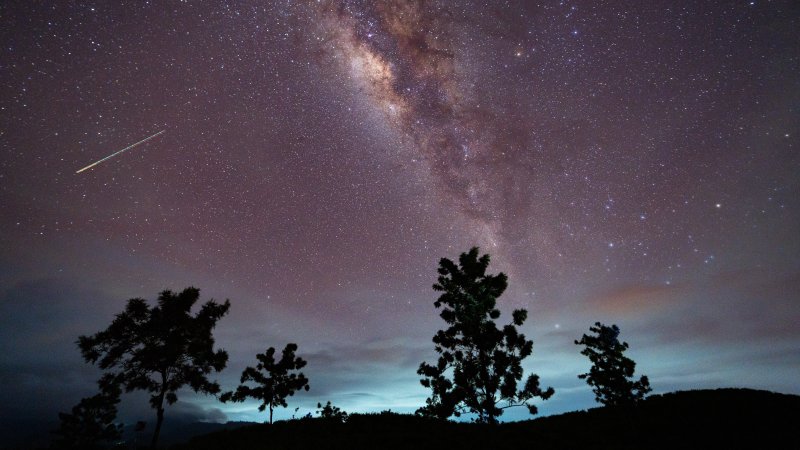
As May advances, the night sky continues to evolve this week: the bright full Moon begins to fade, and a major meteor shower reaches its peak.
After sunset, Venus becomes increasingly visible in the western sky, while spring constellations dominate overhead, News.Az reports, citing Forbes.
Here’s how to make the most of stargazing in the coming days:
Timeline
May 5–6
The Eta Aquariid meteor shower peaks overnight from May 5 to 6. Best observed before dawn, it typically produces 10–20 fast meteors per hour from mid-northern latitudes, some leaving persistent streaks across the sky. For optimal viewing, look toward the east or southeast in the hours before sunrise. Despite some moonlight, brighter meteors should still be visible.
May 9
A few nights later, the Last Quarter Moon occurs on May 9. Rising around midnight, it leaves early evening skies darker, creating better conditions for spotting faint stars and constellations.
All week
Throughout the week, Venus climbs higher and shines more brightly in the post-sunset sky. Look toward the west to spot it easily.
The Eta Aquariids are caused by debris from Halley's Comet. Each year, Earth passes through this stream of dust, and tiny particles burning up in the atmosphere create meteors. These are most visible just before dawn, when the constellation Aquarius rises. While the display is stronger in the Southern Hemisphere, observers in the north can still expect around 10–20 meteors per hour—roughly half the southern rate.
With darker skies returning, stargazers can also try a classic navigation technique: star-hopping from the Big Dipper to the red supergiant star Arcturus, and onward to the bluish Spica. Find the curved handle of the Big Dipper high in the northern sky, follow its arc to Arcturus, then continue along the same curve to locate Spica low in the south.
By Nijat Babayev


Similar news