Pakistan advances US-Iran ceasefire as Russia joins Hormuz talks


Thursday’s news across Russia focuses on intensifying diplomatic efforts to prevent a full-scale regional war in the Middle East, while economic markets react to the closure of the Strait of Hormuz.
Pakistan is significantly stepping up its diplomatic efforts to mediate a ceasefire between the United States and Iran, with Prime Minister Shehbaz Sharif embarking on a high-stakes tour of Saudi Arabia, Qatar, and Türkiye, News.Az reports, citing TASS.
This mission is bolstered by Pakistan's unique position as an even-handed mediator that maintains functional relationships with both Tehran and Washington. Experts suggest that while China remains a supportive patron of this process, it lacks the direct military or economic leverage to force the U.S. into a softer stance, particularly as a scheduled May visit by Donald Trump to China hangs in the balance.
RECOMMENDED STORIES
In the United Nations, Russia has joined China in presenting a joint draft resolution aimed at unblocking the Strait of Hormuz. The security of this vital waterway has reached a critical point, as logistical disruptions and threats have forced crews to refuse transit, driving oil prices toward $120 per barrel. Russian diplomats emphasize that any further movement on the resolution depends on the next 24 hours of talks between Tehran and Washington. Meanwhile, military analysts warn that the U.S. deployment of another aircraft carrier to the Arabian Sea suggests a potential shift toward a forced reopening of the strait.
The situation in Lebanon remains a major obstacle to regional stability, as Iran has directly linked the success of its talks with the U.S. to the cessation of Israeli military operations. Despite the start of direct negotiations between Israel and Lebanon, the IDF continues its ground offensive in the south. Analysts fear that Israel is attempting to turn southern Lebanon into "scorched earth," effectively creating a second Gaza. While a two-week ceasefire between Iran and the U.S. was initiated on April 8, Israel has so far refused to extend this truce to Lebanese territory, leading to continued rocket exchanges with Hezbollah.
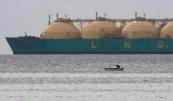
Economically, the prolonged conflict is triggering a sharp deterioration in global investor sentiment, reminiscent of the early stages of the Ukraine conflict in 2022. Fund managers are bracing for a "soft landing" scenario characterized by high energy costs and monetary tightening. Amid these disruptions, Russian coal exports saw a surprise 8% increase in March, driven largely by a spike in demand from South Korea and Türkiye. These nations are increasingly turning to coal as a substitute for gas, which has become prohibitively expensive due to the blockade of the Strait of Hormuz.
By Leyla Şirinova


Similar news