Some Russian and Armenian experts have sought to link the withdrawal of Russian border guards to Armenian–American relations and the peace process with Azerbaijan. In particular, the accelerated transfer of border control to Armenia was associated with the Memorandum signed on August 8 in Washington and the initialling of a peace treaty. Armenia’s Foreign Ministry rejected these claims, stating that the presence of Russian border guards is not addressed in the agreement with Azerbaijan and that the issue is regulated exclusively by bilateral arrangements with the Russian side. The decision that Russian border guards would cease service on the Armenian–Iranian border from January 1, 2025, was agreed in May 2024 in Moscow by Russian President Vladimir Putin and Armenian Prime Minister Nikol Pashinyan.
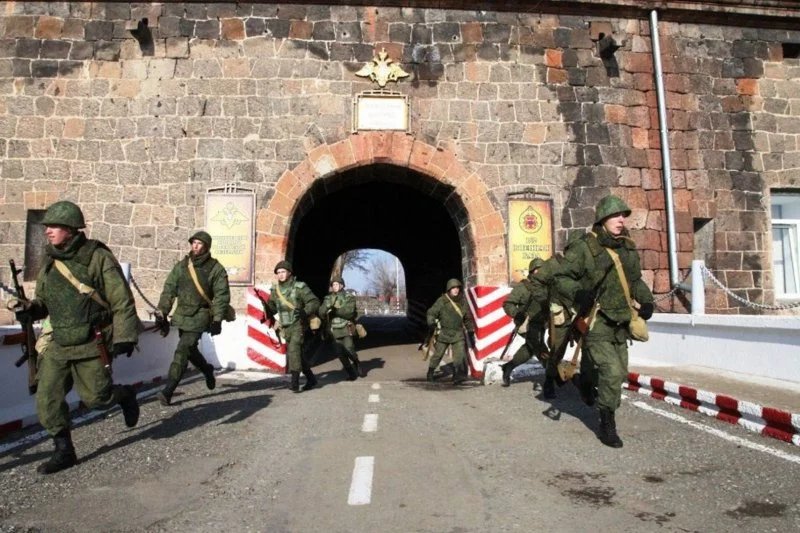
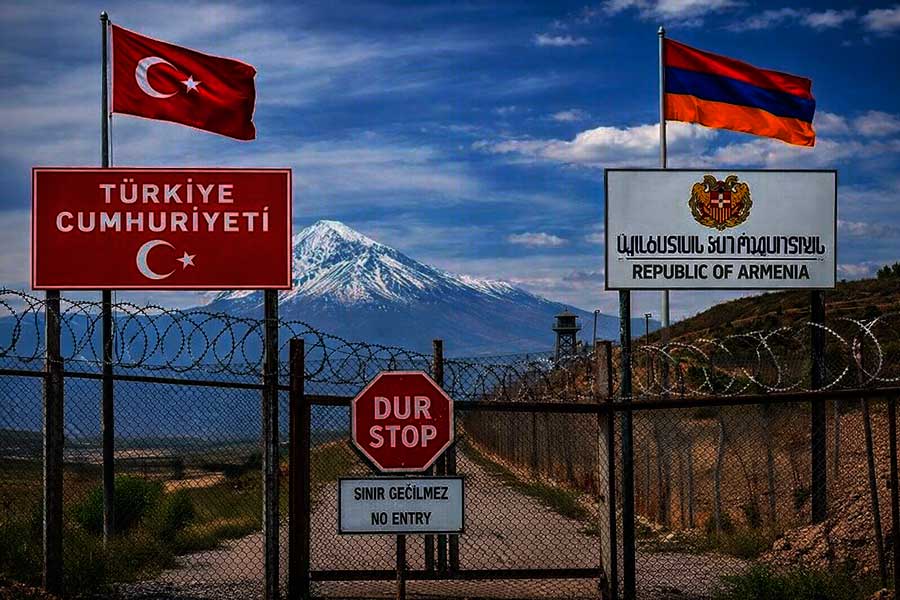
According to Russian media, FSB border guards were stationed in Armenia under the international treaty of September 30, 1992, “On the status of the Border Troops of the Russian Federation on the territory of the Republic of Armenia and the conditions of their functioning.” Under this agreement, four Russian border detachments were based in the country, subordinate to the FSB Border Directorate: in Gyumri, Armavir, Artashat, and Meghri. They guarded Armenia’s borders with Türkiye (330 km) and Iran (45 km). At the Armenian checkpoint at Yerevan’s Zvartnots International Airport, Russian border guards served jointly with their Armenian counterparts.
Armenia independently guarded its border with Georgia (220 km), its border with Azerbaijan (1,000 km), as well as three air checkpoints at Zvartnots, Erebuni, and Gyumri airports.
After changes in relations between Moscow and Yerevan, the latter began considering the withdrawal of Russian forces from its borders. With the conclusion of the Karabakh conflict and the new prospects that opened up for Armenia, the fact that another country controlled the borders of a sovereign state appeared unfavourable and something to be addressed. Armenia had the opportunity to become a truly sovereign state, and the process was expected to begin with its borders.
In this regard, 2024 became a year of change. From August 1, Armenian border guards took up duty at Zvartnots Airport. Yerevan and Moscow also agreed on the withdrawal of Russian border guards stationed in the Ararat, Vayots Dzor, Gegharkunik, Syunik, and Tavush regions – that is, along the borders with Azerbaijan. According to Russian media, Pashinyan stated that due to changed conditions there was no longer a need for Russian military personnel and border guards deployed in Armenia after the 2020 war. These issues were resolved in May 2024 during talks between Vladimir Putin and Nikol Pashinyan in Moscow.
At the time, the Kremlin press service reported that “at the request of the Armenian side, Russian border guards will remain on sections of Armenia’s border with Türkiye and Iran.” However, this later proved not entirely accurate, as by the end of the year Yerevan’s plans appeared to have shifted.
At the beginning of 2025, Russian border guards left the only checkpoint on the Armenian–Iranian border – Karchevan. They have now also departed from the Margara and Akhurik checkpoints on the Armenian–Türkiye border.
However, the withdrawal of Russian border guards does not fully resolve the issue, as the 102nd Russian military base still remains on Armenian territory. This question will be difficult for Yerevan to resolve, if not impossible. Moscow is unlikely to simply observe developments, as it did with the withdrawal of its border guards from Armenian checkpoints. Pashinyan understands this well and therefore periodically states clearly and firmly that Yerevan has no such plans.
Recently, during an official visit to Poland, the Armenian prime minister once again declared that Armenia does not plan to renounce the presence of the Russian 102nd military base on its territory. Armenia and Russia, he said, are partners with close economic and political ties. Their relations are simply undergoing a phase of transformation.
Russia maintains its military presence not only through the base in Gyumri but also through the airbase in Erebuni. For now, no changes are expected regarding these facilities. However, as Western, and primarily American, presence expands, changes may become inevitable. Much will depend on relations between Moscow and Washington and on the position of the U.S. administration. So far, there have been no public statements or signs of dissatisfaction from the current administration regarding the military presence of a third party in Armenia.
Nevertheless, it cannot be ruled out that Yerevan will seek to take advantage of the window of opportunity that has opened. Everything will depend on how current trends in Eurasian geopolitics develop. If Donald Trump indeed manages to stop the war in Ukraine, Washington may move towards rapprochement with Moscow. The United States has identified China as its main adversary, and a convergence of American and Russian interests could serve the goal of isolating Beijing. In that case, the division of spheres of influence would continue, and it remains unclear which sphere Armenia would fall into.
In any event, the military base is a trump card which, with a skilful approach by Yerevan, could at a critical moment be turned into a bargaining chip in negotiations with Moscow. Time will tell.