South Korean president holds talks with Japanese PM


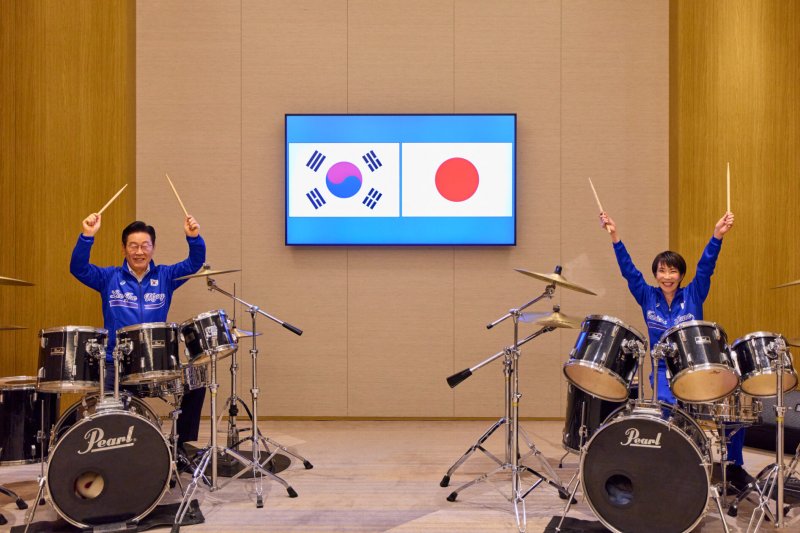
On January 13, South Korean President Lee Jae-myung held a summit with Japanese Prime Minister Takaichi Sanae in Nara Prefecture, Japan. This was their second meeting, following their first encounter on the sidelines of the APEC summit in Gyeongju, South Korea, in October 2025.
Recalling that last year marked the 60th anniversary of diplomatic normalization between South Korea and Japan, Lee expressed his hope to build fruitful relations between the two countries, News.Az reports, citing The Diplomat.
“As the global landscape grows increasingly turbulent, the South Korea-Japan relationship has become more vital than at any point in history,” Lee said in his opening remarks during the summit meeting
Recognizing the barriers and challenges the two countries mutually face, Lee emphasized the importance of “building a better future hand in hand” by nurturing strengths and minimizing friction.
“I hope that the prime minister and I can join hands, and that the peoples of both South Korea and Japan can unite their efforts, so that we may walk together toward a new future for our two nations,” Lee said.
Welcoming Lee’s visit to her hometown for the summit meeting, Takaichi also shared her intention to advance the bilateral Japan-South Korea relations while ensuring that the both countries collaborate to play a key role in regional stability.
“I hope that this year, taking the president’s visit as a momentum, we can make it a year where we elevate Japan-Korea relations to an even higher level,” Takaichi said in her opening remarks.
Historically, liberal leaders of South Korea have taken hawkish stance on Japan due to Tokyo’s revisionist attitude toward Japanese colonial rule over the Korean Peninsula between 1910 and 1945. Lee, a liberal icon of the South, was anticipated to play hardball against Tokyo once he assumed the presidency. However, he has demonstrated that he can approach diplomacy with Japan in a pragmatic manner. Lee recognizes that not only managing ties between South Korea and Japan but also strengthening the trilateral Japan-South Korea-U.S. relations are crucial to cope with the rising power of China and the growing nuclear threats of North Korea in the region. As North Korea has enhanced its bilateral relations with Russia, Lee appears to have no other options but to manage relations with Japan wisely in order to grapple with the rising trilateral coalitions between China, Russia, and North Korea.
After their closed-door discussions, Lee and Takaichi held a joint press conference to share the results of the summit meeting.
“Prime Minister Takaichi and I engaged in extensive discussions on practical measures to sustain future-oriented cooperation, building upon the foundation of shuttle diplomacy that our two nations have successfully established,” Lee said.
Lee also elaborated the results of the summit meeting by announcing new agreements for bilateral cooperation in the economic and social sectors – which can be interpreted as his clear vow to develop the bilateral relations for the national interests of South Korea.
Amid the aggravated tensions between Japan and China, Lee also said he emphasized that South Korea, China, and Japan need to communicate and cooperate in East Asia, implying that he would not be on the side of either Beijing or Tokyo. China-Japan relations are currently frozen, as China objected strenuously to comments made by Takaichi on Taiwan and responded with economic penalties. Notably, Lee’s trip to Japan took place within a week of his state visit to China, where he was warmly welcomed by Beijing.
With the latest round of shuttle diplomacy, Lee and Takaichi reaffirmed their will to enhance bilateral relations. Considering Takaichi’s hawkish stance on the historical disputes, however, it is questionable how Lee will handle the situation if Takaichi or her administration take measures that could bring anger from South Koreans. Takaichi is well-known to be a protege of late Prime Minister Abe Shinzo, whose time in office saw a post-normalization nadir in Japan-South Korea relations over historical issues.


Similar news