The task force will be led by Jorge Moreira da Silva, Executive Director of the United Nations Office for Project Services.
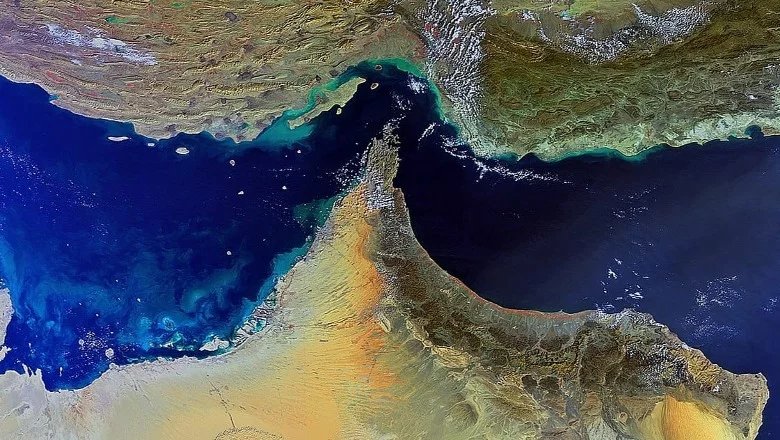
Its primary objective is to develop and propose technical mechanisms to “meet humanitarian objectives in the Strait of Hormuz”. Oil transportation will not be included in the group’s mandate.
According to Dujarric, the group will focus on creating a mechanism to facilitate the transport of fertilisers and non-oil raw materials through the strait.
Iran has responded positively to the UN’s request to expedite the passage of humanitarian goods through the Strait of Hormuz, and has said that relevant measures will be coordinated with the organisation in the near future. This was stated on social media by Iran’s permanent representative to the UN in Geneva, Ali Bahreini.
“In response to the United Nations’ request, the Islamic Republic of Iran has decided to facilitate and further expedite the safe passage of humanitarian goods through the Strait of Hormuz. The operational mechanisms will be agreed upon with the UN in due course,” he wrote, adding that Iran is “firmly committed to ensuring, maintaining, and protecting the security and stability of the strait for all non-hostile countries”.
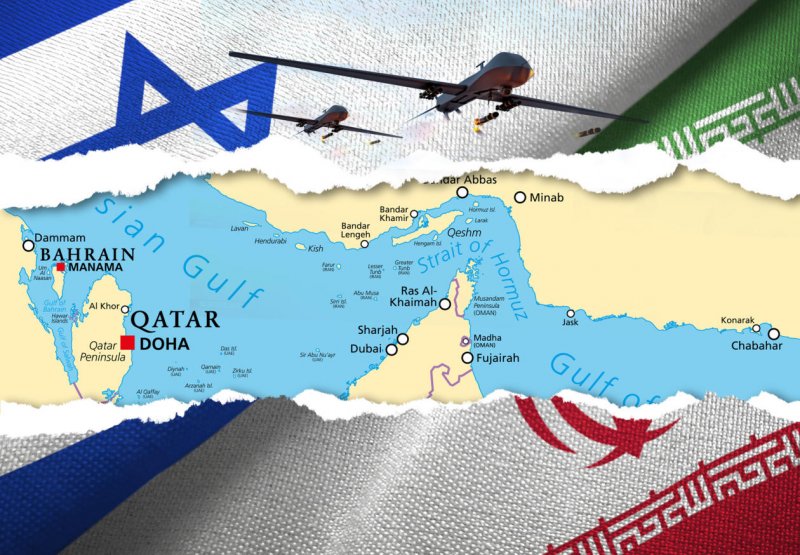
Photo: MarketWatch photo illustration/iStockphoto
Countries deemed unfriendly to Iran could face strikes if they attempt to pass through the Strait of Hormuz. The Islamic Revolutionary Guard Corps (IRGC) has warned that all ships heading to, or departing from, ports linked to what it described as the “Israeli-American alliance” and its supporters are prohibited from passing through the strait, regardless of their route.
Recently, Donald Trump said that the Strait of Hormuz was open, after which several ships from different countries attempted to transit it. These vessels were halted following warning measures by the IRGC. A day earlier, Al Jazeera reported that the strait had been completely closed.
However, it appears that the strait cannot be considered fully closed, as Iran has allowed ships from Russia, China, India, Iraq, Pakistan and Malaysia to pass through. Thailand has also reported successful negotiations with Tehran on the matter. Earlier, Iran’s Foreign Minister Abbas Araghchi clarified that permission applies only to vessels from friendly countries. “We see no reason to allow our enemies to use the strait,” Tasnim News Agency quoted him as saying. According to the minister, diplomats from many countries have been in contact with Iran’s Ministry of Foreign Affairs, but Tehran’s position remains unchanged.
On 25 March, Interfax, citing The Times of Israel, reported that Iran had opened the Strait of Hormuz to several oil tankers as part of dialogue with the United States.
Previously, Iran had not ruled out allowing commercial vessels to pass through the strait, provided there were prior agreements and transit payments. According to RBK, citing Lloyd’s List, one tanker paid $2 million for passage. However, it remains unclear how such fees are collected or whether they apply universally. It is known that vessels which reach agreements with Tehran initially pass through Iranian territorial waters, where they are identified by the IRGC and port authorities.
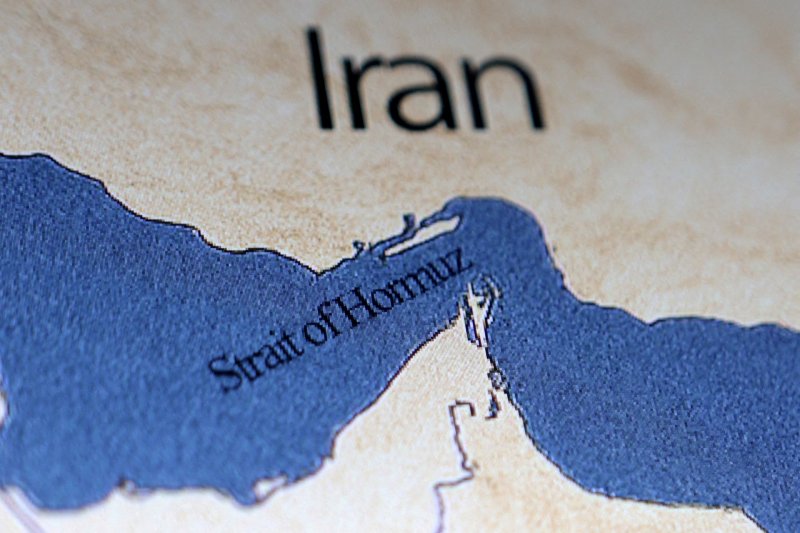
Photo credit: REUTERS/Dado Ruvic/Illustration
Iran has made clear that it considers itself the ultimate authority in the strait and will take all key decisions. Despite the provisions of international maritime law, Tehran has already implemented its own rules, which also apply to friendly countries. On Friday, Pravda.Ru reported that Iranian forces turned away two large Chinese container ships, the CSCL Indian Ocean and CSCL Arctic Ocean. The vessels had approached Larak Island, about 20 miles from the port of Bandar Abbas, before abruptly turning back.
It should be recalled that last Sunday Donald Trump gave Iran 48 hours to open the Strait of Hormuz, threatening to strike Iranian energy infrastructure if the demand was not met. As expected, the ultimatum failed, and the US president extended the deadline, postponing potential strikes until 6 April. Trump continues to claim that “negotiations are ongoing and going well”, writing this on the social media platform Truth Social. Meanwhile, Tehran has dismissed these claims. The US president has also insisted that Iran is seeking negotiations, although Tehran has rejected his proposals.
Recently, Trump said in a live broadcast on Fox News that the US had already “achieved complete victory” in its confrontation with Iran.
At the same time, Tasnim cited a senior source in Iran’s security forces as saying: “Any military operation by the enemy in the waters of the Strait of Hormuz will lead to its complete blockade indefinitely. If the US decides to launch a ground offensive against Iran, Tehran will have the full right to respond symmetrically to eliminate the threat.”
This warning came amid a report by The Wall Street Journal that the Pentagon is considering deploying around 10,000 troops to the Middle East, in addition to the 5,000 marines and several thousand paratroopers already sent to the region. Meanwhile, Bloomberg, citing its sources, reported that Washington has no such plans.
It is difficult to speak of a “complete victory” for either side at this stage. However, the American side appears to be showing signs of uncertainty. The fact that the Iranian leadership has held its ground and remains capable of resisting may have been underestimated by US analysts. Despite America’s military advantages, Iran holds a critical economic lever — the Strait of Hormuz. Through control of this waterway, Tehran exerts influence over the interests of much of the world. Many of its critics are now weighing what matters more — national prosperity or alignment with US and Israeli policy.
The new rules imposed by Iran in the Strait of Hormuz can be seen as a form of coercion. However, they remain one of the few tools available to Tehran to deter further escalation.
Tural Heybatov