The 44 days that changed Azerbaijan’s history


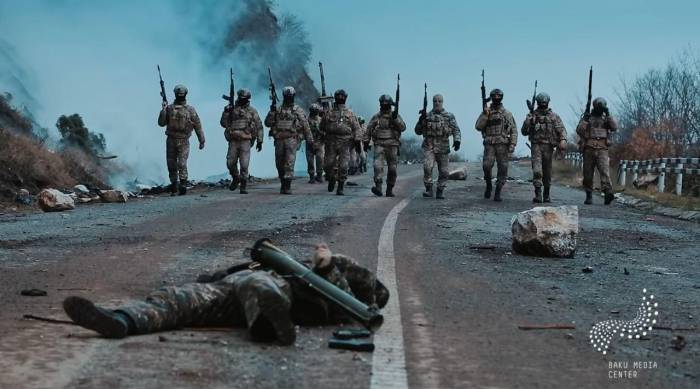
The 44-day war between Azerbaijan and Armenia, which took place from September 27 to November 10, 2020, marked a historic turning point in the region’s history. The conflict concluded with Azerbaijan’s decisive military victory and the restoration of its territorial integrity, ending decades of Armenian occupation of Azerbaijani territories. During the war, Azerbaijan successfully liberated major cities and regions that had been under occupation since the late 1980s. This significant achievement was the result of a well-coordinated military strategy, robust diplomatic efforts, and the firm leadership of President Ilham Aliyev.
The roots of the Karabakh conflict can be traced back to 1988, when Armenia initiated aggression against Azerbaijan, demanding the separation of the Karabakh region from the Azerbaijan SSR. With the collapse of the Soviet Union in 1991, the situation escalated into a full-scale war. By 1994, a ceasefire agreement was reached, but it failed to bring a resolution to the conflict.For nearly three decades, Armenian forces maintained control over more than 20% of Azerbaijani territory, including Nagorno-Karabakh and seven surrounding districts. The occupation displaced tens of thousands of Azerbaijanis, who were forced to live as refugees and internally displaced persons, often under dire conditions. This prolonged injustice fueled Azerbaijan’s determination to restore its sovereignty and ensure the return of its displaced citizens to their ancestral lands.
In the years leading up to the 2020 war, tensions remained high as Armenia frequently violated ceasefire agreements and engaged in provocative actions. These violations escalated in September 2020, prompting Azerbaijan to launch a large-scale military operation to reclaim its territories. President Ilham Aliyev declared that Azerbaijan would not tolerate the continued occupation of its lands and emphasized the nation’s commitment to defending its sovereignty and the rights of its people.
Azerbaijan’s military campaign was characterized by its strategic precision and effective use of modern technologies. The Azerbaijani Armed Forces deployed advanced drones, precision-guided missiles, and artillery systems to neutralize Armenian defenses and achieve swift victories. This technological edge, combined with meticulous planning, allowed Azerbaijan to liberate key cities and regions, including Jabrayil, Fuzuli, Zangilan, and the culturally significant city of Shusha.
The capture of Shusha was particularly symbolic and strategically important. As one of the cultural and historical centers of Azerbaijan, Shusha had been under Armenian occupation for nearly 30 years. Its liberation not only boosted national morale but also played a crucial role in shaping the outcome of the conflict. The victory in Shusha paved the way for the subsequent liberation of other occupied territories and underscored Azerbaijan’s military superiority.
On November 10, 2020, a ceasefire agreement brokered by Russia formally ended the conflict. The terms of the agreement solidified Azerbaijan’s victory, with Armenia agreeing to withdraw its forces from several critical areas. This marked the culmination of a long and arduous struggle for Azerbaijan, as it regained control over territories that had been unlawfully occupied for decades. The liberation of these lands was widely celebrated as a restoration of justice and national dignity.
Following the war, Azerbaijan embarked on an ambitious reconstruction program aimed at rebuilding the liberated territories and facilitating the return of displaced citizens. Under the leadership of President Ilham Aliyev, the government prioritized the construction of housing, infrastructure, and essential services in the war-torn regions. Efforts were also made to restore cultural and historical landmarks, ensuring that the rich heritage of these areas was preserved for future generations.
The return of displaced Azerbaijanis to their ancestral lands became a powerful symbol of justice and resilience. Many families, who had endured decades of displacement, expressed hope and joy at the prospect of rebuilding their lives in their rightful homes. The government’s commitment to supporting these families and ensuring their successful reintegration demonstrated a broader vision of national unity and progress.
Azerbaijan’s actions during and after the war received broad international support. The country’s territorial integrity is recognized by the United Nations and the vast majority of states. United Nations Security Council Resolutions 822, 853, 874, and 884, adopted in the early 1990s, had long called for the immediate withdrawal of Armenian forces from Azerbaijani territories and reaffirmed Azerbaijan’s sovereignty. Although these resolutions had been ignored for decades, they provided a clear legal framework for Azerbaijan’s military operations in 2020. The war’s outcome reaffirmed the legitimacy of Azerbaijan’s claims and underscored the importance of adhering to international law.
Despite the challenges of post-war reconstruction, Azerbaijan has also emphasized the need for peace and reconciliation. Achieving lasting peace in the region requires mutual recognition and respect between Azerbaijanis and Armenians. Azerbaijan has consistently advocated for dialogue and cooperation, even as it works to restore stability and prosperity in the liberated territories. This commitment to peace is reflected in the government’s efforts to rebuild not only physical infrastructure but also trust between communities.
The 44-day war of 2020 represents a pivotal chapter in Azerbaijan’s history. It marked the culmination of decades of struggle and resilience, as the nation reclaimed its rightful place on its territories and restored justice for its people. Under the leadership of President Ilham Aliyev, Azerbaijan has demonstrated a steadfast commitment to building a prosperous future. The victory, achieved through a combination of military precision, diplomatic efforts, and national unity, has set the stage for a new era of growth and development. As Azerbaijan continues to rebuild its liberated lands and promote regional stability, the country’s focus remains on creating a better future for all its citizens and ensuring lasting peace in a region long plagued by conflict.
The material was prepared with the financial support of the Media Development Agency of the Republic of Azerbaijan.
(If you possess specialized knowledge and wish to contribute, please reach out to us at opinions@news.az).


Similar news