To Lam in New Delhi: India and Vietnam quietly build a new Asian power axis


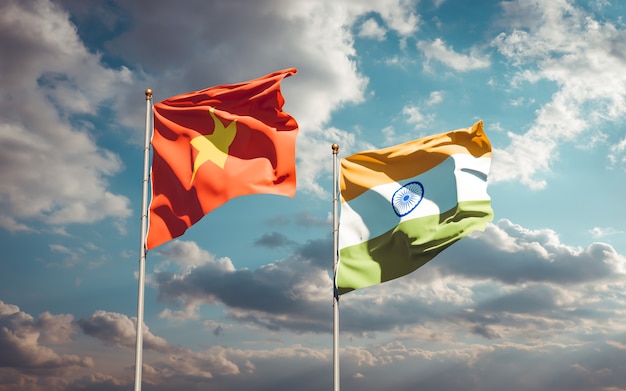
Vietnamese President To Lam’s state visit to India on 5–7 May could become one of the most notable diplomatic events of the month in Asia.
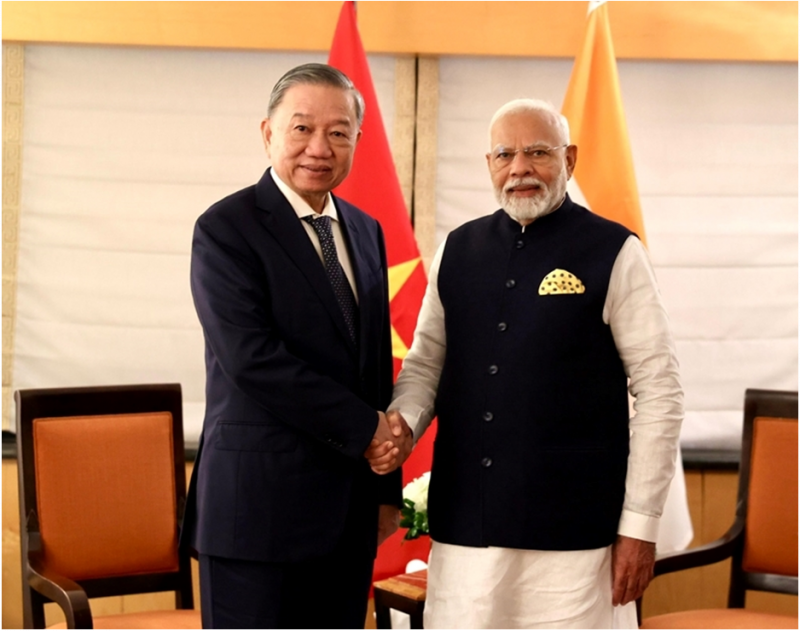
Formally, the agenda is focused on the development of bilateral relations: a ceremonial reception in New Delhi, talks with Prime Minister Narendra Modi, a meeting with Indian President Droupadi Murmu, and participation by ministers, senior officials, and a large business delegation. Yet behind the diplomatic protocol lies a broader message: India and Vietnam are seeking to elevate their Comprehensive Strategic Partnership to a new level at a time when the architecture of the Indo-Pacific is changing rapidly, resilient supply chains are becoming increasingly important, and Asian economies are playing a larger role in global trade.
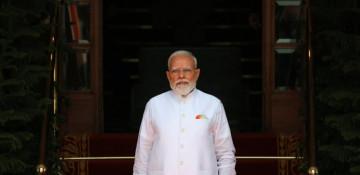
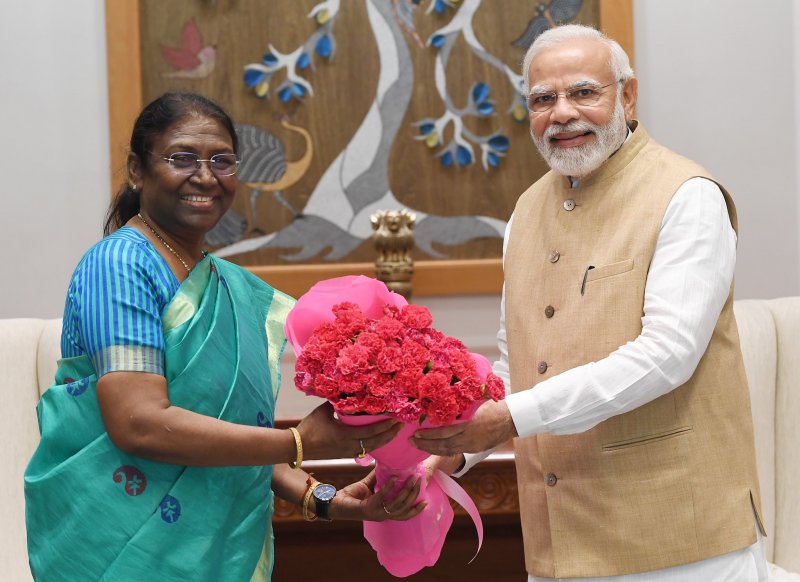
India’s Ministry of External Affairs confirmed that To Lam will visit India at the invitation of Narendra Modi and will be accompanied by ministers, senior officials, and a business delegation. On 6 May, he is expected to receive a ceremonial welcome, hold talks with Modi, and meet President Droupadi Murmu. New Delhi has emphasised that the visit will allow both sides to review progress within the framework of their Comprehensive Strategic Partnership and identify new areas of cooperation.
RECOMMENDED STORIES
The central meaning of this visit is not confrontation with any third country, but the strengthening of independent Asian diplomacy. Vietnam has traditionally pursued a flexible and multi-vector foreign policy, developing relations with different centres of power — from India and Japan to the United States, China, Russia, and ASEAN countries. India, for its part, is seeking to strengthen its own role as one of the leading powers in the Indo-Pacific. Against this backdrop, the growing convergence between New Delhi and Hanoi appears natural: both countries are interested in trade, technology, investment, energy, maritime cooperation, and sustainable development.
For Vietnam, India is an important partner beyond the traditional East Asian framework. It is a major economy, a growing market, a technological hub, and a country with ambitions to become one of the key industrial players of the 21st century. For India, Vietnam is one of its most dynamic partners in Southeast Asia — a country with a fast-growing economy, a strategic location, a developed manufacturing base, and an active foreign policy.
The economic foundation of this relationship is becoming increasingly solid. Bilateral trade between India and Vietnam exceeded $16 billion in the 2025–2026 financial year, growing by more than 10% year-on-year. Indian exports to Vietnam amounted to around $6.11 billion, while Vietnamese exports to India reached approximately $10.35 billion. This means Vietnam continues to maintain a trade surplus with India, while the structure of bilateral trade is becoming increasingly diversified.
The trend over recent years also points to steady growth. In 2016, trade between the two countries stood at around $5.4 billion; by 2025, it had risen to $16.46 billion. In the first quarter of 2026 alone, bilateral trade reached $4.8 billion, up 28% year-on-year. These figures show that the India–Vietnam partnership has long moved beyond diplomatic declarations and is turning into a practical economic mechanism.
The growth in trade is also significant because it reflects deeper changes across Asia. India and Vietnam are gradually becoming not just political partners, but complementary economies. India can offer pharmaceuticals, IT services, agricultural products, raw materials, industrial goods, and a large domestic market. Vietnam, in turn, is strengthening its position as a manufacturing and export hub, particularly in electronics, textiles, equipment, components, and consumer goods.
That is why the business delegation accompanying To Lam is especially important. It shows that Hanoi sees New Delhi not only as a political partner but also as a promising market for investment, trade, and industrial cooperation. For India, this is also an opportunity to expand its economic presence in Southeast Asia, where Vietnam is becoming one of the most attractive partners.
The issue of supply chains is particularly important. After the pandemic, trade disruptions, and rising geopolitical risks, many countries and companies began looking for more resilient and diversified production routes. India offers scale, a large domestic market, a strong labour force, and ambitious industrial programmes. Vietnam has already proven that it can serve as one of Asia’s major manufacturing platforms, attracting producers of electronics, textiles, components, and consumer goods. Together, the two countries could become important nodes in a new Asian economic model, where production is distributed among several reliable centres.
In this context, To Lam’s visit could give new momentum to cooperation in industry, the digital economy, pharmaceuticals, agriculture, energy, and transport. New Delhi is interested in expanding its economic presence in Southeast Asia, while Hanoi wants to attract investment, technology, and new markets. If the two sides can combine India’s scale with Vietnam’s manufacturing flexibility, their partnership could gain new economic depth.
The technology agenda may also become one of the central themes. India is actively developing digital infrastructure, fintech, the space industry, pharmaceuticals, and semiconductor projects. Vietnam, for its part, is strengthening its position in electronics, digital manufacturing, industrial assembly, and high-tech sectors. Joint initiatives in these areas could give both countries greater opportunities to enter global markets.
Another important area is energy and sustainable development. Vietnam needs stable energy sources for its growing industry, while India is interested in expanding energy and technological cooperation with Southeast Asian countries. This creates room for projects in renewable energy, grid infrastructure, energy efficiency, and green technologies.
Maritime cooperation remains another important direction. India and Vietnam are both maritime nations for which the security of trade routes, port infrastructure, shipping, and logistics resilience are of strategic importance. Therefore, dialogue on maritime security should not necessarily be viewed through the lens of confrontation. For both countries, it is primarily about protecting trade, energy flows, and the stability of regional communications.
Defence cooperation is also part of the India–Vietnam partnership. But it should be understood not as preparation for confrontation, but as a normal element of relations between two countries with a long history of cooperation and shared security interests. In recent years, the two sides have developed contacts in training, military exchanges, defence industry cooperation, and naval interaction. For India, this is part of its “Act East” policy; for Vietnam, it is an opportunity to expand international cooperation and strengthen its own capabilities.
Politically, To Lam’s visit is also important because it comes at a time when Vietnam’s role in regional diplomacy is growing. Hanoi is trying to maintain balance between major powers while strengthening its own agency. Vietnam does not want to be merely an object of other countries’ strategies — it wants to be an independent participant in shaping Asia’s agenda. That is precisely why its relations with India are becoming increasingly significant.
For India, the visit also carries symbolic weight. New Delhi is demonstrating that its interest in Southeast Asia is not limited to general statements. Vietnam is one of India’s key partners in ASEAN, and developing ties with Hanoi helps India strengthen its presence in a region where trade, technological, energy, and transport interests intersect.
In practical terms, the visit may lead to several outcomes. First, the two sides may expand their trade and investment agenda, including pharmaceuticals, agriculture, electronics, digital technologies, logistics, and infrastructure. Second, cooperation in training, education, science, and innovation may be strengthened. Third, the business delegation could pave the way for new investment agreements. Fourth, the visit may reinforce political coordination between India and Vietnam in regional and international platforms.
It is important to emphasise that this visit should not be reduced to a logic of being “against” anyone. Its meaning is broader. India and Vietnam are developing relations not because they seek confrontation, but because both countries are interested in growth, stability, technological development, and a more resilient regional architecture. This is a positive agenda based on mutual benefit.
That is why To Lam’s trip to New Delhi matters not only for bilateral relations. It also shows how Asia is changing. More and more countries in the region are seeking not merely to react to the actions of major powers, but to shape their own economic and diplomatic trajectories. India and Vietnam occupy a special place in this process: the former aspires to be a global power, while the latter is becoming one of the most dynamic centres of Southeast Asia.
On the surface, this is a state visit, negotiations, statements, and business forums. At a deeper level, it reflects the formation of a new model of Asian partnership, where economic pragmatism, technological cooperation, and regional stability matter more than ideological blocs and confrontational frameworks.


Similar news