Trump turns the page on decarbonization


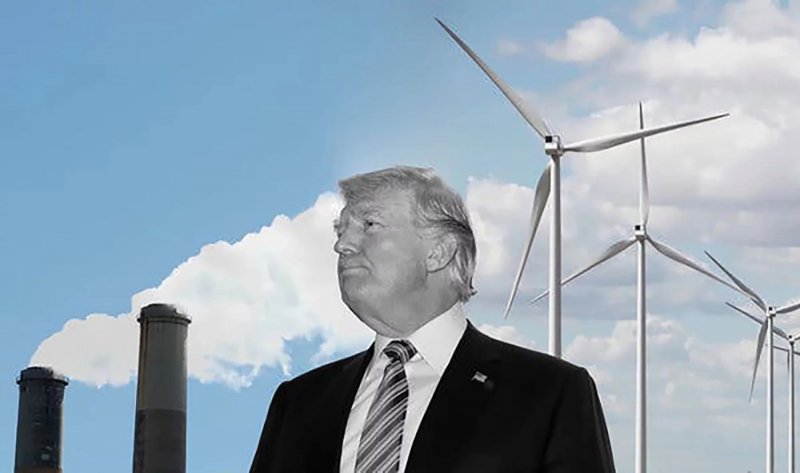
Donald Trump has done more than simply revoke a regulatory document. By invalidating the 2009 “endangerment finding,” which classified greenhouse gases as harmful to public health, he has directly challenged the ideological foundation of the West’s decarbonization drive.
The Obama-era decision imposed strict environmental standards on coal- and gas-fired power plants and tightened emissions limits for the automotive industry. Trump called the measure catastrophic and harmful to American industry. Many observers now see his move as the formal end of a political era in which decarbonization was not just policy but dogma.
RECOMMENDED STORIES
- Shooting near White House: Secret Service neutralizes armed man, Trump unharmed - PTOHOS- VIDEO
- Jakub Korejba: The United States and China are moving from conflict to dividing spheres of influence - INTERVIEW
- After Trump and Putin, Sharif heads to Beijing: Why world leaders are turning to Xi
- Robert De Niro torches Trump with Epstein jab on Colbert
For years, fossil fuels were not merely regulated; they were stigmatized. The green transition was presented as an unquestionable moral imperative. Any deviation from that line was treated as backward or irresponsible. Yet economic realities steadily eroded this narrative.
The shift in tone began almost immediately after Trump’s election. Unlike the previous administration, he openly opposed what he viewed as an ideologically driven green agenda. His stance emboldened critics not only in the United States but across Europe.
In December 2024, The Financial Times published an open letter by Lakshmi Mittal, chairman of ArcelorMittal, one of the world’s largest steel producers. Mittal described the unprecedented strain placed on Europe’s steel industry by decarbonization costs. The sector requires massive investment and depends heavily on green hydrogen technologies that remain commercially unviable. It is difficult to imagine such a public challenge to the prevailing Western climate consensus without a parallel shift in Washington.

Source: taraenergy
None of this negates the reality of climate change. Greenhouse gas emissions are real, and human activity contributes to global warming. However, the radical, categorical methods embraced by lawmakers and policymakers often looked less like environmental stewardship and more like instruments of economic restructuring and geopolitical leverage, particularly against oil- and gas-producing countries.
Former President Obama responded sharply to Trump’s decision, warning that Americans would be “less protected, less healthy, and less able to fight climate change — all so that the fossil fuel industry can make even more money.” Others, however, see a different picture. Environmental Protection Agency Administrator Lee Zeldin argued that repealing the standards could save American taxpayers $1.3 trillion, though he did not detail the calculation. What is clear is that compliance with the Obama-era regulations required costly modernization and the deployment of expensive technologies, placing a significant financial burden on industry.
It is often argued that such policies weakened American manufacturing and allowed China to surpass it. Ironically, China is now the undisputed global leader in renewable energy deployment. In 2025, four Chinese solar power plants ranked among the world’s top ten by capacity, with two occupying the top positions. Not a single American facility appeared in the rankings.
With Trump’s return to the White House, the taboo surrounding debate on decarbonization has been lifted. What had been treated as beyond discussion is now openly contested. A trend largely shaped in Europe evolved into a political instrument, often directed against hydrocarbon-producing states, including Azerbaijan.
President Ilham Aliyev addressed this issue directly at the opening of COP29 in Baku. Oil, gas, wind, sun, gold, silver, and copper are natural resources, he emphasized. Countries cannot be blamed for possessing them or for bringing them to market. Markets need them. People need them. As COP29 president, Azerbaijan supports the green transition, but realism must guide it.
Italian Prime Minister Giorgia Meloni expressed similar views during the COP29 Leaders’ Summit in November 2024. Decarbonization, she argued, must take into account the resilience of national production systems and social stability. A purely ideological approach risks undermining economic foundations. Technological neutrality, she said, is essential, because there is currently no single viable alternative to fossil fuel supply. By 2030, the global population will reach 8.5 billion. Global GDP is expected to double within the next decade. The rapid expansion of artificial intelligence will further increase energy consumption. Under such conditions, a balanced energy mix is not optional — it is unavoidable.
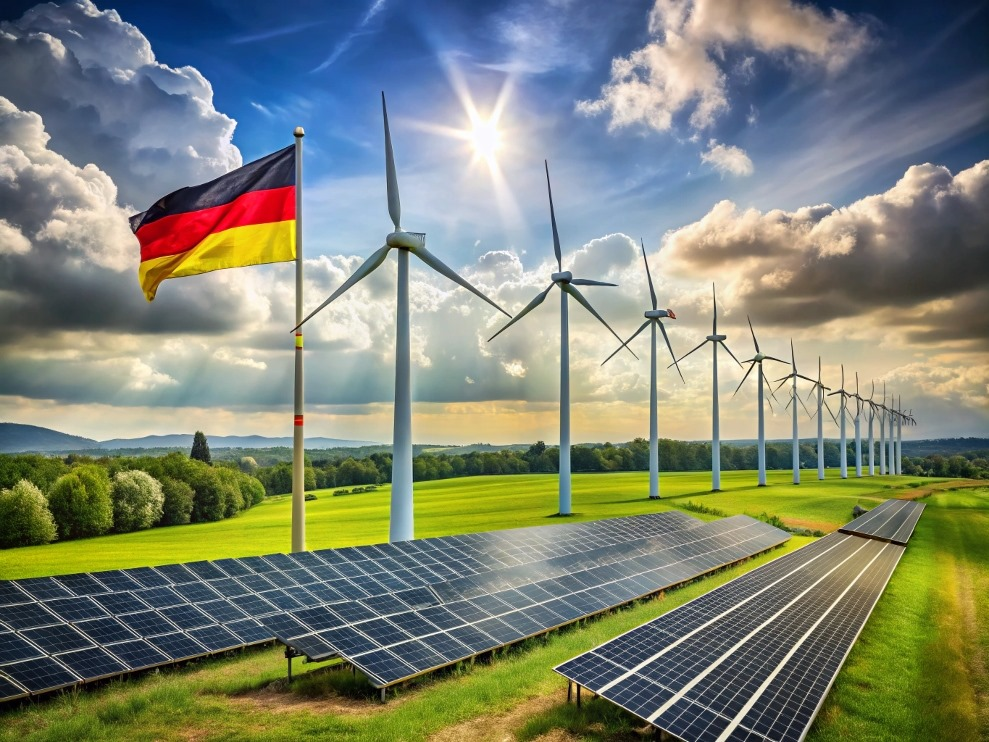
Germany offers one of the clearest examples of the gap between ambition and reality. The country announced plans to phase out both fossil fuels and nuclear power in rapid succession, replacing them with renewables. Nuclear plants were indeed shut down, but renewable capacity failed to replace their output fully or economically. As a result, Germany did not eliminate fossil fuels; it increased imports. European Union sanctions against Russia further complicated the equation, prompting Berlin to diversify energy sources. Azerbaijan emerged as one alternative. Last year, Germany increased its purchases of Azerbaijani oil, and in January Azerbaijani gas began flowing to the country.
Source: ukrfix
Other EU member states have fared no better. None has fully abandoned fossil fuels. Before Kyiv shut down the Druzhba pipeline, European countries multiplied their purchases of Russian gas, effectively channeling hundreds of billions of dollars into the Russian economy even as they condemned Moscow’s actions in Ukraine. Whenever Russia interrupted supplies for political or technical reasons, Europe faced immediate energy crises.
Radical decarbonization has proven extraordinarily complex and expensive. A complete rejection of fossil fuels in the medium term now appears unrealistic. The industrialized world remains structurally dependent on oil and gas. Relocating carbon-intensive industries to developing countries — a long-standing Western practice — does not reduce global emissions. It merely shifts them geographically while leaving the underlying climate challenge intact.
Trump has not erased the climate agenda. He has removed its aura of inevitability.
Oil and gas are once again openly discussed as strategic assets — though, in truth, they never ceased to be.
By Tural Heybatov


Similar news