Two big differences: why the BBC is allowed what Georgian TV channels are not


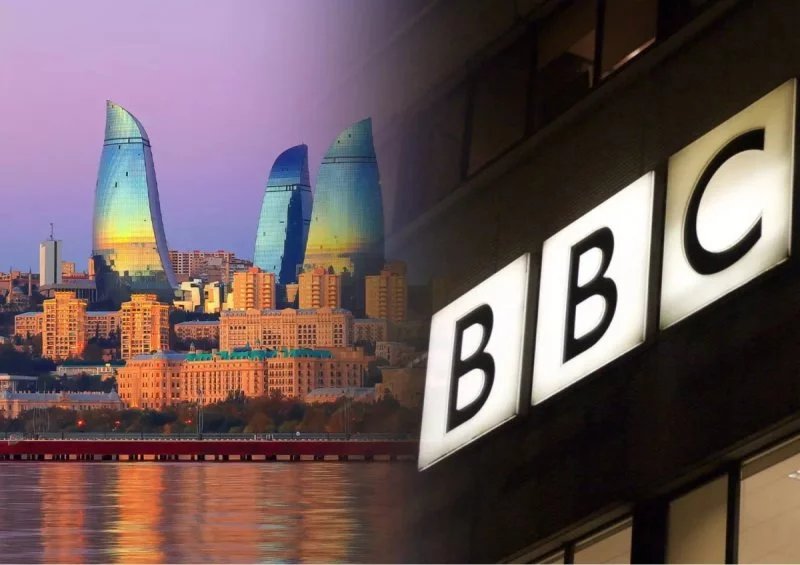
A few days ago, reports emerged of an anti-Azerbaijani gathering in London. Members of the British Parliament, including lords and baronesses, formed a group to conduct a so-called parliamentary inquiry into the alleged “destruction of Armenian heritage” in Karabakh. Representatives of these parliamentary groups met to discuss how to turn what are described as false Armenian narratives into positions of the global public and what tools could be used to exert pressure on Baku.
The gathering was viewed as a serious provocation. Although the situation did not escalate to the point of summoning the British ambassador to the Azerbaijani Foreign Ministry, an appeal from Azerbaijani NGOs was sent to the British diplomatic mission demanding an end to what they called an outrage.
Frankly, there are serious doubts that this situation will be resolved. The United Kingdom is a long-standing partner of Azerbaijan, and the two countries maintain strong ties. However, the Armenian lobby in the UK continues to exert influence, dictating to leading British media how they should cover Azerbaijan and manipulating concepts such as democracy and human rights.
The lobbying meeting in the British Parliament coincided with another notable development reported in the media.
It was announced that the United Kingdom had imposed sanctions on two Georgian television channels — Imedi and POSTV. According to the UK government, both broadcasters deliberately disseminate disinformation about Russia’s invasion of Ukraine and the actions of Western governments. The TV channels described the sanctions as unfounded and said they would not hinder operations. The broadcasters are accused of misleading audiences and promoting certain narratives, including claims that Ukraine and the West are attempting to destabilize Georgia, and of portraying Kyiv as a puppet state.
The British ambassador to Georgia has already been summoned to that country’s Foreign Ministry.
In light of the UK government’s decision regarding Georgian TV channels, a logical question arises: why are no measures taken against media outlets within the United Kingdom itself that spread false narratives about Azerbaijan, including narratives allegedly fabricated by Russian propaganda?
In Azerbaijan, attention has repeatedly been drawn to disinformation in foreign media, particularly the BBC. The broadcaster is accused of disseminating inaccurate information and manipulative content targeting Azerbaijan’s interests and distorting realities. This includes narratives linked to Russia, allegedly aimed at undermining relations between Baku and Ankara or concerning Ruben Vardanyan.
During the Azerbaijan–Georgia Media Forum in Baku, Ioane Shaishmelashvili, host of the program Eurocracy – Former Europe, stated that the BBC spreads inaccurate information about Azerbaijan. “Unfortunately, information campaigns are often presented in a distorted way, and we observe this regarding Azerbaijan, where a large amount of false information is circulated. The BBC has published materials about events related to journalists and their activities. This shows that there are many problems in social networks and media — fake information spreads instantly and reaches a wide audience,” Azerbaijani media quoted him as saying.
The BBC is one of the world’s major information organizations, with a long history and strong reputation. It does not befit such an institution to publish false claims or disseminate inaccurate information about Azerbaijan. If it does, the implication is that it is being used to advance particular political interests. When the BBC reports something, audiences tend to perceive it as credible.
Critics in Azerbaijan argue that the British broadcaster has become a participant in what they describe as destructive information campaigns against the country, publishing tendentious “investigations” concerning freedom of speech, democracy, and the rights of Armenians. This has been especially noticeable during major international events hosted by Azerbaijan. Provocations by the BBC World Service and BBC Azerbaijan during the COP29 climate conference in Baku drew widespread criticism, raising issues unrelated to the climate agenda and described as gross interference in the affairs of a sovereign state.
If the British government can impose sanctions on Georgian TV channels for disseminating Russian disinformation, Azerbaijan argues that it has every reason to take legal action against BBC Azerbaijan, which it accuses of spreading disinformation and promoting provocative narratives. Reference is made to reports from Azerbaijan’s liberated territories, where, while other foreign correspondents focused on the consequences of Armenian occupation, the BBC searched for evidence of the “destruction of Armenian heritage.”
More recently, the BBC has focused on the fate of Ruben Vardanyan and other convicted Armenian figures, drawing in part on Russian propaganda narratives. After the sentencing of a group of individuals described in Azerbaijan as war criminals, the BBC published an article portraying the separatist leaders as “prisoners,” calling the trial “politically motivated” and manipulating figures. Although the information contradicted realities on the ground, it appeared on the BBC website and was widely cited by other outlets.
PR companies promoting Vardanyan are said to have gained access to the BBC World Service and financed a campaign against Azerbaijan. Similar activity was reported during COP29, when coordinated criticism of Azerbaijan, including support for Vardanyan, took place. Particular support for the Vardanyan family allegedly came from the French PR company Havas, described as a Vardanyan-linked project led by Stéphane Fouks. Many Western media outlets, including the BBC, were reportedly drawn into what is described as a paid campaign, and materials supporting Vardanyan were well funded.
Deviation from the prevailing narrative carries consequences. This was illustrated by the BBC program Hard Talk, whose host Stephen Sackur sharply challenged Ruben Vardanyan on air in January 2023. Vardanyan reportedly expected a sympathetic interview but faced 25 minutes of tough questioning that repeatedly unsettled him.
A year later, the highly rated program Hard Talk was canceled by BBC management, prompting questions about the timing.
Media attention has also focused on alleged links between Vardanyan and the British establishment, including members of the royal family. Reports claim that through former Armenian President Armen Sarkissian, Vardanyan built relations with senior figures in British political circles. Journalistic investigations suggest signals allegedly came from various British organizations, and it has been claimed that Vardanyan’s connection with the British crown is a “documented fact,” used to promote certain narratives in the region.
Notably, an article on the BBC website discussing Vardanyan’s sentence in a questioning tone is now unavailable, having been removed for unspecified reasons. Some speculate that controversies surrounding the Russian billionaire’s financial schemes and his alleged ties to the British establishment drew too much attention for Western media to continue highlighting his case.
Nevertheless, this does not resolve the broader issue of what critics describe as double standards and selective approaches by the British government regarding freedom of speech. A clear inconsistency is alleged: when the BBC publishes material critical of Azerbaijan, it is defended as freedom of expression. When Georgian TV channels express their views on the war in Ukraine, they are sanctioned for promoting Russian narratives. These contradictions are too obvious to ignore.
By Tural Heybatov


Similar news