UK, France, Germany warn they’re ready to reinstate Iran sanctions if necessary


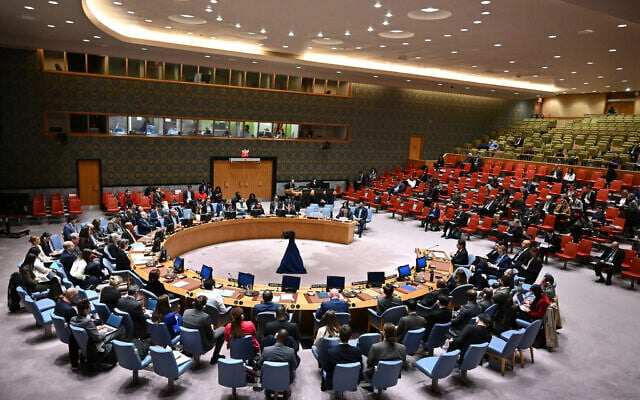
Angela Weiss/AFP
Britain, France and Germany have told the United Nations Security Council that they are ready — if necessary — to trigger a so-called snap back of all international sanctions on Iran to prevent the country from acquiring a nuclear weapon, News.az reports citing The Times of Israel.
They will lose the ability to take such action on October 18 next year when a 2015 UN resolution expires. The resolution enshrines Iran’s deal with Britain, Germany, France, the United States, Russia and China that lifted sanctions on Tehran in exchange for restrictions on its nuclear program.Iran is “dramatically” accelerating enrichment of uranium to up to 60% purity, close to the roughly 90% level that is weapons grade, the UN nuclear watchdog chief told Reuters last week.
The move comes as Iran has suffered a series of strategic setbacks, including Israel’s blows to Hamas in Gaza and Hezbollah in Lebanon — Iranian proxies — and the ouster of its ally Bashar al-Assad in Syria.
Western states say there is no need to enrich uranium to such a high level under any civilian program and that no other country has done so without producing nuclear bombs. Iran denies pursuing nuclear weapons.
“Iran must deescalate its nuclear program to create the political environment conducive to meaningful progress and a negotiated solution,” the UN ambassadors of Britain, Germany and France wrote in a December 6 letter to the UN Security Council. “We reiterate our determination to use all diplomatic tools to prevent Iran from acquiring a nuclear weapon, including using snap back if necessary.”
The communication was in response to letters earlier last week from Russia and Iran, which followed an initial note to the council by Britain, Germany and France on November 27. Russia and Iran also then followed up with further letters this week.
The tit-for-tat letters came as European and Iranian diplomats met late last month to discuss whether they can work to defuse regional tensions, including over Tehran’s nuclear program, before Donald Trump’s return to the White House. During his first term as president, Trump quit the nuclear deal in 2018.


Similar news