Why is Latvia turning to Ukraine to defend against Russian drone threats?


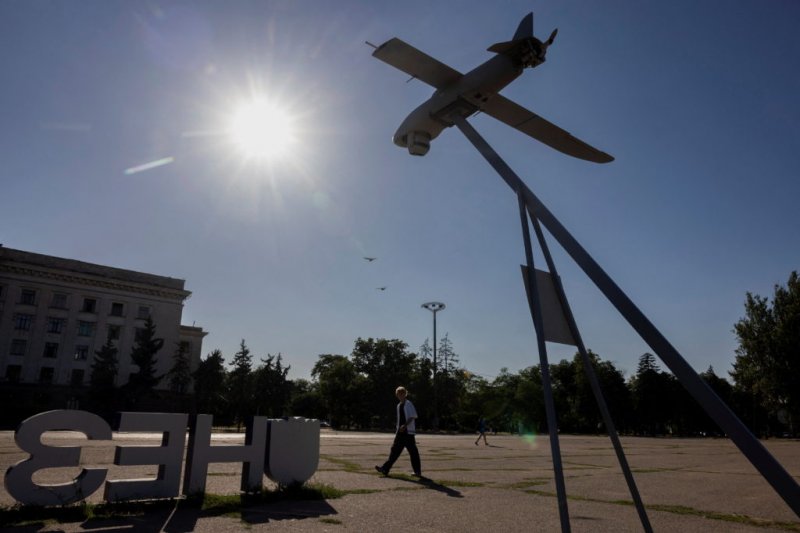
Latvia is seeking help from Ukraine's battle-tested drone warfare experts as concerns grow over the ability of traditional air defense systems to counter increasingly sophisticated drone threats.
The move highlights how Russia's war against Ukraine is reshaping security thinking across Europe and forcing NATO members to adapt to a new era of warfare, News.Az reports.
RECOMMENDED STORIES
Here is what is happening and why it matters.
Why is Latvia inviting Ukrainian drone experts?
Latvia believes Ukraine possesses the world's most advanced practical experience in drone warfare.
Since Russia's full-scale invasion in 2022, Ukraine has become a global laboratory for drone technology, electronic warfare and counter-drone systems. Ukrainian forces have spent years defending cities, military bases and critical infrastructure against thousands of drone attacks.
Latvian Prime Minister Andris Kulbergs said Ukraine's real-world combat experience makes it uniquely qualified to identify vulnerabilities in Latvia's defenses.
The Ukrainian specialists are expected to evaluate Latvia's airspace security gaps and recommend the technologies needed to protect the country from future drone incursions.
Why are drones becoming such a major security concern?
Modern drones have fundamentally changed warfare.
Unlike traditional aircraft, drones are relatively cheap, difficult to detect and capable of flying at low altitudes. They can be used for surveillance, intelligence gathering, electronic warfare and direct attacks on military or civilian targets.
Even small drones can cause significant disruption by targeting energy facilities, transportation networks and military installations.
The growing availability of drone technology means countries can no longer rely solely on conventional air defense systems that were designed primarily to counter fighter jets, helicopters or missiles.
As a result, governments across Europe are rushing to develop specialized anti-drone capabilities.
Why are traditional NATO defense systems struggling?
According to Latvian officials, many existing air defense systems were built for a different era.
Conventional systems are designed to track and intercept large aircraft or high-speed missiles. Drones, however, often have a much smaller radar signature and can fly slowly or at very low altitudes, making detection more difficult.
Using expensive missile systems to destroy relatively cheap drones also creates economic challenges. In many cases, a drone worth a few thousand dollars can force defenders to use interceptor missiles costing hundreds of thousands or even millions of dollars.
This imbalance has become one of the defining challenges of modern warfare.
The experience of the war in Ukraine has demonstrated that countries need layered defense systems combining radar, electronic warfare, jamming technologies and specialized anti-drone weapons.
What agreement did Latvia and Ukraine sign?
The two countries formalized their cooperation during the Nordic-Baltic Eight (NB8) Summit in Tallinn.
Under the agreement, Latvia and Ukraine will cooperate on drone technologies, air defense solutions and counter-drone systems. The partnership is expected to involve technical assessments, equipment procurement and knowledge sharing between military specialists.
Latvian officials hope that Ukrainian-developed anti-drone systems could be deployed in the country before the end of the year.
The agreement reflects a broader trend of European countries increasingly turning to Ukraine for expertise on modern warfare.
What recent incidents raised alarm in Latvia?
A series of security incidents has heightened concerns about the country's air defense capabilities.
According to Latvian officials, drone attacks on oil facilities in May triggered a political crisis that eventually led to the resignation of Defence Minister Andris Sprūds.
The situation escalated further when French NATO fighter jets reportedly shot down a drone over Latvian territory for the first time.
These incidents exposed weaknesses in existing security arrangements and intensified pressure on the government to strengthen national defenses.
The events also highlighted the growing challenge posed by drones operating near NATO territory.
Why is Ukraine considered a global leader in drone warfare?
Few countries have accumulated as much practical experience as Ukraine.
Since the beginning of the war, both Ukrainian and Russian forces have relied heavily on drones for reconnaissance, artillery targeting and strike missions. Ukraine has also pioneered the use of long-range drones capable of reaching strategic targets deep behind enemy lines.
At the same time, Ukrainian forces have developed sophisticated methods for detecting, tracking and neutralizing enemy drones.
The conflict has accelerated innovation at an unprecedented pace, allowing Ukraine to gain expertise that many NATO members are now eager to study and adopt.
For European governments, Ukrainian battlefield experience offers lessons that military exercises alone cannot provide.
Why is Latvia also concerned about economic security?
Latvian leaders argue that national security is not solely about military defense.
Prime Minister Kulbergs has stressed that economic resilience is an essential component of security, particularly for countries located near Russia and Belarus.
Regional instability, geopolitical tensions and security concerns have affected investment, trade and economic growth in parts of the Baltic region.
Latvia is therefore seeking additional financial support from the European Union to strengthen both its economy and its defense capabilities.
Officials believe that a stronger economy will provide the resources necessary to sustain long-term security investments.
What is the concern about Russia's "shadow fleet"?
Latvia has also raised concerns about Russia's so-called shadow fleet.
The term refers to a network of aging oil tankers that Russia is believed to use to transport crude oil while bypassing Western sanctions.
Baltic countries worry that these vessels pose both environmental and security risks. Many of the ships are older and operate under opaque ownership structures, increasing the likelihood of accidents or oil spills.
Latvian officials describe the fleet as a potential environmental disaster waiting to happen and have called for stricter European measures against the vessels.
The issue has become increasingly important as Western governments seek to tighten sanctions enforcement.
What is happening with the Rail Baltica project?
The Latvian government is also facing financial pressure from the delayed Rail Baltica project.
Rail Baltica is one of Europe's largest infrastructure initiatives and aims to connect the Baltic states with the wider European rail network.
However, rising costs have created a funding gap estimated at €3.7 billion.
Prime Minister Kulbergs has suggested scaling back parts of the project to make it financially sustainable. He has urged Latvia, Lithuania and Estonia to cooperate on a revised plan rather than pursuing competing national priorities.
His comment that "we can't afford a Bentley, we need to scale back to an Opel" reflects concerns that the original project has become too expensive under current economic conditions.
What does this mean for European security?
Latvia's decision to seek Ukrainian assistance illustrates how warfare is changing across Europe.
The growing drone threat is forcing NATO members to rethink traditional defense strategies and invest in new technologies. It also demonstrates how Ukraine's battlefield experience is increasingly influencing military planning far beyond the front lines.
As drone technology continues to evolve, many European countries may follow Latvia's example and turn to Ukraine for expertise on defending against one of the fastest-growing threats in modern warfare.
The development underscores a broader reality: future security challenges are likely to depend as much on technological adaptation and innovation as on conventional military strength.
By Faig Mahmudov


Similar news