Uzbekistan and the Taliban strengthen ties with a $2.5 billion deal


By Samir Muradov
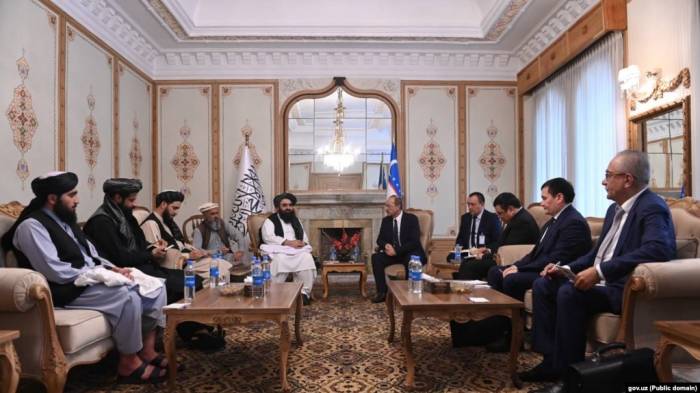
The recent visit of Uzbekistan's Prime Minister Abdulla Aripov to Kabul marked the signing of agreements worth $2.5 billion , a significant step in deepening economic relations between the two neighboring countries. This visit, the first at such a high level in three years, reflects both countries' willingness to strengthen bilateral relations despite the challenging international environment and Afghanistan's ongoing isolation.The Taliban, facing numerous economic challenges since coming to power in August 2021, is compelled to seek new avenues for economic recovery. Afghanistan has lost access to a significant portion of international aid, exacerbating financial difficulties and leading to a sharp 27% decline in GDP over the past three years. In this challenging situation, Aripov's visit and the signing of 35 Memoranda of Understanding (MoUs) signal Uzbekistan's readiness to support Afghanistan's efforts to stabilize its economy.
These agreements cover key sectors such as agriculture, energy, infrastructure, and manufacturing. A particular focus is on investments: of the $2.5 billion, $1.4 billion is earmarked for investments, while $1.1 billion is allocated for trade deals. These investments are expected to help Afghanistan revive economic activity and strengthen trade ties with neighboring countries.
Furthermore, the signing of these agreements underscores Uzbekistan's strategic interest in Afghanistan. With a shared border of 144 kilometers , the two countries aim to develop close economic cooperation that will contribute to both their domestic development and regional stability.
Uzbekistan's role as a regional leader in Central Asia is becoming increasingly prominent amid the ongoing crisis in Afghanistan. President Shavkat Mirziyoyev has repeatedly emphasized the importance of regional cooperation and the need for dialogue with the Taliban, despite their complex relations with the international community. His calls for engagement with the Afghan government are based on the belief that sustainable peace and economic development in the region are impossible without Afghanistan's active participation.
A critical element of this strategy is Uzbekistan's involvement in various infrastructure projects aimed at improving connectivity and trade with Afghanistan. One such project is the reconstruction of the 75-kilometer cross-border railway line, which connects the two countries and opens up new opportunities for expanding trade routes in the region. Further plans to extend this line to Pakistan will create a transit corridor linking Central and South Asia, potentially boosting trade volumes and strengthening economic ties between the countries.
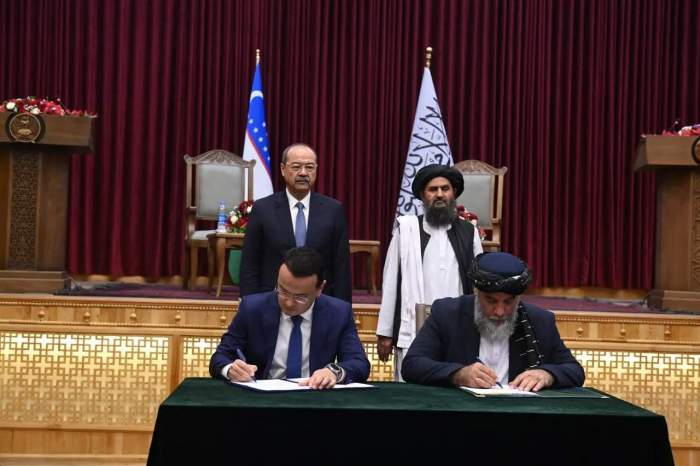
The deepening economic cooperation between Afghanistan and Uzbekistan has significant implications not only for both countries but for the entire region. The growth of trade and the implementation of joint projects could improve Afghanistan's economic situation, which in turn would reduce risks associated with instability in the country.
Recognizing Afghanistan's importance for regional security, Uzbekistan seeks to play an active role in supporting the country's economic integration and stabilization. Mirziyoyev has repeatedly appealed to the international community to engage in dialogue with the Taliban, stressing that isolating Afghanistan could only worsen its problems. In his speech at the UN Special Programme for the Economies of Central Asia (SPECA) in late 2023, he noted, "We cannot afford to leave this country alone with its problems. A positive outcome cannot be achieved without involving the current government in international dialogue."
Despite the progress in economic cooperation, the Taliban's domestic policies continue to be a major obstacle in Afghanistan's relations with the international community. Restrictions on women's rights and the ban on education for girls beyond the sixth grade have drawn sharp criticism from international human rights organizations and governments. These policies negatively impact the country's economy, reducing productivity and limiting growth opportunities.
Nevertheless, the Taliban dismisses these criticisms, claiming that their policies reflect Afghanistan's traditional cultural and religious norms. This stance complicates efforts to gain international recognition and limits access to foreign aid. As a result, Afghanistan remains largely dependent on regional allies like Uzbekistan, which continues to maintain bilateral relations amid broader international isolation.
The signing of trade and investment agreements between Afghanistan and Uzbekistan is a significant step towards strengthening economic ties and integrating Afghanistan into regional frameworks. However, despite these successes, the country continues to face serious challenges related to domestic policies and international isolation. In the absence of official recognition, the Taliban government is compelled to seek support from its regional partners, such as Uzbekistan, which in turn sees this cooperation as an opportunity to strengthen its influence in Central Asia and support regional stability.


Similar news