Viral livestream shows BYD battery hitting 76°C during ultra-fast charge


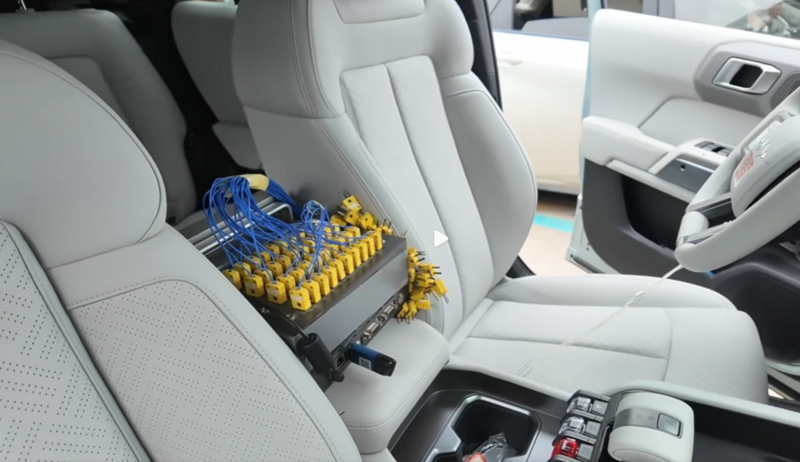
A livestreamed test of BYD Company’s new megawatt flash-charging system has sparked widespread debate in China after battery surface temperatures reportedly exceeded 76°C during an ultra-fast charging demonstration.
The independent test, conducted by automotive blogger “Caishendao,” measured a BYD vehicle charging from 8% to 97% state of charge using multiple external sensors attached to the battery pack. According to the published data, temperatures recorded at different points on the battery surface peaked at around 76.4°C, while onboard diagnostic readings showed slightly lower internal values, News.Az reports, citing CNC.
The experiment has triggered discussion across Chinese social media platforms over whether such high temperatures could affect long-term battery durability or safety, particularly under repeated ultra-fast charging cycles.
RECOMMENDED STORIES
BYD has not publicly responded with any changes to its charging specifications following the online debate. The company has been actively promoting its megawatt charging technology as part of its broader next-generation electric vehicle strategy.
The discussion also referenced China’s evolving battery safety standards, including proposed guidelines that suggest lower temperature thresholds for lithium iron phosphate battery operation, though these rules are not yet mandatory.
Industry observers note that ultra-fast charging inevitably increases thermal stress, but emphasize that modern battery systems rely heavily on liquid cooling and thermal management systems to prevent dangerous overheating during operation.
The controversy comes as BYD Company continues to scale up its global electric vehicle dominance. The company remains the world’s largest EV manufacturer by sales volume, delivering more than 314,000 vehicles globally in April 2026 alone.
As competition intensifies in the global EV market, particularly around charging speed and efficiency, the incident highlights growing scrutiny of how next-generation battery technologies balance performance with long-term safety and reliability.
By Aysel Mammadzada


Similar news