Should you buy an EV? The pros and cons of electric cars


Electric vehicles (EVs) are currently driving a massive transformation in global transportation, yet they are far from a modern invention. The earliest electric motors date back to the late 1820s, and by 1894, heavy electric cars like the "Electrobat" were successfully operating as taxis in major American cities. However, the 1908 debut of the cheaper, faster Ford Model T—paired with the discovery of cheap Texas crude oil—effectively crushed the early EV market. It took the environmental movements of the 1960s, the oil crises of the 1970s, and NASA’s deployment of electric Lunar Roving Vehicles on the Moon to reignite mainstream interest.
Today, the automotive market is flooded with diverse options, ranging from fully electric Battery EVs (BEVs) and Plug-in Hybrids (PHEVs) to traditional Hybrids (HEVs) and Hydrogen Fuel Cell vehicles (FCEVs). While brands like Tesla and BYD have exploded in global popularity, a fierce debate remains over whether switching to an EV is truly the right move for every driver, News.Az reports, citing Britannica.
Supporters point to significant environmental and economic advantages. While manufacturing a large lithium-ion battery does carry an initial environmental cost, cradle-to-grave lifecycle studies prove that EVs have a much lower climate impact overall than gas cars, which continuously burn fossil fuels.
RECOMMENDED STORIES
Furthermore, EVs are significantly cheaper to operate and maintain. Because they lack internal combustion engines, drivers completely bypass standard oil changes, transmission fluid flushes, and spark plug replacements. Regenerative braking systems—which capture kinetic energy to recharge the battery during deceleration—also dramatically reduce wear and tear on brake pads. On average, EV drivers save between $428 and $899 per year on fuel and maintenance costs alone. Additionally, the direct-drive power distribution eliminates traditional transmissions, providing smooth handling, instant torque, and a uniquely quiet driving experience.
Conversely, critics argue that the green narrative surrounding EVs is flawed. The extraction of lithium and cobalt for batteries is a highly resource-intensive process notoriously linked to localized water contamination, ground destabilization, and severe biodiversity loss. Furthermore, if an EV is charged in a region that relies primarily on coal-fired power plants, it continues to run indirectly on fossil fuels. Safety concerns also persist, as damaged lithium-ion batteries can trigger intense fires that emit toxic gases like hydrogen fluoride and are notoriously difficult for emergency crews to extinguish.
Financial and structural barriers also prevent widespread adoption. In the United States, upfront costs remain heavily prohibitive; the cheapest gas cars start around $17,000, while the cheapest entry-level EVs hover near $29,000. Compounding this issue, federal tax credits were repealed on September 30, 2025, and a majority of U.S. states now levy hefty annual registration surcharges on EVs to make up for lost gas-tax revenue.
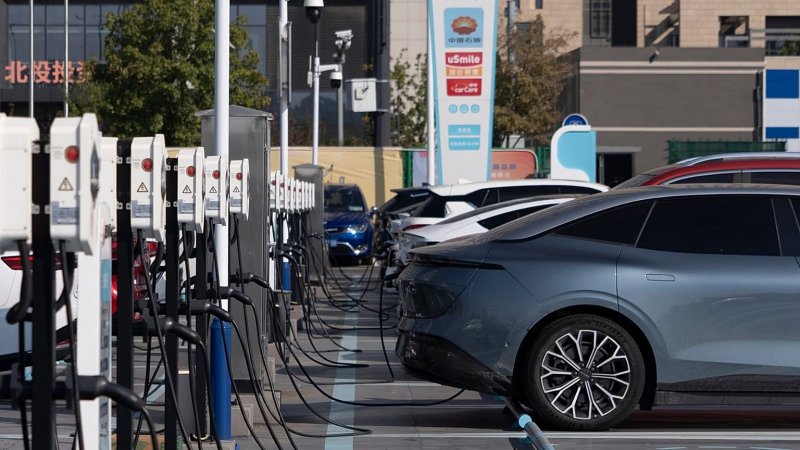
Finally, "range anxiety" continues to plague consumers. There are currently only 22 public charging stations per 1,000 road miles compared to 104 gas pumps, and these chargers remain heavily clustered in dense urban areas. Compounded by data from Consumer Reports showing that fully electric cars experience 42% more mechanical and software issues than traditional gas vehicles, many drivers remain hesitant to make the switch.
By Aysel Mammadzada


Similar news