Warning as massive asteroid set to pass closer than the Moon - VIDEO


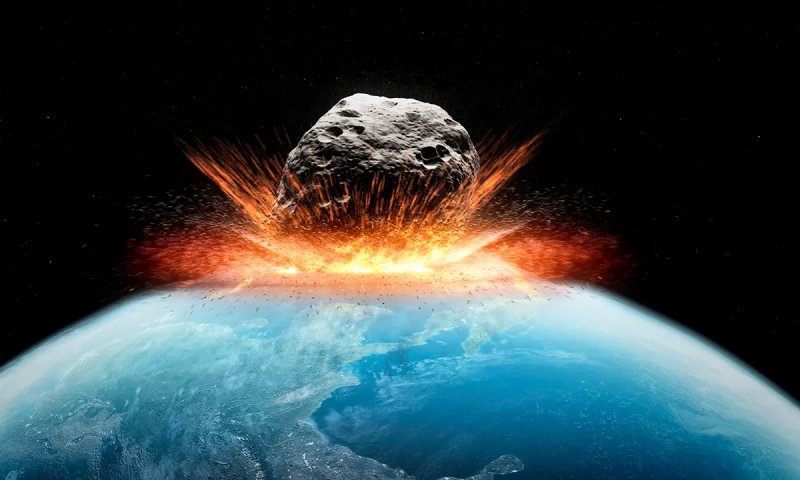
A newly discovered asteroid roughly the size of a basketball court is expected to make a very close pass by Earth on May 18, travelling even closer to the planet than the Moon’s orbit.
The asteroid, named 2026 JH2, was first detected on May 10 by the Mt. Lemmon Survey in Arizona, one of the major observatories tracking objects near Earth. Scientists estimate the space rock measures between 16 and 35 metres wide, making it comparable in size to the meteor that exploded over Chelyabinsk, Russia, in 2013, News.Az reports, citing Sky at Night Magazine.
According to astronomers, the asteroid will make its closest approach to Earth at 21:23 UTC on May 18, passing at a distance of around 90,000 kilometres. For comparison, the Moon orbits Earth at an average distance of about 385,000 kilometres, meaning the asteroid will travel at less than a quarter of that distance.
RECOMMENDED STORIES
Despite the unusually close flyby, scientists say there is no danger of impact. Experts explain that modern asteroid-tracking technology allows researchers to calculate the paths of near-Earth objects with high precision.
NASA also notes that even if an asteroid of this size entered Earth’s atmosphere, much of it would likely burn up before reaching the surface, significantly reducing potential damage.
Astronomers classify 2026 JH2 as a Near Earth Asteroid, meaning it passes relatively close to the planet during its orbit around the Sun. Because smaller asteroids are difficult to detect in deep space, many are only discovered shortly before close approaches.
The asteroid is currently visible in the southern sky after sunset near the constellations Ursa Major and Leo. While it cannot be seen with the naked eye, scientists say it should become visible through small amateur telescopes as it approaches Earth.
Astronomy enthusiasts without telescopes will also be able to follow the event online through a live broadcast organised by the Virtual Telescope Project, which plans to capture the asteroid during its close flyby.
By Leyla Şirinova


Similar news