What did North Korea and China agree to expand cooperation on?


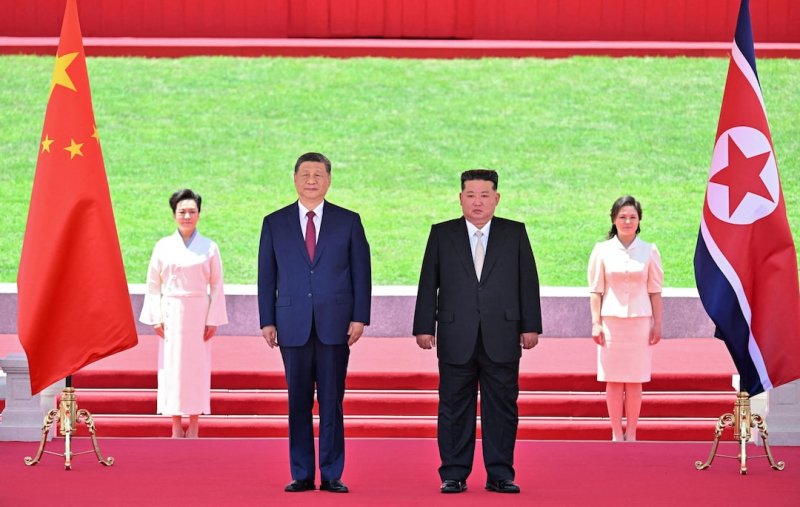
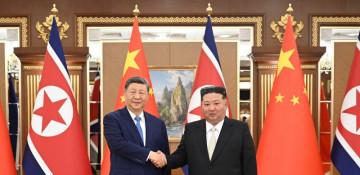
Chinese President Xi Jinping and North Korean leader Kim Jong Un met in Pyongyang in June 2026 for a summit that marked Xi's first visit to North Korea in seven years.
The meeting attracted significant international attention because it highlighted a renewed commitment by Beijing and Pyongyang to deepen their strategic partnership amid growing geopolitical tensions in East Asia, News.az reports.
RECOMMENDED STORIES
The two leaders agreed to expand cooperation across a wide range of sectors, including trade, agriculture, construction, science and technology, healthcare, transportation, tourism, diplomacy, and security coordination. They also reaffirmed their commitment to protecting each other's sovereignty and development interests.
This FAQ explainer examines what was agreed, why it matters, and what it could mean for the future of the region.
What happened during the summit?
Xi Jinping arrived in Pyongyang for a state visit that included formal talks with Kim Jong Un, ceremonial events, and discussions on bilateral relations. The visit coincided with the anniversary of the friendship treaty between China and North Korea, providing an opportunity for both countries to highlight the historical foundations of their relationship.
During the summit, both leaders pledged to deepen strategic communication, increase practical cooperation, and strengthen ties across multiple sectors. The visit underscored the importance both governments place on maintaining close relations in a rapidly changing international environment.
What specific areas of cooperation did China and North Korea agree to expand?
The leaders identified several key areas where cooperation will be strengthened.
Trade and economic cooperation
Economic cooperation was one of the central themes of the summit.
China remains North Korea's most important trading partner and economic partner. Both countries agreed to expand trade, improve cross border commerce, strengthen supply chains, and encourage greater economic exchanges.
The agreement includes efforts to facilitate the movement of goods, improve logistics, and increase commercial cooperation. Enhanced trade is expected to support economic growth and improve economic resilience in both countries.
Agricultural cooperation
Agriculture was highlighted as a major area for future collaboration.
North Korea has faced recurring challenges related to food production and food security. China agreed to support agricultural development through cooperation in farming technology, crop management, irrigation systems, seed development, and agricultural modernization.
The objective is to improve productivity, increase food production, and strengthen food security.
Construction and infrastructure development
The two countries also agreed to strengthen cooperation in construction and infrastructure.
Potential projects may include transportation networks, industrial facilities, urban development, border infrastructure, and modernization initiatives designed to improve connectivity and economic activity.
Infrastructure development is considered essential for supporting long term economic cooperation and facilitating trade between the neighboring countries.
Science and technology cooperation
Science and technology emerged as another important pillar of the partnership.
The agreement includes plans to expand cooperation in research, technological innovation, industrial modernization, and technical training.
China's experience in advanced manufacturing, digital development, and technological innovation could provide valuable opportunities for North Korea as it seeks to modernize parts of its economy.
Healthcare cooperation
Healthcare cooperation was also included in the areas identified for expansion.
Potential initiatives include medical exchanges, public health cooperation, disease prevention programs, healthcare training, and support for medical infrastructure.
The experience of recent global health challenges has highlighted the importance of stronger healthcare cooperation between neighboring countries.
Transportation and logistics
Both governments agreed to improve transportation links and logistics cooperation.
Enhanced transportation connectivity is expected to facilitate trade, tourism, and people to people exchanges. Improvements in railways, roads, ports, and border facilities could contribute to greater economic integration.
Tourism cooperation
Tourism is expected to become another area of expanding cooperation.
China has historically been the largest source of visitors to North Korea. The two governments discussed measures aimed at encouraging tourism, expanding travel opportunities, and promoting cultural exchanges.
Increased tourism could generate economic benefits while strengthening social and cultural ties between the two countries.
Cultural and educational exchanges
The leaders also emphasized the importance of strengthening people to people contacts.
This may include academic cooperation, educational exchanges, cultural programs, language training, and youth exchanges designed to improve mutual understanding and strengthen long term relations.
Diplomatic coordination
China and North Korea agreed to strengthen diplomatic communication and strategic coordination.
This includes regular consultations between government officials, increased dialogue on international affairs, and closer cooperation on regional issues.
Such coordination allows both countries to align their positions on key global developments and enhance their influence in international forums.
Security cooperation
Security cooperation was another major focus of the summit.
The two leaders emphasized the need to safeguard sovereignty, national security, and development interests. They pledged to strengthen strategic communication and maintain close coordination on security matters.
Although no new military alliance was announced, the discussions reflected the importance of security cooperation within the broader bilateral relationship.
Law enforcement cooperation
The summit also addressed cooperation in law enforcement and border management.
Areas of cooperation may include combating cross border crime, improving border security, enhancing information sharing, and strengthening cooperation between relevant government agencies.
Why is this summit important?
The summit carries significance for several reasons.
First, it marked Xi Jinping's first visit to North Korea in several years, demonstrating the importance Beijing places on the relationship.
Second, the meeting occurred during a period of heightened geopolitical competition, including growing tensions between China and the United States, ongoing security concerns on the Korean Peninsula, and shifting regional alliances.
Third, the summit highlighted both countries' desire to strengthen their partnership amid broader global uncertainty.
Why does North Korea want closer ties with China?
North Korea has several reasons for seeking stronger cooperation with China.
Economic benefits
China is North Korea's largest economic partner and an important source of trade and investment opportunities.
Expanded economic cooperation can help support growth, improve infrastructure, and strengthen key sectors of the economy.
Food security support
Agricultural cooperation with China may help North Korea address food security challenges through improved technology, expertise, and productivity.
Diplomatic support
China plays an influential role in international affairs and can provide diplomatic backing on issues important to North Korea.
Strategic stability
Maintaining close relations with China helps North Korea strengthen its position in a complex regional security environment.
Why does China want closer ties with North Korea?
China also has several strategic reasons for deepening cooperation.
Regional stability
China places a high priority on maintaining stability along its border with North Korea.
A stable and economically functioning North Korea helps reduce the risk of regional instability.
Economic interests
Greater economic cooperation can benefit border regions and create new opportunities for trade and development.
Strategic influence
Maintaining strong relations with North Korea helps China preserve its influence in Northeast Asia and shape regional developments.
Security considerations
North Korea remains an important strategic partner in a region where security competition continues to intensify.
Did the summit focus on nuclear issues?
Nuclear issues remained an important background factor during the summit, although public discussions focused primarily on economic cooperation, development, and strategic coordination.
North Korea continues to view its nuclear program as central to its national security strategy, while China generally advocates stability and dialogue regarding security issues on the Korean Peninsula.
Although no major announcements regarding nuclear negotiations emerged from the summit, the issue remains a significant element of regional politics.
What role does the friendship treaty play?
The friendship treaty between China and North Korea remains one of the most important foundations of bilateral relations.
Signed in 1961, the treaty symbolizes decades of political, economic, and strategic cooperation. It has served as a framework for maintaining close ties despite changes in the international environment.
The anniversary of the treaty provided an important symbolic backdrop for the summit and reinforced the message that both countries intend to preserve and strengthen their partnership.
How does North Korea's relationship with Russia affect China?
In recent years, North Korea has strengthened ties with Russia, leading some observers to speculate about changing dynamics within the region.
China remains North Korea's most significant economic partner, but Beijing has an interest in ensuring that its influence in Pyongyang remains strong.
The summit can therefore be viewed as an effort to reaffirm the importance of China North Korea relations and demonstrate that the partnership remains a cornerstone of regional politics.
Does this mean China and North Korea are forming a new alliance?
Not necessarily.
China and North Korea already maintain a long standing strategic relationship, and the summit focused primarily on expanding existing cooperation rather than creating a completely new alliance structure.
The agreements are best understood as an effort to strengthen and modernize an existing partnership rather than establish a new military bloc.
Could the agreements affect regional security?
Yes.
Any significant strengthening of ties between China and North Korea is likely to influence regional security calculations.
Governments across East Asia closely monitor developments involving both countries because they affect diplomatic relations, military planning, economic cooperation, and regional stability.
Enhanced coordination between Beijing and Pyongyang may influence how neighboring countries approach security and foreign policy issues.
How might South Korea view the summit?
South Korea is likely to watch the developments carefully.
The expansion of cooperation between China and North Korea could affect regional diplomatic dynamics and security considerations on the Korean Peninsula.
South Korean policymakers will likely pay particular attention to any developments related to security cooperation, economic exchanges, and strategic coordination.
How might the United States view the summit?
The United States is also expected to monitor the outcomes of the summit closely.
Washington has significant interests in regional stability, security on the Korean Peninsula, and broader developments involving China and North Korea.
The strengthening of ties between the two countries may be viewed within the broader context of strategic competition and regional geopolitics.
What practical outcomes could emerge from the agreements?
Several developments may result from the summit.
Increased trade
Trade volumes between the two countries could continue to grow as economic cooperation expands.
Infrastructure projects
New infrastructure and development initiatives may emerge to support transportation and economic activity.
More tourism
Travel and tourism exchanges could increase as connectivity improves.
Agricultural improvements
Expanded agricultural cooperation may contribute to higher productivity and better food security.
Greater diplomatic engagement
Regular high level meetings and consultations could become more frequent.
Enhanced strategic coordination
The two governments may increasingly coordinate positions on regional and international issues.
What is the key takeaway?
The summit between Xi Jinping and Kim Jong Un represents a significant effort to strengthen one of Asia's most important bilateral relationships. The two leaders agreed to expand cooperation in trade, agriculture, infrastructure, science and technology, healthcare, tourism, transportation, diplomacy, and security coordination.
For North Korea, closer ties with China offer economic opportunities, technological support, diplomatic backing, and greater strategic stability. For China, the partnership helps maintain regional stability, protect economic interests, and preserve influence in Northeast Asia.
While many details of the agreements remain to be implemented, the summit demonstrates that both countries continue to view their relationship as a critical component of their national strategies and an important factor shaping the future of East Asian geopolitics.
By Faig Mahmudov


Similar news