Yandex metrika counter
Why is Xi Jinping strengthening ties with Kim Jong Un right now?
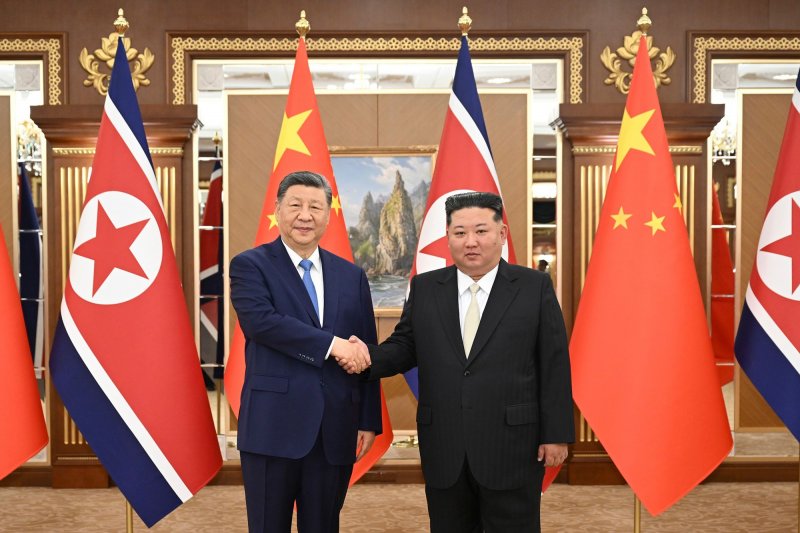
Photo: CNN

Chinese President Xi Jinping's June 2026 visit to North Korea was far more than a symbolic diplomatic event.

It was his first trip to Pyongyang in seven years and came at a time when the geopolitical landscape in Northeast Asia is undergoing major changes, News.az reports.

Xi and North Korean leader Kim Jong Un pledged to expand cooperation in trade, agriculture, technology, infrastructure and strategic coordination, signaling a renewed effort to deepen one of Asia's most important political relationships.

But why now?

The answer lies in a combination of regional security concerns, China's competition with the United States, North Korea's growing relationship with Russia, and Beijing's desire to maintain influence over a key neighbor.

Why did Xi choose this moment to visit North Korea?

Timing is perhaps the most important clue.

Xi's visit came amid:

  • Growing military cooperation between North Korea and Russia
  • Rising tensions between China and the United States
  • Increased U.S. military cooperation with South Korea and Japan
  • Continued North Korean nuclear development
  • Growing instability in the global security environment

Chinese leaders rarely visit North Korea. The fact that Xi chose Pyongyang for his first overseas trip of 2026 highlights how important Beijing considers the relationship at this moment.

Is China worried about North Korea getting too close to Russia?

Many analysts believe this is one of the biggest reasons behind Xi's visit.

Since the Ukraine war intensified, North Korea and Russia have developed much closer political and military ties. Kim Jong Un and Russian President Vladimir Putin have expanded cooperation on security, trade and defense issues.

While China and Russia remain strategic partners, Beijing does not want North Korea becoming overly dependent on Moscow.

For decades, China has been North Korea's primary political and economic supporter. A stronger Russia-North Korea relationship could reduce Beijing's influence in Pyongyang. Xi's visit appears partly designed to remind Kim that China remains North Korea's most important long term partner.

Why is North Korea important to China?

North Korea occupies a unique position in China's security calculations.

China shares a border with North Korea and views stability on the Korean Peninsula as a core national interest.

Beijing worries about several scenarios:

  • Regime collapse in North Korea
  • Refugee flows into China
  • Military conflict near China's border
  • Expansion of U.S. influence closer to Chinese territory

A stable North Korea acts as a buffer between China and U.S. forces stationed in South Korea. This strategic reality has shaped Chinese policy for decades.

Is the United States a factor in this decision?

Absolutely.

China increasingly views regional politics through the lens of strategic competition with Washington.

Beijing is concerned about:

  • U.S. alliances with South Korea and Japan
  • Expanded military exercises in the region
  • Missile defense deployments
  • Growing cooperation among Washington, Seoul and Tokyo

By strengthening ties with North Korea, China demonstrates that it retains influence over one of the region's most unpredictable actors and remains a central player in any future discussions about Korean Peninsula security.

What does China gain from a stronger relationship?

China's objectives are both strategic and economic.

Regional stability

Beijing wants to prevent instability near its borders.

Political influence

Maintaining close ties ensures China remains North Korea's most important diplomatic partner.

Economic opportunities

North Korea has gradually reopened after years of pandemic related isolation, creating opportunities for increased trade and investment.

Geopolitical leverage

A strong relationship gives China greater influence in discussions involving regional security, nuclear issues and relations with the United States.

What does North Korea gain?

Kim Jong Un also has strong reasons for welcoming closer ties.

Economic support

China remains North Korea's largest trading partner and most important economic lifeline.

Diplomatic backing

Chinese support helps North Korea counter international pressure.

Strategic balance

By maintaining strong relationships with both China and Russia, North Korea gains greater flexibility in foreign policy.

Development assistance

The summit focused heavily on practical cooperation, including agriculture, construction, science and technology. These sectors are important for North Korea's economic development goals.

Did the leaders announce specific areas of cooperation?

Yes.

Xi and Kim agreed to expand cooperation in:

  • Trade
  • Agriculture
  • Construction
  • Science and technology
  • Transportation
  • Infrastructure
  • Healthcare
  • Strategic communication

The emphasis on economic cooperation suggests both sides want tangible benefits from closer ties rather than purely symbolic political statements.

Why is the visit symbolically important?

The visit coincides with the 65th anniversary of the China-North Korea friendship treaty.

The treaty remains one of the most important foundations of bilateral relations and symbolizes decades of political and military cooperation.

Chinese and North Korean officials frequently refer to the relationship as being forged through shared historical struggles and mutual sacrifices during the Korean War.

The anniversary provided an ideal opportunity for both governments to emphasize continuity and solidarity.

Did Xi discuss North Korea's nuclear weapons program?

Public reports from the summit did not highlight major discussions about denuclearization.

This is notable because China has historically opposed North Korea's nuclear tests and previously supported international sanctions.

Today, Beijing appears more focused on stability and influence than on publicly pressuring Kim over nuclear issues.

China remains concerned about nuclear tensions, but its immediate priority appears to be preserving regional stability and maintaining its relationship with Pyongyang.

How does the Russia factor change the equation?

One of the most important geopolitical developments of recent years has been the emergence of a much stronger Moscow-Pyongyang partnership.

North Korea has gained new diplomatic opportunities and economic channels through Russia. This has given Kim Jong Un greater leverage than at any point in recent years.

For Beijing, this creates a new reality.

China no longer enjoys the near monopoly of influence over North Korea that it once did. Strengthening ties now helps Beijing ensure that it remains the primary power shaping developments on the Korean Peninsula.

In many ways, Xi's visit was as much about preserving Chinese influence as it was about strengthening friendship.

Could this affect South Korea and Japan?

Yes.

South Korea and Japan closely monitor developments in China-North Korea relations because both countries face direct security challenges from North Korea's missile and nuclear programs.

A stronger China-North Korea partnership could influence:

  • Regional military planning
  • Diplomatic negotiations
  • Missile defense strategies
  • Security cooperation between Washington, Seoul and Tokyo

The visit sends a signal that Beijing remains deeply invested in developments on the Korean Peninsula and intends to play a central role in future regional security discussions.

Is China trying to create an anti-Western bloc?

Not necessarily, but there are elements of strategic alignment.

China, North Korea and Russia increasingly share concerns about:

  • U.S. military influence
  • Western sanctions
  • Security alliances led by Washington
  • The existing international security order

However, each country continues to pursue its own national interests.

China's objective is not necessarily to build a formal alliance structure, but rather to strengthen relationships that help counterbalance U.S. influence in Asia.

Why does the economic dimension matter?

Economics is becoming increasingly important in the relationship.

North Korea faces ongoing challenges related to food security, infrastructure development and economic modernization.

China can provide:

  • Agricultural expertise
  • Investment opportunities
  • Technology cooperation
  • Infrastructure support
  • Expanded trade

For Beijing, economic engagement is also a way to maintain influence and encourage stability without relying solely on political or security ties.

What does this mean for the future of Northeast Asia?

The visit suggests that Northeast Asia is entering a new phase of geopolitical competition.

China is seeking to strengthen ties with key partners.

North Korea is balancing relations between China and Russia.

South Korea and Japan are deepening cooperation with the United States.

As a result, the region is becoming increasingly divided into competing strategic groupings.

This does not mean conflict is inevitable, but it does mean that diplomatic decisions are becoming more consequential.

What is the key takeaway?

Xi Jinping is strengthening ties with Kim Jong Un now because China sees North Korea as strategically important at a moment of growing geopolitical uncertainty. Beijing wants to maintain influence over Pyongyang as North Korea deepens ties with Russia, counter expanding U.S. alliances in Northeast Asia, preserve stability along its border and reinforce its role as a central player in regional security affairs.

The visit demonstrates that despite North Korea's growing relationship with Moscow, China remains determined to stay at the center of Korean Peninsula diplomacy. For Xi, the trip was not simply about friendship. It was about ensuring that one of China's most important neighbors remains closely aligned with Beijing during a period of increasing global competition, shifting alliances and rising regional tensions.


News.Az 

By Faig Mahmudov

Similar news

Archive

Prev Next
Su Mo Tu We Th Fr Sa
  1 2 3 4 5 6
7 8 9 10 11 12 13
14 15 16 17 18 19 20
21 22 23 24 25 26 27
28 29 30 31