What everyone should know about the Ebola outbreak


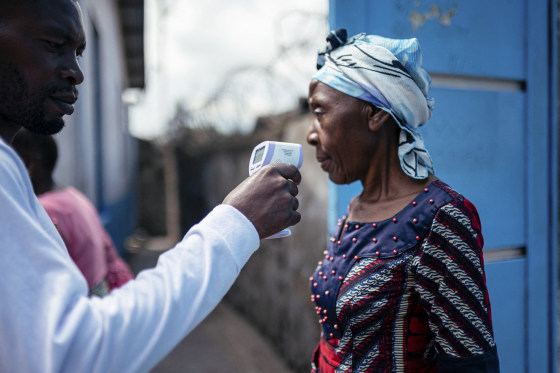
The latest Ebola outbreak in the Democratic Republic of the Congo (DR Congo) has triggered international concern after health authorities confirmed hundreds of infections and dozens of deaths.
Unlike previous outbreaks, this one is being driven by a rare strain of the virus for which there is no approved vaccine, while the disease is spreading in a region already destabilized by armed conflict, mass displacement and weak healthcare infrastructure, News.az reports.
For many residents of eastern DR Congo, Ebola is not just a medical emergency. It is a daily fear layered on top of war, poverty and displacement.
What is Ebola?
Ebola is a severe and often deadly disease caused by a virus that originates in animals, particularly fruit bats.
Humans can become infected after coming into contact with infected animals or their bodily fluids. Once the virus enters a community, it can spread rapidly through direct contact with blood, vomit, sweat, saliva and other bodily fluids of infected individuals.
The disease was first identified in 1976 near the Ebola River in what is now DR Congo.
Since then, numerous outbreaks have occurred across Africa, ranging from small rural clusters to major epidemics involving thousands of people.
What are the symptoms of Ebola?
Symptoms usually appear between two and 21 days after infection.
Early symptoms often resemble malaria or flu, making diagnosis difficult.
Patients typically experience:
-
Fever
-
Severe headache
-
Fatigue
-
Muscle pain
-
Sore throat
As the disease progresses, symptoms may become more severe and include:
-
Vomiting
-
Diarrhoea
-
Abdominal pain
-
Organ failure
-
Internal bleeding
-
External bleeding
Without treatment, Ebola can be fatal.
Why is this outbreak different?
This outbreak is caused by the Bundibugyo strain of Ebola, one of the rarest forms of the virus.
Only two previous outbreaks linked to this strain had been recorded before the current crisis.
Unlike the more common Zaire strain, for which vaccines and treatments exist, there is currently no approved vaccine specifically targeting Bundibugyo Ebola.
This means health workers are fighting the outbreak without one of their most effective tools.
The situation is further complicated by conflict, displacement and public mistrust in affected communities.
How did the current outbreak begin?
Health officials believe the virus circulated undetected for several weeks before being identified.
The first known patient was a nurse who developed symptoms in April.
After the nurse died, the body was transported from Bunia back to Mongbwalu for burial.
Public health officials believe traditional funeral practices may have contributed to the rapid spread of the disease.
In many communities, family members wash, touch or prepare bodies before burial. These practices are culturally important but can be highly dangerous when dealing with Ebola because the virus remains active after death.
Why are funerals such a major concern?
One of the most tragic lessons from previous Ebola outbreaks is that funerals can become super-spreader events.
During the devastating West African Ebola epidemic between 2014 and 2016, numerous transmission chains were traced back to funeral ceremonies.
Family members often view caring for deceased relatives as a sacred responsibility.
Health workers therefore face a difficult challenge.
They must protect communities while also respecting deeply rooted cultural traditions.
In previous outbreaks, specially trained burial teams worked closely with religious and community leaders to create safer funeral practices that still honored local customs.
What true stories show how dangerous Ebola can be?
The nurse whose death alerted authorities
The current outbreak was first detected after a nurse fell ill and died.
By the time health officials identified Ebola as the cause, the virus had already spread to multiple contacts.
The case illustrates one of Ebola's greatest dangers.
Early symptoms often resemble common illnesses, allowing infections to circulate unnoticed.
The four nurses who survived
Amid the tragedy, there have also been stories of hope.
Four nurses infected during the outbreak recovered after receiving treatment and were discharged from hospital.
Their release was celebrated publicly, offering a rare moment of optimism for communities living under the shadow of the epidemic.
Their survival also demonstrated that early diagnosis and proper medical care can significantly improve outcomes.
The healthcare workers who lost their lives
At least five healthcare workers have died during the outbreak.
Doctors, nurses and laboratory technicians continue to place themselves at risk while treating infected patients.
Throughout Ebola's history, healthcare workers have frequently been among the most vulnerable victims because of their constant exposure to infected individuals.
Many continue working despite limited resources and difficult conditions.
Why is conflict making the outbreak harder to stop?
The outbreak is centered in eastern DR Congo, one of the most unstable regions in Africa.
Numerous armed groups operate in the area.
Territory frequently changes hands, creating major obstacles for health teams.
Medical workers often cannot travel freely between affected communities.
Roadblocks, insecurity and active fighting can delay emergency responses.
In some cases, health teams must suspend operations altogether because conditions become too dangerous.
Imagine trying to contain a deadly virus while armed groups control roads, villages and entire districts.
That is the reality facing Ebola response teams today.
How does displacement contribute to the crisis?
More than 250,000 people have been displaced by conflict in the region.
Families often move repeatedly in search of safety.
This constant movement makes contact tracing extremely difficult.
Health officials must identify everyone who has interacted with infected patients.
When people are constantly relocating, that process becomes far more complicated.
Displaced populations may also lack access to healthcare, sanitation and reliable information, creating additional opportunities for the virus to spread.
Why are poor roads such a problem?
Infrastructure challenges significantly slow outbreak response efforts.
A journey that might take one hour elsewhere can take three or four hours in parts of eastern DR Congo.
Poor roads delay:
-
Ambulance services
-
Delivery of medical supplies
-
Laboratory testing
-
Contact tracing operations
-
Emergency response teams
Every hour matters during an Ebola outbreak.
Delays can mean additional infections and additional deaths.
Why do some communities distrust health authorities?
Misinformation remains one of the biggest obstacles.
Some communities initially believed the disease was caused by witchcraft or supernatural forces.
Others sought treatment from traditional healers rather than hospitals.
This is not unique to the current outbreak.
During previous Ebola epidemics, rumors frequently spread faster than accurate information.
Some residents feared treatment centers.
Others believed health workers were responsible for introducing the disease.
Building trust therefore becomes just as important as delivering medical care.
How many people have been affected?
The outbreak has resulted in hundreds of confirmed infections and dozens of deaths.
Cases have been concentrated in Ituri Province but have also appeared in neighboring areas.
The spread into multiple provinces has raised concerns that the outbreak could expand further if not contained quickly.
Officials remain particularly concerned about population movement across borders.
Has Ebola spread beyond DR Congo?
Yes.
Uganda has confirmed cases linked to the outbreak.
The movement of people between DR Congo and neighboring countries increases the risk of regional transmission.
However, health experts stress that Ebola remains far less contagious than diseases such as COVID-19.
Transmission requires direct contact with infected bodily fluids.
As a result, widespread global spread remains unlikely.
Why is there no vaccine for this strain?
Most recent Ebola preparedness efforts focused on the Zaire strain because it has historically caused the largest outbreaks.
Vaccines were developed and tested specifically against that variant.
The Bundibugyo strain is much rarer and has received less scientific attention.
Researchers are now studying whether existing vaccines may provide some protection while experimental vaccines continue to be developed.
Are there any treatments available?
There are currently no approved treatments designed specifically for Bundibugyo Ebola.
However, doctors provide supportive care that can significantly improve survival chances.
This includes:
-
Rehydration
-
Electrolyte replacement
-
Oxygen support
-
Treatment of secondary infections
Researchers are also evaluating experimental antiviral drugs that may help prevent infection among people exposed to the virus.
What lessons were learned from previous Ebola outbreaks?
The world learned painful lessons from the West African epidemic that killed more than 11,000 people.
One of the most important lessons was the value of rapid action.
When outbreaks are detected early and response measures begin immediately, transmission can often be contained.
Health officials also learned the importance of community engagement.
Medical interventions alone are not enough.
Success depends on gaining public trust and encouraging communities to participate in prevention efforts.
What is being done to stop the outbreak?
Authorities have launched a large scale response involving:
Faster testing
A dedicated laboratory has been established in one of the outbreak centers, allowing results to be delivered within 24 hours.
Contact tracing
Health workers are identifying and monitoring people who have interacted with infected patients.
Treatment centers
Specialized facilities have been established to isolate and treat cases.
Public awareness campaigns
Officials are educating communities about symptoms, hygiene and safe burial practices.
International support
Global health organizations have mobilized funding, expertise and personnel to support local authorities.
What role do local communities play?
Communities are at the center of outbreak control.
Residents are being encouraged to:
-
Report symptoms immediately
-
Avoid contact with bodies of Ebola victims
-
Follow hygiene guidelines
-
Cooperate with contact tracers
-
Seek medical care early
Without community participation, even the best medical response can fail.
Should the world be worried about a global pandemic?
Health experts emphasize that the situation is serious but very different from COVID-19.
Ebola spreads through direct contact with infected bodily fluids rather than through the air.
This makes large scale global transmission much less likely.
The primary concern remains Central and East Africa, where conflict, displacement and weak health systems create conditions that allow outbreaks to persist.
What is the key takeaway?
The latest Ebola outbreak in DR Congo is proving exceptionally difficult to contain because it combines several challenges at once. Health workers are confronting a rare strain with no approved vaccine, operating in an active conflict zone, navigating mass population displacement, overcoming misinformation and attempting to stop transmission in communities where healthcare access remains limited.
Yet amid the crisis, stories of recovered patients, dedicated nurses and doctors, and communities working with health authorities demonstrate that Ebola is not unbeatable. The lesson from every previous outbreak is clear: speed, trust and community cooperation remain the most powerful weapons against one of the world's deadliest diseases.
By Faig Mahmudov


Similar news