Is a bigger Middle East war coming? Explaining the Iran-Israel escalation


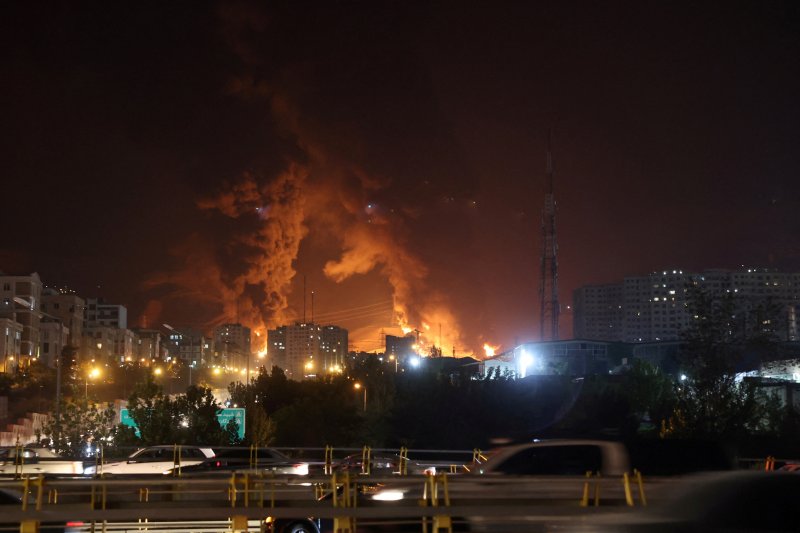
The Middle East is once again facing one of its most dangerous moments in decades. After months of conflict, missile exchanges, airstrikes and diplomatic breakdowns, fears are growing that the confrontation between Iran and Israel could evolve into a broader regional war involving multiple countries and armed groups.
Recent days have seen renewed attacks, explosions reported in Iranian cities, missile launches toward Israel, threats to shipping routes and growing concerns about the involvement of Iran-backed groups across the region, News.az reports.
Although diplomatic efforts continue, the ceasefire that previously reduced tensions appears increasingly fragile.
What is happening between Iran and Israel?
The current crisis stems from a wider conflict that escalated dramatically in 2026 following major military operations involving Israel, Iran and the United States.
Since then, both sides have exchanged missile strikes, drone attacks and military threats. Although periods of reduced fighting have occurred, neither side has fully resolved the underlying disputes driving the conflict.
The latest escalation began after new Israeli military actions in Lebanon were followed by Iranian missile attacks. Israel then launched retaliatory strikes against military and infrastructure targets inside Iran, reigniting fears that the conflict could spiral further.
Why are tensions rising again?
Several factors are driving the renewed confrontation.
Unresolved military disputes
The previous ceasefire reduced fighting but did not address the major issues dividing the two sides.
Questions surrounding Iran's military capabilities, regional influence, missile programs and broader security concerns remain unresolved.
Proxy conflicts
Iran and Israel are not only confronting each other directly. They are also involved in conflicts through allied groups across the region.
These include:
-
Hezbollah in Lebanon
-
Houthi forces in Yemen
-
Militias in Iraq and Syria
-
Various regional security partners
Any clash involving one of these actors can quickly trigger a wider escalation.
Regional instability
Several Middle Eastern countries remain politically fragile due to ongoing economic difficulties, armed conflicts and humanitarian crises.
This creates an environment where local incidents can rapidly become international crises.
Could this become a regional war?
Yes, but the probability depends on how several key actors behave over the coming weeks.
A broader war could emerge if:
-
Israel launches larger military operations against Iran.
-
Iran expands attacks beyond current targets.
-
Hezbollah enters the conflict on a larger scale.
-
Gulf states become directly involved.
-
Shipping routes are heavily disrupted.
-
U.S. forces become engaged in new combat operations.
Analysts warn that the conflict already involves multiple fronts and several countries, making it more dangerous than previous isolated confrontations.
Which countries could be drawn in?
Lebanon
Lebanon remains one of the most vulnerable countries.
Hezbollah continues to support Iran and has previously launched attacks against Israel. Any large scale Hezbollah intervention could trigger major Israeli military operations in Lebanon.
Syria
Syria has historically served as a battleground for proxy conflicts involving Iran and Israel.
Although Damascus has attempted to avoid direct involvement, renewed fighting could easily spill into Syrian territory.
Iraq
Several Iran-aligned armed groups operate in Iraq.
If attacks target U.S. forces or regional allies, Iraq could become another theater of conflict.
Yemen
The Houthis have already increased threats against shipping and Israeli-linked maritime traffic.
Their actions could further destabilize key trade routes.
What role do the Houthis play?
Yemen's Houthi movement has become an increasingly important factor in regional security.
The group recently announced new restrictions targeting Israeli-linked shipping in the Red Sea and warned of further escalation. Although the measures do not apply to all commercial vessels, shipping companies remain concerned about broader disruptions.
The Red Sea has become even more strategically important because of ongoing concerns surrounding the Strait of Hormuz.
What is the Strait of Hormuz and why does it matter?
The Strait of Hormuz is the world's most important oil transit route.
Around one fifth of globally traded oil moves through this narrow waterway.
Any disruption can affect:
-
Oil prices
-
Natural gas supplies
-
Shipping costs
-
Food prices
-
Inflation
The strait has become a major bargaining point in the broader Iran crisis, with continued concerns about shipping security.
Could oil prices surge again?
Yes.
Recent fighting already pushed oil prices sharply higher before some gains eased following signals of de-escalation. Brent crude briefly approached the $100 per barrel mark as traders feared further disruptions.
If the conflict expands significantly, analysts believe energy markets could face another major shock.
Higher oil prices would affect:
-
Fuel costs
-
Airline tickets
-
Electricity bills
-
Transportation expenses
-
Food prices
Is the United States likely to become more involved?
The United States remains a critical factor.
Washington has military forces throughout the Middle East and maintains close security ties with Israel and Gulf allies.
While American leaders continue to support diplomatic efforts, any major attack on U.S. personnel or facilities could trigger a stronger response.
Could diplomacy still prevent a larger war?
Yes.
Despite the violence, diplomatic channels remain active.
Recent statements from multiple governments indicate continued efforts to prevent further escalation. There have also been signs that neither Iran nor Israel currently seeks a full scale regional war.
However, diplomacy faces major challenges because mistrust between the parties remains extremely high.
Why doesn't either side want a full regional war?
The costs would be enormous.
For Iran
A wider war could:
-
Damage critical infrastructure
-
Reduce oil revenues
-
Increase economic pressure
-
Trigger additional international isolation
For Israel
A regional conflict could mean:
-
Multiple active fronts
-
Prolonged missile attacks
-
Greater economic disruption
-
Increased military casualties
For neighboring countries
Many Arab states fear being caught between competing powers and suffering economic and security consequences.
What are the biggest risks right now?
Miscalculation
History shows that wars often expand because of unintended escalation rather than deliberate planning.
A missile strike causing large casualties or hitting a sensitive target could provoke a stronger response than expected.
Proxy involvement
Groups allied with Iran may act independently, creating crises that governments struggle to control.
Attacks on shipping
Disruptions to maritime trade routes could trigger international intervention and raise economic stakes.
Civilian casualties
Large civilian losses often increase political pressure for retaliation.
What would a worst-case scenario look like?
A worst-case scenario could involve:
-
Sustained Iran-Israel missile exchanges
-
Large scale Hezbollah intervention
-
Houthi attacks on shipping routes
-
U.S. military involvement
-
Gulf infrastructure attacks
-
Major oil supply disruptions
Such a conflict would likely affect global energy markets, financial systems and international trade far beyond the Middle East.
What are the latest developments raising concern?
Recent weeks have seen a combination of military activity and political tension that has increased fears of a broader conflict.
Iran has continued to strengthen its military posture while warning against further attacks on its territory. Israel has maintained a high level of military readiness and signaled that it will continue acting against perceived threats.
Meanwhile, international shipping companies have increased security measures in both the Persian Gulf and the Red Sea, reflecting concerns that maritime routes could become targets if the conflict expands.
Regional governments are also preparing contingency plans for possible disruptions to energy exports, trade flows and transportation networks.
How would a wider war affect ordinary people?
The consequences would extend far beyond the Middle East.
Consumers around the world could face:
-
Higher fuel prices
-
Rising food costs
-
Increased inflation
-
More expensive air travel
-
Supply chain disruptions
-
Greater economic uncertainty
Financial markets would likely experience significant volatility, while governments could face additional pressure to address rising living costs.
What is the most likely outcome?
The most likely scenario is continued instability rather than immediate full scale regional war.
Periods of escalation and de-escalation may continue as both sides attempt to demonstrate strength while avoiding a conflict that could become uncontrollable.
However, the margin for error is becoming increasingly narrow. Every missile launch, airstrike or maritime incident carries the risk of triggering a wider confrontation.
What is the key takeaway?
A bigger Middle East war is not inevitable, but the risk is higher than it has been in years. The Iran-Israel confrontation has already evolved beyond a simple bilateral dispute and now involves multiple countries, armed groups and strategic chokepoints stretching from Lebanon and Syria to the Red Sea and the Persian Gulf.
Recent attacks, renewed tensions and growing threats to regional shipping demonstrate how quickly the situation can deteriorate. While diplomacy may still prevent a broader conflict, the region remains on edge, and any major miscalculation could transform a contained crisis into a far larger war with global economic and security consequences.
By Faig Mahmudov


Similar news