What is behind the mass school kidnappings in Nigeria?


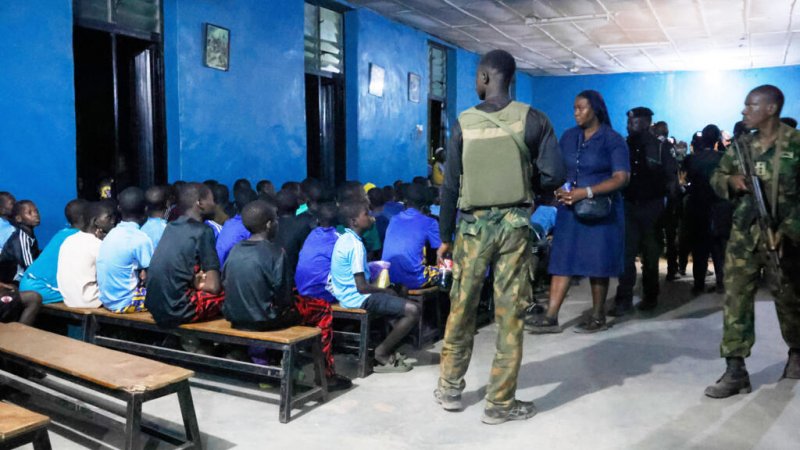
A large scale attack on schools in Nigeria's southwestern Oyo State has raised fresh concerns about the spread of kidnapping gangs into regions previously considered relatively safe.
On May 15, armed men wearing military style clothing stormed multiple schools near Yawota, a town in Oyo State. During the coordinated raids, more than 30 pupils and at least one teacher were abducted and taken into nearby forests, News.az reports.
The attacks targeted three schools in the Oriire district and shocked residents who had largely been spared the mass school kidnappings that have plagued northern Nigeria for years.
How did the attack unfold?
According to witnesses, gunmen arrived at schools during the morning hours and quickly overwhelmed local communities.
Parents and residents reported hearing gunfire as armed attackers moved into school compounds. Children, teachers and residents attempted to flee, but many were unable to escape.
Some students managed to run to safety, while others were captured and taken away by the attackers.
The coordinated nature of the assaults suggested significant planning and organization.
How many people were kidnapped?
Authorities have not released a final confirmed figure, but reports indicate that more than 30 students and at least one teacher were abducted during the attacks.
Additional kidnappings were reported at nearby schools, bringing the total number of victims even higher.
The exact number remains unclear because investigations are ongoing and authorities continue to verify information.
Were there casualties?
Yes.
During one of the attacks, a teacher was reportedly shot dead while attempting to escape through a classroom window.
Reports also indicated that another teacher may have been killed after being abducted, although circulating videos allegedly showing the incident have not been independently verified.
The attacks left communities traumatized and fearful.
Why are these kidnappings significant?
The attacks represent a major shift in Nigeria's security landscape.
For years, mass school kidnappings were largely concentrated in northern Nigeria and parts of the country's Middle Belt region. Southwestern states such as Oyo were generally considered safer.
The expansion of such attacks into the southwest has raised fears that kidnapping networks are extending their operations into new areas.
Security analysts warn that this could mark a dangerous evolution of Nigeria's kidnapping crisis.
Why do armed groups kidnap schoolchildren?
The primary motive is usually ransom.
Kidnapping has become a lucrative criminal enterprise in many parts of Nigeria. Armed groups often abduct students, teachers, travelers, religious leaders and community members before demanding payments for their release.
Families, communities and governments frequently face intense pressure to negotiate with kidnappers to secure the safe return of victims.
The practice has created a cycle in which successful ransom payments encourage further kidnappings.
How widespread is kidnapping in Nigeria?
Kidnapping has become one of Nigeria's most serious security challenges.
Over the past decade, thousands of people have been abducted across different parts of the country.
Victims have included:
-
Schoolchildren
-
Teachers
-
Farmers
-
Business owners
-
Religious leaders
-
Travelers
-
Government officials
Many kidnappings occur along highways, in rural communities and in remote areas where security forces have limited presence.
Which groups are responsible for these kidnappings?
Responsibility often varies by region.
Nigeria faces threats from several different armed groups, including:
Criminal bandit gangs
These groups primarily operate for financial gain through kidnapping, cattle rustling and robbery.
Islamist insurgents
Militant groups such as Boko Haram and Islamic State West Africa Province have carried out kidnappings as part of broader insurgency campaigns.
Community militias
Some armed groups emerge from local conflicts and engage in criminal activities to finance their operations.
Organized criminal networks
In some cases, kidnappings are conducted by sophisticated criminal organizations with extensive logistics and intelligence capabilities.
Who is suspected in the Oyo attacks?
No group has formally claimed responsibility for the attacks.
However, Nigerian military officials have suggested that Boko Haram militants may have been involved, a claim that has generated concern because Boko Haram traditionally operates in northeastern Nigeria rather than the southwest.
If confirmed, such involvement could indicate a significant geographical expansion of militant activity.
Investigations remain ongoing.
Why is Boko Haram's possible involvement alarming?
Boko Haram has spent more than a decade waging an insurgency against the Nigerian government.
The group gained international notoriety after abducting hundreds of schoolgirls from Chibok in 2014.
If Boko Haram or affiliated militants are indeed operating in southwestern Nigeria, it would represent a major security challenge for authorities and could signal a broader expansion of extremist networks.
Why is Oyo State important?
Oyo State is located in southwestern Nigeria, one of the country's most economically significant regions.
The state is relatively close to Lagos, Nigeria's largest city and commercial hub.
Historically, southwestern Nigeria has experienced fewer large scale insurgent attacks than northern regions.
The emergence of mass kidnappings in Oyo therefore has implications beyond the state itself, raising concerns about security across the wider southwest.
Why are rural schools particularly vulnerable?
Many rural schools face significant security challenges.
Common vulnerabilities include:
-
Remote locations
-
Limited police presence
-
Poor road infrastructure
-
Weak communication networks
-
Inadequate security fencing
-
Long response times for emergency services
These factors make schools attractive targets for armed groups seeking to conduct kidnappings and escape before security forces arrive.
How have local communities responded?
The attacks have triggered fear and uncertainty.
Many families have temporarily withdrawn children from school.
Some residents have reportedly fled their communities due to concerns about further attacks.
Parents continue to demand the safe return of abducted students and stronger security measures to protect schools.
Community leaders have urged authorities to intensify rescue operations and improve security across affected areas.
What has the Nigerian government done?
Nigerian authorities have launched investigations and rescue efforts.
According to officials:
-
Security operations are ongoing.
-
Authorities have established contact with the kidnappers.
-
Several suspects have reportedly been detained.
-
Police and military personnel have been deployed to affected communities.
The government has also urged families to avoid spreading rumors and to rely on official information.
Why has insecurity remained a challenge in Nigeria?
Nigeria faces multiple overlapping security threats.
These include:
Insurgency
Militant groups continue to operate in parts of the northeast.
Banditry
Criminal gangs conduct kidnappings and attacks across several states.
Farmer-herder conflicts
Competition over land and resources has fueled violence in central regions.
Weak governance in remote areas
Limited state presence in some communities allows armed groups to operate more freely.
Economic pressures
High unemployment and poverty can contribute to recruitment by criminal organizations.
Together, these factors create a complex security environment that is difficult to address through military action alone.
How does this affect education?
School attacks have serious long term consequences.
Reduced school attendance
Parents may keep children at home due to safety concerns.
Learning disruptions
Abductions and school closures interrupt education.
Psychological trauma
Students, teachers and families often experience lasting emotional effects.
Teacher shortages
Educators may be reluctant to work in high risk areas.
Lower educational outcomes
Extended insecurity can weaken educational systems over time.
These impacts can affect communities for years after attacks occur.
How could the kidnappings influence Nigerian politics?
Security is expected to become a major issue ahead of Nigeria's next presidential election.
President Bola Tinubu came to office promising to improve security and strengthen law enforcement capabilities.
However, continued kidnappings and attacks have intensified public scrutiny of the government's performance.
Opposition parties are likely to use security concerns as a central campaign issue.
Voters may increasingly judge political leaders based on their ability to protect communities and restore stability.
Are school kidnappings becoming more common again?
Recent incidents suggest that school kidnappings remain a significant threat.
The Oyo attacks occurred shortly after another mass abduction involving dozens of schoolchildren in northeastern Borno State.
The recurrence of such incidents indicates that despite government efforts, armed groups continue to view schools as vulnerable targets.
Security experts warn that without stronger preventive measures, further attacks could occur.
What challenges do rescue operations face?
Rescuing kidnapped victims is often extremely difficult.
Challenges include:
-
Dense forests and remote terrain
-
Limited intelligence on kidnappers' locations
-
Risks to hostages during military operations
-
Poor communication infrastructure
-
Mobility of armed groups
Authorities must balance pressure for rapid action against the need to protect the lives of abducted victims.
What is the broader significance of the Oyo kidnappings?
The Oyo school attacks may represent more than an isolated security incident.
They highlight concerns that kidnapping networks and armed groups are expanding into new regions of Nigeria.
If the trend continues, areas previously viewed as relatively secure could face increasing risks.
The attacks also demonstrate how insecurity remains one of Nigeria's most pressing national challenges, affecting education, economic development, political stability and public confidence in government institutions.
What is the key takeaway?
The mass kidnappings in Oyo State have reignited fears about Nigeria's worsening security situation and the spread of school abductions beyond traditional hotspots in the north. More than 30 students and teachers were seized during coordinated attacks on multiple schools, leaving families desperate for answers and communities gripped by fear.
The incident underscores the continuing threat posed by armed criminal groups and militants, highlights ongoing weaknesses in rural security, and is likely to become a major political issue as Nigeria approaches future elections. For many affected families, however, the focus remains far simpler: securing the safe return of their children.
By Faig Mahmudov


Similar news