What psychological effects do child soldiers experience?


Nigeria is Africa's most populous country and one of the continent's largest economies. Despite its economic potential, abundant natural resources and growing international influence, the country continues to face a complex and multifaceted security crisis that affects millions of people.
Unlike conflicts that are concentrated in a single region or driven by a single cause, Nigeria's security challenges stem from a combination of terrorism, organized crime, kidnappings, communal violence, separatist movements, resource disputes, poverty and weak governance structures, News.az reports.
RECOMMENDED STORIES
- Azerbaijan provides rehabilitation services to Ukrainian children under social program
- Nigeria, China push for stronger cooperation in power, infrastructure development
- Why Northern Nigeria is highly displeased with Tinubu’s Government - VIDEO
- Army frees 360 people abducted by Boko Haram in Nigeria’s Borno state
The crisis has become one of the most significant security challenges in Africa because of its humanitarian, economic and political consequences. Entire communities have been displaced, thousands of schools have been disrupted and millions of citizens face uncertainty about their safety and future.
The situation is also important internationally because instability in Nigeria can affect neighboring countries, regional trade, migration patterns and counterterrorism efforts across West Africa.
When did Nigeria's security problems begin?
Nigeria's security challenges have deep historical roots.
Many experts trace current instability to a combination of colonial legacies, uneven development, ethnic and religious divisions and governance challenges that emerged after independence in 1960.
However, the modern phase of Nigeria's security crisis accelerated during the early 2000s with the emergence of extremist groups in the northeast and growing criminal networks in other regions.
Over time, these threats evolved and diversified. Terrorist organizations expanded their activities, criminal gangs became more organized and local conflicts over land and resources intensified.
As a result, Nigeria today faces multiple overlapping security challenges rather than a single conflict.
What are the main security threats facing Nigeria today?
Nigeria currently faces several major threats.
The first is Islamist extremism, particularly in the northeastern region.
The second is organized banditry, which has become a major problem in northwestern states.
The third is kidnapping for ransom, which affects both urban and rural areas.
The fourth consists of communal clashes between farmers and herders competing for land and resources.
The fifth involves separatist tensions in parts of southeastern Nigeria.
The sixth includes criminal networks engaged in arms trafficking, smuggling and other illicit activities.
Together, these threats create a highly complex security environment that challenges both local authorities and the federal government.
What is Boko Haram?
Boko Haram is one of the most notorious extremist organizations in Africa.
The group emerged in northeastern Nigeria in the early 2000s under the leadership of Mohammed Yusuf.
Initially operating as a religious movement, Boko Haram later transformed into a violent insurgent organization seeking to challenge the Nigerian state and establish governance based on its interpretation of Islamic law.
The group gained international attention after launching large scale attacks against civilians, military targets, schools, government institutions and religious sites.
Over the years, Boko Haram's activities have caused widespread destruction and human suffering across northeastern Nigeria and neighboring countries.
What does the name Boko Haram mean?
Although translations vary, Boko Haram is commonly interpreted as meaning that Western education is forbidden.
The name reflects the group's opposition to Western influenced institutions, including schools, government systems and secular governance structures.
This ideological position explains why schools, teachers and students have frequently become targets of attack.
How did Boko Haram become so powerful?
Several factors contributed to the growth of Boko Haram.
High unemployment and poverty created conditions that made recruitment easier.
Weak government presence in some remote areas allowed extremist networks to establish influence.
Corruption and governance failures reduced public trust in institutions.
Limited educational opportunities and social services left many communities vulnerable to radicalization.
The group also exploited local grievances and political frustrations to gain support or recruit members.
What is the Islamic State West Africa Province?
The Islamic State West Africa Province, often referred to as ISWAP, emerged after divisions within Boko Haram.
Although both groups share extremist ideologies, they have sometimes differed in strategy and leadership.
ISWAP has become one of the most active militant organizations in the Lake Chad Basin region.
Its operations extend beyond Nigeria and affect neighboring countries including Niger, Chad and Cameroon.
The existence of multiple extremist organizations has complicated efforts to restore security in the region.
Why are schools frequently attacked in Nigeria?
Schools are targeted for both ideological and strategic reasons.
Extremist groups often oppose formal education and view schools as symbols of state authority.
Criminal groups, meanwhile, view schools as attractive targets because large numbers of students can be abducted simultaneously.
Mass kidnappings generate national attention and increase pressure on authorities to negotiate.
In many rural areas, schools also lack adequate security infrastructure, making them vulnerable to attack.
What was the Chibok schoolgirl kidnapping?
The Chibok kidnapping remains one of the most infamous incidents in modern Nigerian history.
In April 2014, Boko Haram militants abducted more than 270 girls from a secondary school in the town of Chibok.
The incident shocked the international community and generated global calls for action.
The social media campaign "Bring Back Our Girls" became a worldwide movement supported by governments, celebrities and international organizations.
While some of the girls were eventually rescued or released, the incident remains a powerful symbol of the human cost of Nigeria's security crisis.
Why has kidnapping become such a major problem?
Kidnapping has evolved into one of the most profitable criminal activities in Nigeria.
Armed groups frequently abduct travelers, students, farmers, businesspeople, religious leaders and public officials.
Victims are typically held until ransom payments are made.
The practice has expanded because it offers significant financial rewards while often involving relatively limited risk for perpetrators operating in remote areas.
Over time, kidnapping has transformed from an occasional criminal activity into a sophisticated criminal industry.
Who is most at risk of kidnapping?
Although anyone can become a target, certain groups face higher risks.
Students attending boarding schools in vulnerable regions have frequently been targeted.
Travelers using isolated highways are often at risk.
Farmers working in remote agricultural areas may face abduction threats.
Business owners and wealthy individuals are commonly targeted because criminals assume they can pay larger ransoms.
However, ordinary citizens are increasingly affected as criminal groups expand their operations.
How do kidnappings affect communities?
The impact extends far beyond the immediate victims.
Parents become afraid to send children to school.
Economic activity declines because people avoid traveling or working in vulnerable areas.
Communities lose confidence in security institutions.
Psychological trauma can affect families for years.
In some cases entire villages are abandoned because residents no longer feel safe.
The cumulative effect can severely disrupt local development and social cohesion.
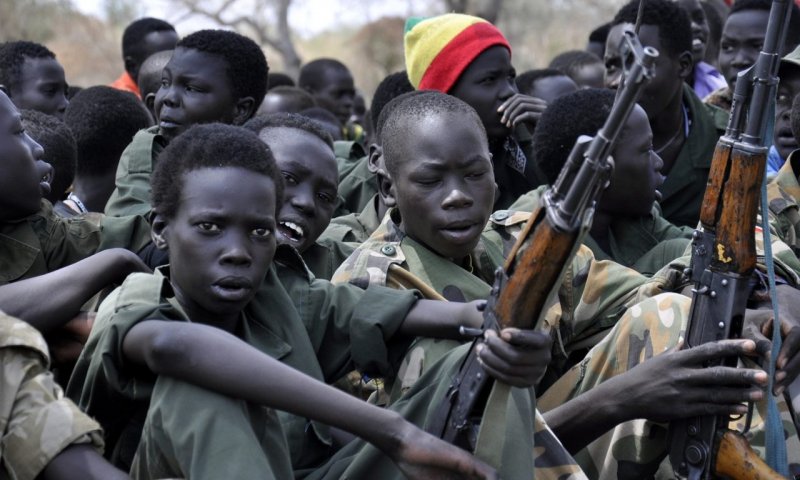
What are child soldiers?
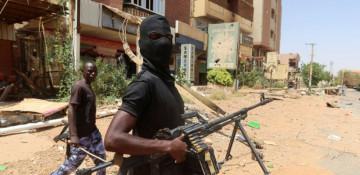
Child soldiers are individuals under the age of 18 who are recruited, used or exploited by armed groups.
International law considers the recruitment and use of children in armed conflict a serious violation of children's rights.
Child soldiers may serve as fighters, scouts, messengers, cooks, guards or logistical assistants.
Some are forced into service while others are manipulated, coerced or pressured into joining.
How widespread is child recruitment in Nigeria?
Child recruitment has been documented in areas affected by extremist violence.
Thousands of children have been exposed to armed conflict over the years.
Many have been abducted from villages or displaced communities.
Others have been recruited after losing family members, access to education or economic opportunities.
The problem has drawn significant concern from humanitarian organizations and child protection agencies.
Why do armed groups recruit children?
Children are often easier to manipulate than adults.
They may be more vulnerable to intimidation, indoctrination and coercion.
In conflict zones, children frequently face limited opportunities and reduced access to education.
Some join armed groups seeking protection, food or a sense of belonging.
Others are forcibly recruited through abduction or threats against their families.
Armed groups exploit these vulnerabilities to sustain their operations.
What roles do child soldiers perform?
Children may be assigned a variety of tasks.
Some are trained as combatants and participate directly in attacks.
Others gather intelligence, transport supplies or serve as guards.
Many perform domestic duties within militant camps.
Girls often face additional risks, including forced marriage, domestic servitude and sexual exploitation.
The specific roles vary depending on the group and local circumstances.
What psychological effects do child soldiers experience?
The psychological consequences can be profound.
Many former child soldiers suffer from anxiety, depression and post traumatic stress.
Exposure to violence at an early age can affect emotional development and social relationships.
Some children struggle to reintegrate into their communities because of stigma or fear.
Without appropriate support, trauma can persist for many years after the conflict ends.
How does conflict affect children's education?
Education is often one of the first casualties of insecurity.
Schools may be destroyed, occupied or closed because of security concerns.
Teachers may flee dangerous areas.
Parents may keep children at home to protect them from abduction or violence.
As a result, millions of children in conflict affected regions experience interrupted or inadequate education.
This creates long term challenges for economic development and social mobility.
What is the humanitarian impact of the security crisis?
The humanitarian consequences are enormous.
Millions of people have been displaced from their homes.
Many communities face food shortages and limited access to healthcare.
Children frequently experience malnutrition and educational disruption.
Women and girls often face heightened risks of exploitation and abuse.
Humanitarian agencies continue to provide assistance, but insecurity complicates aid delivery.
The scale of need remains substantial.
How has the crisis affected Nigeria's economy?
Insecurity imposes significant economic costs.
Agricultural production declines when farmers cannot safely access their land.
Businesses face higher security expenses.
Investors may hesitate to commit resources in unstable areas.
Infrastructure projects can be delayed or abandoned.
Tourism and local commerce often suffer.
These effects reduce economic growth and place additional pressure on government finances.
What role does poverty play in the crisis?
Poverty is both a cause and a consequence of insecurity.
Economic hardship can make recruitment by criminal or extremist groups more attractive.
At the same time, insecurity discourages investment and limits employment opportunities.
This creates a cycle in which poverty contributes to instability while instability reinforces poverty.
Breaking this cycle is widely regarded as essential for long term peace and development.
What is being done to improve security?
The Nigerian government has implemented a range of measures.
These include military operations against extremist organizations, intelligence gathering, community policing initiatives and security sector reforms.
Authorities have also sought greater cooperation with neighboring countries.
International partners provide support through training, humanitarian assistance and development programs.
While progress has been achieved in some areas, significant challenges remain.
Can military force alone solve the problem?
Most analysts believe military action is necessary but insufficient.
Security operations can disrupt armed groups and protect civilians.
However, long term stability requires broader solutions.
These include improving governance, expanding educational opportunities, creating jobs, reducing corruption and strengthening public institutions.
Addressing underlying social and economic grievances is considered essential for sustainable peace.
What is the outlook for Nigeria's future?
Nigeria possesses significant strengths, including a large population, entrepreneurial culture, abundant resources and growing regional influence.
These advantages provide a foundation for future development.
However, the country's long term success will depend in part on its ability to reduce insecurity and strengthen state institutions.
Progress will likely require a combination of security reforms, economic development, community engagement and improved governance.
Although the challenges remain substantial, many experts believe that sustained investment in security, education, opportunity and institution building can help Nigeria move toward greater stability and prosperity in the coming decades.
Why should the world care about Nigeria's security crisis?
Nigeria's importance extends far beyond its borders.
As Africa's most populous nation and one of its largest economies, developments in Nigeria have regional and global implications.
Instability can affect migration patterns, trade networks, humanitarian conditions and counterterrorism efforts across West Africa.
Conversely, a more stable and prosperous Nigeria could serve as a major driver of economic growth and development across the continent.
For this reason, Nigeria's security challenges are not merely a national issue but a matter of broader international significance.
By Faig Mahmudov


Similar news