Why Canada targets crypto ATMs?


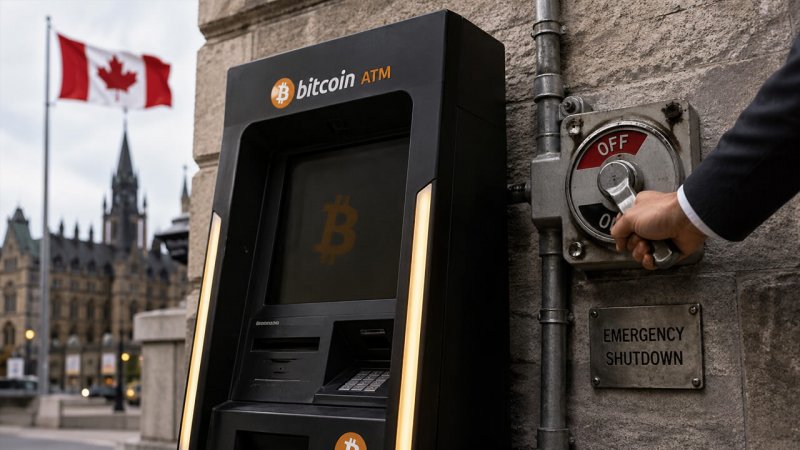
Canada is moving toward a nationwide ban on cryptocurrency ATMs as part of a broader crackdown on financial crime. The proposal was introduced in the government’s 2026 Spring Economic Update, signaling a major policy shift in how authorities regulate digital assets.
Officials have identified crypto ATMs as a growing risk to consumers, particularly as fraud cases linked to these machines continue to rise. The proposed ban would affect thousands of machines across the country, one of the highest densities globally.
RECOMMENDED STORIES
Why are crypto ATMs being targeted?
The Canadian government has described crypto ATMs as a primary method used by scammers to defraud victims and by criminals to move illicit funds.
These machines allow users to convert cash into cryptocurrency quickly, often with minimal identity verification. While convenient, this feature makes them attractive for fraud schemes. Criminals frequently instruct victims—especially older individuals—to deposit cash into these machines, transferring funds directly into digital wallets controlled by scammers.
Authorities argue that the lack of oversight and the irreversible nature of crypto transactions make recovery of stolen funds extremely difficult.
How do crypto ATM scams typically work?
Fraud involving crypto ATMs often follows a similar pattern: Victims are contacted by scammers posing as government officials, tech support, or financial institutions.
They are told to withdraw cash and deposit it into a crypto ATM. Funds are instantly transferred to a scammer’s wallet, making them nearly impossible to trace or recover.
Because these machines do not function like traditional banks, they lack safeguards such as transaction reversals or fraud detection systems.
How serious is the fraud problem?
The scale of crypto related fraud has been rising rapidly, prompting urgent policy responses. Investigations in Canada have repeatedly identified crypto ATMs as a central tool in scam operations.
Globally, the trend is similar. In the United States alone, crypto ATM scams have resulted in hundreds of millions of dollars in losses in recent years, highlighting the growing misuse of the technology.
Canadian authorities say the increasing number of cases and the vulnerability of victims justifies stronger action.
Is this part of a wider anti crime strategy?
Yes. The proposed ban is one element of a broader effort to combat financial crime in Canada. Alongside the ATM ban, the government is also planning structural reforms, including the creation of a new financial crimes agency to improve enforcement and coordination.
This reflects concerns that existing systems have been fragmented and insufficient to deal with modern financial crimes, especially those involving digital assets and cross border transactions.
Will crypto still be allowed in Canada?
The proposed ban targets only crypto ATMs, not cryptocurrency itself. Canadians would still be able to buy and sell digital assets through regulated platforms and licensed money service businesses.
The government’s goal is to eliminate high risk access points while preserving legitimate use of cryptocurrencies within a regulated framework.
How will this affect crypto ATM operators?
For companies operating crypto ATMs, the ban could be highly disruptive. Businesses managing large networks of machines would likely face shutdown or major restructuring.
Industry groups have already raised concerns, arguing that regulation rather than prohibition would be a more balanced approach. However, policymakers appear to prioritize consumer protection and fraud prevention.
Are other countries taking similar steps?
Canada is not alone in targeting crypto ATMs. Several jurisdictions have introduced restrictions or outright bans due to fraud concerns.
This reflects a broader global trend toward stricter oversight of cryptocurrency infrastructure.
Why are crypto ATMs especially vulnerable to abuse?
Several characteristics make crypto ATMs attractive to criminals.
Speed allows transactions to be processed almost instantly.
Anonymity means minimal identity checks for smaller amounts.
Irreversibility ensures that once funds are sent they cannot be recovered.
Accessibility places machines in public locations such as convenience stores.
These factors combine to create an environment where scams can be executed quickly and with limited traceability.
What are the arguments against the ban?
Critics argue that banning crypto ATMs could limit financial access for legitimate users who rely on cash based crypto transactions. It could also push activity into less regulated or underground channels and potentially slow innovation in the digital asset sector.
Some industry representatives advocate for stronger compliance measures instead, such as stricter identity verification and transaction monitoring.
What happens next?
The proposal is still in the policy stage, but given political support, it is expected to move forward. Implementation details, including timelines and enforcement mechanisms, have not yet been fully outlined.
If enacted, Canada would become one of the largest economies to impose a nationwide ban on crypto ATMs.
What does this mean for the future of crypto regulation?
Canada’s move signals a shift toward more aggressive regulation of cryptocurrency infrastructure. Rather than focusing solely on exchanges and platforms, authorities are now targeting physical access points that facilitate transactions.
This could influence other countries to adopt similar measures, especially as fraud cases continue to rise globally.
Conclusion
Canada’s plan to ban crypto ATMs underscores growing concerns about the intersection of digital finance and criminal activity. While the machines were originally designed to make cryptocurrency more accessible, authorities now see them as a major vulnerability in the financial system.
The outcome of this policy will likely shape future approaches to crypto regulation worldwide, balancing innovation with the need for consumer protection and financial security.
By Faig Mahmudov


Similar news