Why civil society and rule of law remain the backbone of modern Azerbaijan


By Emil Nuriyev
In today’s increasingly complex geopolitical landscape, the internal stability and resilience of a nation are not measured solely by its military capabilities or economic output. They are also deeply rooted in how effectively a country builds and maintains two critical pillars of modern statehood: the rule of law and a vibrant civil society. In the case of Azerbaijan, these foundations have been deliberately and consistently strengthened over the past three decades, positioning the country as a model for others navigating the post-Soviet transition.
The early years of Azerbaijan’s independence were marked by intense upheaval. Following the collapse of the Soviet Union, Azerbaijan faced severe internal crises, including political chaos, economic collapse, and the trauma of war. It was in this context that Heydar Aliyev, the national leader and former First Secretary of Soviet Azerbaijan, returned to power in 1993 at the request of the people. His leadership ushered in a new era focused on restoring order, institutionalizing governance, and laying the groundwork for a functioning legal state.
Aliyev’s approach to state-building was pragmatic and visionary. Recognizing that sustainable development required more than just economic recovery, he initiated a series of legal and political reforms aimed at creating institutions capable of upholding the rule of law and protecting individual rights. These reforms were not decorative—they were designed to create a real separation of powers, strengthen judicial independence, and enable the growth of civil society. In short, they were foundational.
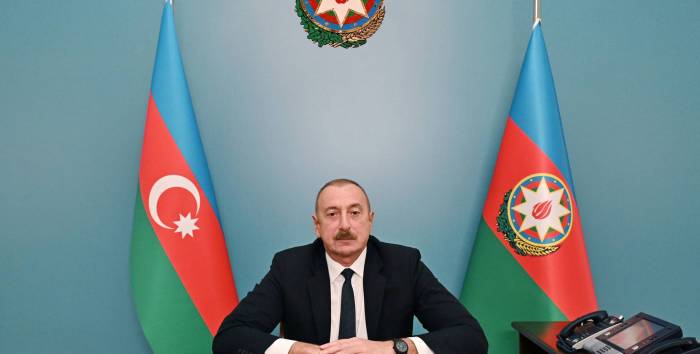
The progress did not stop there. Under President Ilham Aliyev, the country has pursued a second wave of reforms focused on modernization, digital governance, transparency, and citizen-centric public services.
President.az
Ilham Aliyev has consistently emphasized the importance of the rule of law as a key component of state legitimacy. His administration has improved institutional mechanisms, introduced modern governance tools such as electronic courts, and implemented wide-ranging judicial reforms that align with international standards.
Innovative platforms like the “ASAN Service” and “DOST” centers have transformed how Azerbaijani citizens interact with the government. These initiatives have simplified bureaucratic processes, reduced corruption, and increased citizen satisfaction. More importantly, they represent a tangible shift in how the state views its role—not as an authority to be feared, but as a service provider accountable to the people.
Civil society, too, has been given space and support to grow. NGOs, public associations, media outlets, and citizen initiatives now play a significant role in public life. Their participation in areas such as education, environmental protection, youth policy, human rights, and social welfare adds pluralism and legitimacy to policymaking. To encourage this engagement, Azerbaijan has established a comprehensive support system for NGOs, including the Council on State Support to NGOs, founded in 2007. Through this body, local and international organizations receive grants and technical assistance, while mechanisms for public oversight have been institutionalized.
This support is not limited to financial aid. The legal and administrative environment in Azerbaijan has become increasingly conducive to civil society activity. By easing registration processes, enhancing transparency in grant allocation, and encouraging public-private partnerships, the government has shown a willingness to foster genuine civic engagement.
The media, often considered the fourth pillar of democracy, has also seen important developments. While challenges remain—as they do in most developing democracies—the creation of the Media Development Agency in 2021 has set the stage for renewed efforts to improve journalistic standards, ensure freedom of information, and promote media responsibility. The role of the press in ensuring transparency, holding officials accountable, and informing the public has been explicitly acknowledged and supported at the policy level.
Judicial reform is another area where Azerbaijan has made notable strides. The second phase of reforms, launched in 2004, has included the establishment of new courts, the implementation of electronic case management systems, and the alignment of judicial selection processes with international best practices. These efforts have not only expanded access to justice but also enhanced public trust in the legal system.
All of this is underpinned by the Constitution of the Republic of Azerbaijan, which places the protection of human rights at the heart of the country’s legal order. The Constitution mandates all state institutions to act in the service of the people and affirms the supremacy of law as a guiding principle.
Today, thousands of NGOs, dozens of public associations, and a growing number of independent media outlets are actively contributing to the national discourse. They are not just watchdogs—they are partners in shaping a more inclusive, transparent, and accountable governance model. Their presence ensures that democratic norms are not just written in law, but practiced in everyday life.
Yet, no system is ever perfect or complete. Continuous legislative updates and improved implementation are essential for progress to remain durable. But Azerbaijan’s commitment to this process—seen in both the policy vision and institutional action—suggests that these are not fleeting reforms but part of a long-term, strategic agenda.
In an era when democracy is under threat in many parts of the world, Azerbaijan offers a counter-narrative—one that values legal order and civic participation as essential to national strength. The country’s experience demonstrates that the rule of law and a thriving civil society are not luxuries; they are necessities. And they are what keep a modern state standing tall.
The material was prepared with the financial support of the Media Development Agency of the Republic of Azerbaijan.


Similar news