Why Iran’s recurring protests signal deeper domestic crises and global impact


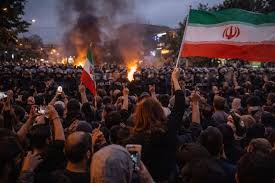
In recent years, protests in Iran have shifted from isolated outbreaks into a recurring pattern. Demonstrations no longer emerge only in response to a single political decision or economic shock but reflect deeper structural tensions within Iranian society, News.Az reports.
Economic hardship, political restrictions, social grievances, and generational change have combined to create a volatile environment in which unrest can quickly spread. These protests are not merely domestic disturbances; they increasingly shape Iran’s foreign relations, sanctions dynamics, and regional posture. Understanding why protests keep returning requires examining both internal pressures and the international context surrounding Iran.
How economic stress fuels public anger
Economic conditions remain one of the strongest drivers of protest activity in Iran. High inflation, currency depreciation, unemployment, and declining purchasing power have steadily eroded living standards. Even during periods of increased oil revenue, many Iranians see little improvement in their daily lives. Subsidy reforms, price hikes for fuel or basic goods, and delayed wages frequently trigger localized demonstrations that can escalate nationwide. The perception that economic mismanagement and corruption benefit elites while ordinary citizens struggle amplifies frustration and lowers the threshold for protest.
Why sanctions intensify social pressure rather than suppress dissent
International sanctions play a dual role in Iran’s protest dynamics. On one hand, sanctions constrain state revenue and economic capacity, limiting the government’s ability to cushion social discontent. On the other hand, authorities often frame protests as being influenced or exploited by external pressure. For many citizens, however, sanctions are experienced less as a geopolitical tool and more as a daily hardship. This gap between official narratives and lived reality contributes to mistrust. Rather than silencing dissent, prolonged sanctions can deepen resentment toward both domestic governance and the international system.
How social restrictions intersect with economic grievances
Protests in Iran rarely stem from economics alone. Social restrictions, particularly those affecting personal freedoms, cultural expression, and gender norms, frequently intersect with economic grievances. For younger generations, limitations on lifestyle choices, online access, and self-expression are increasingly difficult to reconcile with global connectivity. When social control combines with economic insecurity, protests take on a broader identity-driven character. Demonstrations may begin over a specific incident but quickly evolve into wider calls for dignity, accountability, and systemic change.
Why generational change is transforming protest culture
Iran’s demographic profile has shifted significantly over the past decades. A large portion of the population is young, urban, and digitally connected. This generation has limited memory of the early revolutionary period and measures legitimacy less through ideology than through performance and opportunity. Social media platforms, encrypted messaging, and online networks enable rapid mobilization and information sharing, even under restrictions. As a result, protests can spread faster, adopt new symbols, and sustain momentum longer than in the past. Generational change has made unrest more unpredictable and less easily contained.
How the state responds and adapts to repeated unrest
Iranian authorities have developed a range of responses to protests, combining security measures, selective concessions, and narrative control. In some cases, force is used to rapidly restore order. In others, officials adjust policies or offer limited economic relief. Media messaging often emphasizes stability, sovereignty, and resistance to foreign interference. Over time, the state has refined its ability to manage unrest tactically. However, repeated protests suggest that these responses address symptoms rather than underlying causes, allowing tensions to resurface.
Why protests affect Iran’s regional and foreign policy posture
Domestic unrest has implications beyond Iran’s borders. Periods of protest often coincide with heightened sensitivity in foreign policy, as authorities seek to project strength externally while managing vulnerability internally. Regional engagements and security postures may be emphasized to signal resilience. At the same time, internal instability can limit diplomatic flexibility, making compromise appear risky. For foreign actors, protests become a lens through which Iran’s stability and negotiating position are assessed, influencing diplomatic and economic calculations.
How international reactions shape protest narratives
External reactions to protests play a significant role in shaping their trajectory. Statements of support from foreign governments may encourage protesters but also provide authorities with grounds to frame unrest as externally driven. Sanctions imposed or expanded during periods of protest can be interpreted domestically as punishment of the population rather than pressure on leadership. This dynamic creates a complex feedback loop in which international actions can unintentionally strengthen hardline narratives while weakening moderate or reformist voices.
Why the middle class remains a critical factor
Historically, Iran’s middle class has played a pivotal role in protest movements. When economic decline erodes middle-class stability, dissatisfaction spreads beyond marginalized groups. Professionals, students, and small business owners bring organizational capacity, visibility, and symbolic weight to demonstrations. Their participation signals broader societal discontent and increases pressure on authorities. Conversely, when segments of the middle class prioritize stability over confrontation, protest movements may lose momentum. The shifting fortunes of this group remain central to Iran’s protest dynamics.
How protests impact investor confidence and economic outlook
Recurring unrest has tangible economic consequences. Domestic investors delay decisions, while foreign investors view instability as an additional risk factor layered onto sanctions. Currency volatility often increases during protest periods, further undermining confidence. Even when protests subside, the perception of fragility lingers, affecting long-term planning. This creates a self-reinforcing cycle in which economic uncertainty fuels protests, and protests deepen economic uncertainty.
Why leadership cohesion matters during protest waves
The response to protests is shaped not only by public pressure but also by internal elite dynamics. Cohesion among political, security, and economic elites allows for coordinated responses. Divisions or mixed messaging can embolden protesters and prolong unrest. Leadership transitions or power struggles heighten uncertainty, making protests more consequential. Observers often watch elite behavior as closely as street activity, assessing whether unrest signals deeper shifts within the system.
How protests influence the evolution of Iranian political discourse
Even when protests do not result in immediate policy change, they leave a lasting imprint on political discourse. Issues raised during demonstrations enter public debate, shaping expectations and redefining acceptable demands. Over time, repeated protest cycles normalize public expression of dissent, even under restrictive conditions. This gradual shift influences how future grievances are articulated and how authorities anticipate and respond to them.
Why protests persist despite repression
The persistence of protests despite significant risks reflects a calculation by many participants that the cost of silence outweighs the cost of action. Economic insecurity, social frustration, and limited avenues for institutional change reduce the effectiveness of deterrence. While repression can suppress demonstrations temporarily, it does not eliminate the drivers of unrest. Each cycle leaves behind networks, experiences, and narratives that inform the next.
How future protest cycles may evolve
Looking ahead, protests in Iran are likely to remain episodic rather than continuous, flaring in response to specific triggers. Economic shocks, policy changes, or symbolic incidents can rapidly mobilize discontent. The form of protests may continue to evolve, incorporating decentralized actions, digital activism, and localized expressions. The state’s ability to manage unrest will depend on economic performance, policy adaptability, and elite cohesion.
Conclusion – why Iran’s protests are a long-term structural challenge
Protests in Iran are no longer anomalies; they are symptoms of enduring structural tensions. Economic hardship, social restrictions, generational change, and international pressure interact to create a cycle of unrest that periodically resurfaces. While authorities have demonstrated resilience and adaptability, the underlying drivers remain unresolved. For both domestic actors and international observers, protests serve as a barometer of Iran’s internal balance and future trajectory. Understanding them requires moving beyond single events to recognize a deeper, ongoing transformation within Iranian society.


Similar news