Why Iran’s protests keep returning despite years of repression


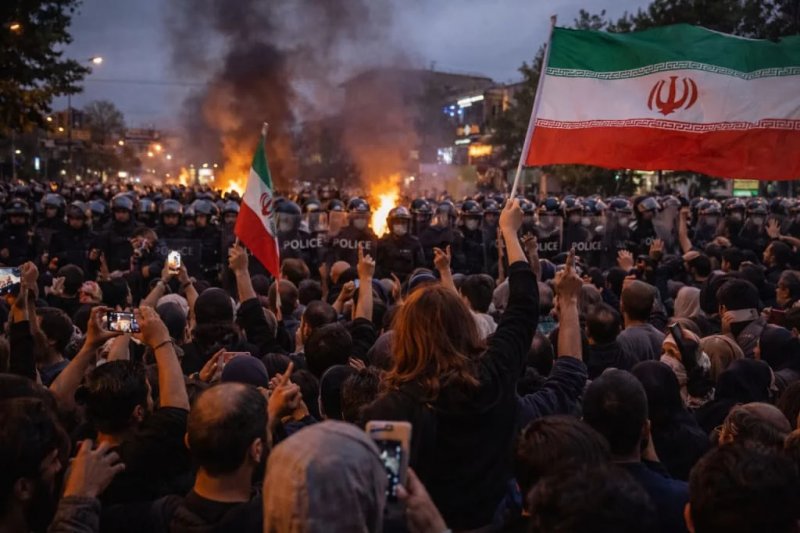
Iran protests in 2025–2026 are not a sudden or isolated phenomenon, News.Az reports.
They represent the latest phase in a long cycle of unrest shaped by years of economic deterioration, restricted political space, and unresolved social tensions. What distinguishes the current wave is not only its scale, but the depth of accumulated frustration that has built steadily over roughly a decade.
What is happening now?
Recent weeks have seen protests spreading across multiple cities in Iran. Demonstrations have been driven initially by economic hardship, but they have quickly expanded to reflect broader dissatisfaction with governance, social restrictions, and state accountability. Authorities have responded with security deployments and communication restrictions, including internet and phone disruptions, reinforcing the sense of confrontation between society and the state.
Why are these protests described as the result of a decade of pressure?
Iran has experienced repeated protest waves since the mid 2010s. Each episode has emerged from specific triggers, yet all have shared common underlying causes: declining living standards, limited economic opportunity, perceptions of corruption and inequality, and the absence of effective political channels to address grievances. Every protest cycle leaves behind deeper mistrust and a population more willing to challenge authority despite the risks.
What economic factors are driving the unrest?
At the center of the current protests is economic stress felt directly in everyday life. Currency depreciation, rising food prices, housing costs, and transport expenses have eroded purchasing power for large segments of the population. Wages and employment opportunities have failed to keep pace with inflation, creating a widespread sense of downward mobility, particularly among young people and the urban middle class.
Why does the currency crisis matter so much politically?
A weakening currency is not an abstract macroeconomic issue. It affects daily transactions and long term planning, making it harder for households to secure basic necessities or save for the future. Currency instability also fuels perceptions of injustice, especially when some groups are believed to benefit from privileged access to foreign exchange, imports, or state protection while the majority bears the cost.
Are these protests only about the economy?
While economic hardship often serves as the initial spark, protests in Iran tend to evolve rapidly into broader expressions of political and social dissatisfaction. Economic grievances merge with demands for dignity, accountability, and personal freedoms. Over time, the boundary between material concerns and systemic critique becomes blurred, turning cost of living protests into challenges to the legitimacy of governing institutions.
How does social unrest connect to economic pressure in Iran?
Economic and social issues are deeply intertwined. Restrictions on media, civil society, and political competition reduce the number of peaceful channels available for expressing dissatisfaction. As a result, economic stress is more likely to erupt into street protests. Social policies and enforcement practices also take on symbolic meaning, transforming economic frustration into wider opposition to state authority.
What impact did earlier protest movements have on today’s situation?
Previous protest waves, particularly those in the early 2020s, reshaped public expectations and protest dynamics. They demonstrated the possibility of nationwide mobilization, increased the visibility of youth and women in political expression, and weakened the credibility of official narratives. Even when suppressed, these movements left a lasting imprint on society’s willingness to protest again.
Why do authorities repeatedly impose internet restrictions?
Communication shutdowns have become a recurring tool during periods of unrest. Limiting connectivity slows protest coordination, reduces the spread of images and videos, and restricts information flows to and from the outside world. However, these measures also disrupt commerce, education, and daily life, often intensifying public anger rather than defusing it.
Who is participating in the protests?
The current protests appear largely decentralized, involving students, workers, small business owners, and unemployed youth. The absence of a single leadership structure makes the movement harder to neutralize through arrests, but it also complicates sustained organization, negotiation, and strategic planning.
How does the state typically respond to such protests?
Historically, the state response combines security force deployment, arrests, legal pressure, and official narratives that frame unrest as foreign influenced. This approach prioritizes control and deterrence over accommodation. While effective in the short term, it often reinforces the perception that authorities are unwilling or unable to address underlying grievances.
Is there a pattern to how protests begin in Iran?
Yes. Protests usually start with issues that have immediate and visible effects on households, such as fuel prices, food costs, subsidies, or currency shocks. They gain momentum when these economic pressures intersect with symbolic grievances, including perceived corruption, unequal treatment, or arbitrary enforcement of rules. Once mobilization begins, broader political demands often follow.
How does Iran’s power structure affect economic reform?
Iran’s economy is shaped by a complex network of state institutions, semi state organizations, and powerful interest groups. This structure can limit competition, reduce transparency, and discourage investment. During periods of crisis, it also makes meaningful reform difficult, as changes threaten entrenched interests that benefit from the status quo.
What role do external factors play?
International sanctions and regional tensions contribute to economic pressure and uncertainty. While authorities emphasize external causes for domestic hardship, critics argue that internal governance failures amplify these challenges. External pressure and internal dysfunction often reinforce each other, narrowing the space for compromise and reform.
What indicators matter most going forward?
Observers typically watch for signs such as the spread of labor strikes, prolonged market closures, sustained communication restrictions, or visible disagreements among political elites. Economic measures aimed at stabilizing prices or the currency can also influence protest momentum, as can regional or security developments that shift public attention.
Are these protests likely to bring immediate political change?
Recent history suggests that large scale protests can reshape public attitudes and social norms without producing rapid leadership change. The state retains significant coercive capacity and has shown a willingness to endure economic and reputational costs to maintain control. As a result, unrest often leads to a prolonged period of tension rather than a single decisive outcome.
Why do protests keep recurring despite the risks involved?
For many participants, the risks of protest are weighed against a sense of having little left to lose. Repeated economic decline, limited prospects for advancement, and the absence of accountability mechanisms weaken fear as a deterrent. Each protest cycle also generates experience and shared memory, shaping how future unrest unfolds.
What is the broader significance of the current protests?
The latest protests reflect the convergence of acute economic hardship and long standing social and political grievances. They highlight a pattern of unresolved structural problems rather than a temporary crisis. While security measures may suppress unrest in the short term, they also risk deepening the legitimacy gap that continues to fuel repeated waves of protest across Iran.


Similar news