Why is Donald Trump’s upcoming China visit attracting global attention?


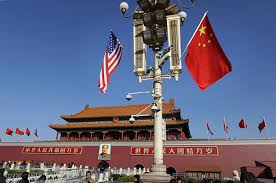
The planned visit of U.S. President Donald Trump to China is drawing worldwide attention because relations between China and the United States remain one of the most important factors shaping global politics, economics, and security.
RECOMMENDED STORIES
The visit comes during a period marked by:
-
Geopolitical conflicts
-
Economic uncertainty
-
Trade tensions
-
Technological rivalry
-
Supply chain disruptions
-
Growing concerns over artificial intelligence and cybersecurity
Many governments and financial markets hope the summit will help stabilize relations between the world’s two largest economies and reduce fears of further escalation.
Because China and the United States influence nearly every major global issue, even symbolic diplomatic engagement between the two countries can have significant international consequences.
Why are China and the United States so important globally?
China and the United States are the two largest economies in the world and together shape major areas of global development.
Their decisions affect:
-
International trade
-
Financial markets
-
Energy demand
-
Technology industries
-
Climate policy
-
Supply chains
-
Artificial intelligence development
-
Global security
The relationship between Beijing and Washington influences not only bilateral ties but also the stability of the international system itself.
When relations improve, markets often become calmer and global economic confidence strengthens.
When tensions rise, uncertainty spreads across industries, governments, and financial systems worldwide.
Why do global markets closely monitor China-U.S. relations?
Financial markets are highly sensitive to developments between China and the United States because both countries play central roles in global commerce and investment.
Positive relations can help:
-
Support international trade
-
Stabilize supply chains
-
Reduce inflationary pressure
-
Encourage investment
-
Improve market confidence
Conversely, worsening tensions can create fears involving:
-
Tariff escalation
-
Technology restrictions
-
Supply shortages
-
Slower economic growth
-
Currency volatility
-
Geopolitical instability
Industries particularly affected include semiconductors, manufacturing, artificial intelligence, energy, shipping, and consumer electronics.
This is why diplomatic summits between Chinese and American leaders receive enormous international attention.
Why have China-U.S. tensions increased in recent years?
The relationship between China and the United States has become increasingly competitive over the past decade.
Major areas of disagreement include:
-
Trade imbalances
-
Semiconductor restrictions
-
Artificial intelligence competition
-
National security concerns
-
Taiwan related tensions
-
Military activity in Asia
-
Technology export controls
-
Investment regulations
Washington increasingly views China as a strategic competitor in economics, technology, and geopolitics.
Meanwhile, Beijing argues that some American policies are aimed at containing China’s rise and limiting its technological development.
As a result, competition expanded beyond trade into broader strategic rivalry.
Why are trade and technology disputes so important?
Trade and technology now sit at the center of global power competition.
The two countries compete heavily in areas including:
-
Artificial intelligence
-
Semiconductors
-
Telecommunications
-
Advanced manufacturing
-
Green technology
-
Quantum computing
The United States imposed restrictions on exports of advanced chips and semiconductor equipment to China, citing national security concerns.
China responded by accelerating efforts to build domestic technological independence.
These disputes matter globally because modern economies depend heavily on technology supply chains connected to both countries.
What does China mean by “mutual respect” and “equality”?
Chinese officials and state media frequently emphasize principles such as:
-
Equality
-
Mutual respect
-
Mutual benefit
-
Dialogue
-
Cooperation
Beijing argues that major powers should manage disagreements through communication rather than confrontation.
China also stresses that competition between major countries does not necessarily have to lead to conflict.
From Beijing’s perspective, stable relations require both sides to acknowledge each other’s core interests and avoid zero sum thinking.
This language reflects China’s broader diplomatic approach toward managing strategic rivalry while maintaining economic engagement.
Why does China oppose “decoupling”?
“Decoupling” refers to efforts to reduce economic dependence between China and the United States.
This can involve:
-
Relocating supply chains
-
Restricting technology exports
-
Limiting investment
-
Reducing industrial integration
China argues that full economic separation would harm both countries and destabilize the global economy.
Chinese officials often describe bilateral economic relations as fundamentally based on mutual benefit.
Many economists also warn that aggressive decoupling could increase costs for businesses and consumers worldwide because the two economies remain deeply interconnected.
Why is artificial intelligence becoming a major issue in the relationship?
Artificial intelligence emerged as one of the most important strategic technologies in the world.
Both China and the United States are investing heavily in:
-
AI infrastructure
-
Machine learning systems
-
Semiconductor development
-
Robotics
-
Military AI applications
Leadership in AI is increasingly viewed as critical for future economic and geopolitical influence.
This intensified competition over advanced chips, computing power, and technological innovation.
AI also raises broader questions involving:
-
Regulation
-
Security
-
Data governance
-
Ethical standards
-
Global technological leadership
As a result, AI became a major dimension of U.S.-China strategic rivalry.
Why is communication between Beijing and Washington considered essential?
Many analysts believe stable communication helps prevent misunderstandings and reduces the risk of escalation between major powers.
Without regular dialogue:
-
Diplomatic mistrust can increase
-
Economic uncertainty can grow
-
Security tensions may intensify
-
Crisis management becomes harder
Both countries possess enormous military, economic, and political influence.
As permanent members of the United Nations Security Council, they also play important roles in international governance and conflict management.
Because of their global influence, tensions between the two powers can affect countries far beyond Asia or North America.
How does the relationship affect climate policy?
China and the United States are among the world’s largest economies and energy consumers.
Cooperation between the two countries is often considered essential for addressing:
-
Climate change
-
Carbon emissions
-
Renewable energy development
-
Environmental technology
-
Global sustainability goals
Without some level of coordination between Beijing and Washington, international climate initiatives become significantly more difficult.
This is one reason many governments encourage continued engagement between the two powers despite broader strategic competition.
Why is the international community watching closely?
Many countries worry about becoming caught between competing American and Chinese economic systems.
Governments around the world depend heavily on trade with both countries and fear being forced to choose sides in technological or geopolitical disputes.
Stable China-U.S. relations help support:
-
Global trade flows
-
Investment confidence
-
Supply chain stability
-
Economic growth
-
International cooperation
Instability between the two powers can create uncertainty for nearly every major economy.
This explains why international markets and governments closely monitor diplomatic developments involving Beijing and Washington.
Can one summit solve all the problems?
Most analysts believe no single meeting can fully resolve the deep structural tensions between China and the United States.
Major disagreements involving technology, security, trade, and geopolitical influence are likely to continue.
However, summits can still play important roles by:
-
Maintaining communication
-
Preventing escalation
-
Building confidence
-
Clarifying intentions
-
Managing competition
Even limited diplomatic progress can reduce uncertainty and improve international stability.
Many experts now describe the relationship as one of “managed competition,” where both countries compete strategically while trying to avoid direct confrontation.
Why do stable China-U.S. ties matter more than ever today?
The world currently faces multiple overlapping challenges, including:
-
Slower economic growth
-
Geopolitical conflicts
-
Climate risks
-
Energy instability
-
Technological disruption
-
Supply chain pressures
At a time of growing global uncertainty, many countries increasingly look to major powers for stability and coordination.
Because China and the United States influence so many aspects of the international system, their relationship affects global peace and prosperity more than perhaps any other bilateral relationship in the world.
Stable ties do not necessarily mean the absence of competition or disagreements.
Instead, they mean managing rivalry responsibly through dialogue, communication, and cooperation where possible.
That is why the upcoming summit is being closely watched not only by Beijing and Washington, but by governments, businesses, and financial markets across the entire world.
By Faig Mahmudov


Similar news