Why Switzerland’s neutrality image is eroding in South Caucasus


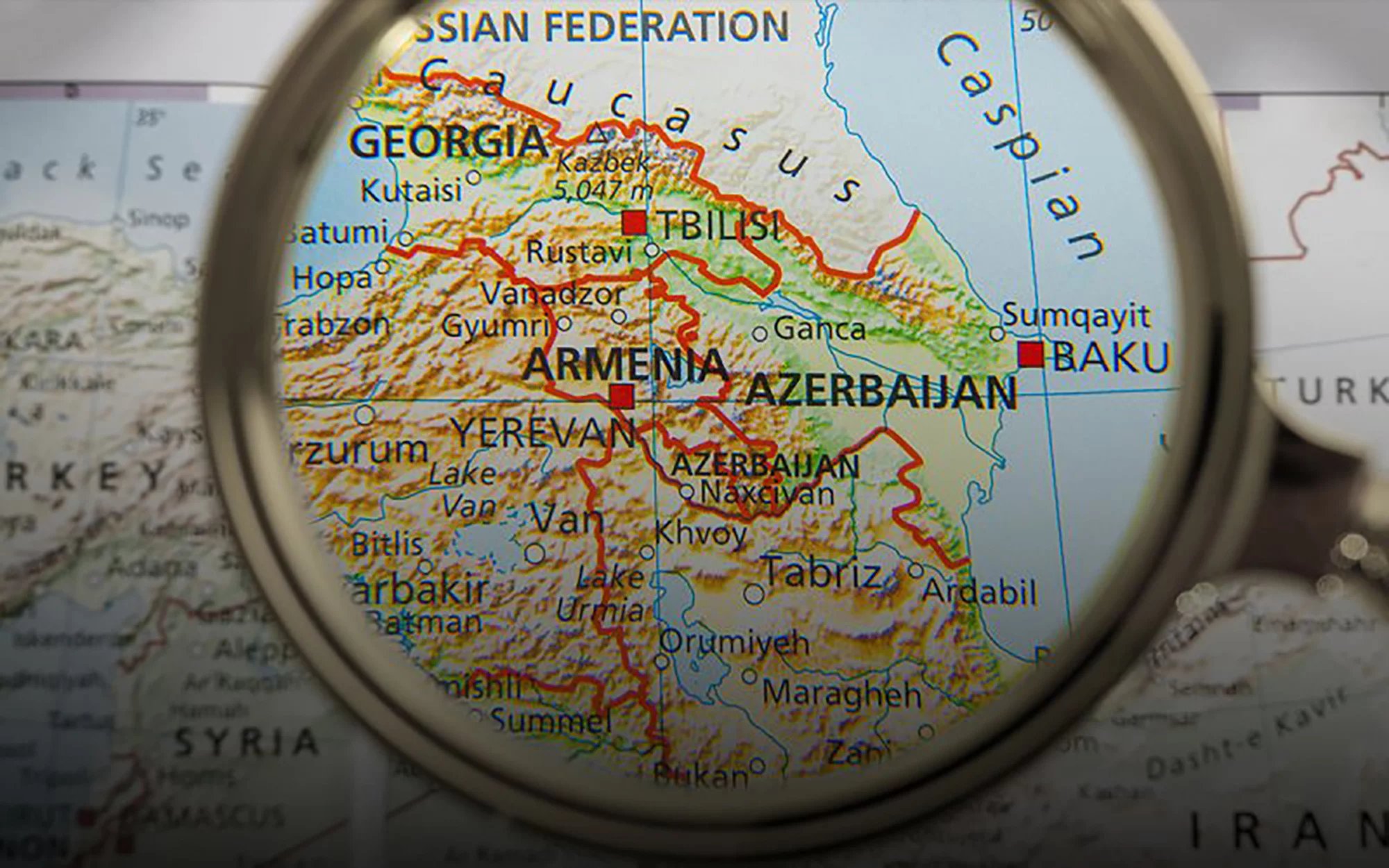
For decades, Switzerland has sought to tout itself within the international system as a balancing actor, a venue for dialogue, and a platform for conflict mitigation.
By hosting international organizations, maintaining distance from military blocs, and promoting humanitarian diplomacy, Switzerland has carefully cultivated an image of neutrality. However, developments in the South Caucasus in recent years have placed this long-standing image under serious scrutiny.
RECOMMENDED STORIES
Since the end of the military phase of the Karabakh conflict and the emergence of new political and legal realities in the region, the behavior of certain Swiss political circles has raised fundamental questions about how neutrality is applied in practice. At a time when the priority for the region should be the consolidation of stability and the encouragement of direct dialogue between the parties, Switzerland’s actions have increasingly appeared misaligned with these objectives.
The military operations of autumn 2020 radically altered the balance of power in the South Caucasus and effectively dismantled a status quo that had persisted for decades. Subsequent security measures implemented in 2023 eliminated the presence of illegal armed structures in the Karabakh region. From that point onward, the central focus of the international agenda shifted toward the preparation of a peace agreement, border delimitation, and the opening of regional communication routes. A number of influential states and international institutions, either explicitly or implicitly, acknowledged these new realities.

Source: Report
Against this backdrop, initiatives emerging within the Swiss parliament and affiliated political platforms drew particular attention. Rather than contributing to future oriented frameworks, these initiatives appeared to revive debates centered on a conflict that had already entered its post-conflict phase. International experience suggests that sustainable peace is built not by revisiting outdated narratives, but by constructing institutional mechanisms that address the future.
A defining feature of the approaches promoted by certain Swiss parliamentary working groups was their failure to account for the political realities established after 2020. By bypassing the agreements that reshaped the region and reintroducing elements of pre-conflict rhetoric, these initiatives effectively created an enabling environment for forces in Armenia that reject compromise and refuse to accept the outcomes of military defeat.
In practical terms, such external signals strengthened the arguments of domestic groups in Armenia that oppose a peace-oriented agenda. Political developments between 2021 and 2024, including elections, parliamentary debates, and public discourse, demonstrated that the issue of peace remains deeply divisive within Armenian society. In such a fragile internal environment, unbalanced positions taken by third countries inevitably acquire direct political significance.
Another troubling aspect of Switzerland’s approach lies in the striking resemblance between some of the narratives voiced in Bern and long-standing information strategies employed by Russia. Attempts to portray the regional situation as an unresolved conflict and to cast doubt on the legitimacy of post-2020 realities closely mirror messaging repeatedly advanced by Moscow on international platforms. This convergence raises legitimate questions about the extent to which Switzerland’s proclaimed independence from geopolitical power centers is maintained in practice.
Tensions surrounding international humanitarian institutions constitute another critical dimension. Decisions related to the termination or limitation of certain humanitarian missions in the Karabakh region were met with dissatisfaction in parts of the West. In Switzerland, this dissatisfaction appeared to shift from humanitarian concern into the political domain. According to several observers, humanitarian discourse has increasingly been used as a vehicle for political leverage rather than as a neutral instrument of assistance.
Switzerland’s transformation over the past decade into a convenient hub for groups holding openly anti-Azerbaijan positions further complicates its claim to impartiality. Various organizations, foundations, and informal platforms operating in Geneva and other Swiss cities regularly host events that criticize Azerbaijan’s domestic and regional policies from a one-sided perspective. These activities often rely on selective interpretations of international law, undermining Switzerland’s image as a balanced actor.
Source: RSI
The roots of this trend can be traced, in part, to the actions of Switzerland’s former political leadership. The role played by former foreign minister and president Didier Burkhalter in facilitating the departure of Emin Huseynov from Azerbaijan, as well as in addressing his financial liabilities, continues to be perceived in Baku not as a purely humanitarian gesture but as a politically motivated decision. This episode remains emblematic of Switzerland’s selective approach to human rights advocacy.
Burkhalter’s record extends beyond this single case. During his tenure as chair of the Organization for Security and Co-operation in Europe, his handling of the Karabakh conflict also attracted criticism. The failure to clearly distinguish between the state subjected to occupation and the occupying party undermined the credibility of international mediation mechanisms. This approach contributed to the prolongation of a negotiation process that produced no tangible results for years.
Taken together, these facts point to the necessity of a comprehensive reassessment of Switzerland’s policy toward the South Caucasus. If Switzerland genuinely seeks to contribute to peace, it must acknowledge the realities that have emerged in the region and refrain from actions that indirectly empower rejectionist forces within one of the parties. Otherwise, Switzerland risks being perceived not as a neutral mediator, but as an actor advancing selective political agendas.
Ultimately, peace cannot be achieved through the reinterpretation of past conflicts, but through pragmatic, forward-looking engagement. Any external intervention that complicates direct dialogue between regional actors inevitably erodes trust. For Switzerland, the fundamental question is whether it will uphold the neutrality it has long claimed, or whether it will drift toward becoming an indirect participant in emerging geopolitical rivalries in the South Caucasus. The answer will shape not only regional dynamics, but also Switzerland’s own international credibility.


Similar news