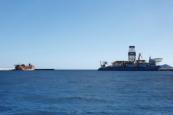
Russia-NATO: Tensions rise as Moscow plans to change Baltic Sea borders


By Sabina Alizade
In recent days, significant tension has arisen regarding Russia's plans to expand its maritime borders in the Baltic Sea. These plans have elicited strong reactions from Lithuania, Finland, and other countries, expressing concern over the potential consequences of such actions. However, an official statement yesterday refuted these plans, further altering the situation.
The foreign ministers of Lithuania and Finland, along with representatives from other countries, responded with concern and disapproval, emphasizing that such actions could be seen as violations of international law and could have negative implications for regional security.
However, the refutation of this statement yesterday has changed the context of the situation. The official confirmation of the cancellation or misinformation about the border expansion plans not only brought relief but also required a reevaluation of the international community's response.
These events underscore the importance of careful analysis and verification of information before drawing conclusions and taking further steps. Ensuring peace and stability in the region requires all parties to base their actions on respect for international law and dialogue.
The situation continues to evolve, and it is crucial to remain vigilant to new developments and the international community's reactions. Only through dialogue and cooperation can sustainable solutions to such conflicts be achieved, ensuring the security of all countries in the region.
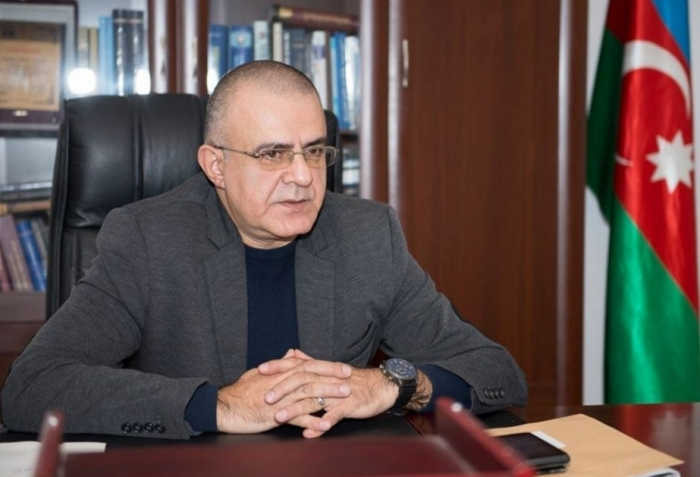
Political expert Elchin Mirzabeyli has told News.Az that Finland and Sweden joining NATO has altered the geostrategic situation in the Baltic region, expanding the North Atlantic Alliance's area of responsibility and doubling its border length with Russia to 2,600 km.
"In the event of a major armed conflict between Russia and NATO, this common border could become a frontline. The Baltic Sea, currently excluding Russia's coastal strips and territorial waters around Kaliningrad and St. Petersburg, has effectively become a NATO sea," he said.
"Today, the Baltic and North Seas are part of a larger geostrategic Arctic-North Atlantic area, extending to the Black Sea as potential operational zones. The entry of the two Scandinavian countries into NATO has facilitated the monitoring and control of the most important maritime routes in the Baltic Sea by the alliance forces, creating additional challenges for Russia in this direction," Mirzabeyli added.
The expert noted that Estonia, Latvia, and Lithuania, as well as the islands of Bornholm and Gotland in the Baltic Sea, are becoming increasingly important strategically for NATO. In the event of a conflict with Russia, the alliance would have greater opportunities to block its access to Kaliningrad and St. Petersburg through blockades and military operations.
"For this reason, Russia is proposing the division of territorial waters in the eastern part of the Gulf of Finland and the regions of Baltiysk and Zelenogradsk along a straight line, as is done in enclosed bodies of water. This means changing the state border line in the Baltic Sea and turning a large area into internal maritime waters," he noted.
Elchin Mirzabeyli believes that the circumstances prompting Russia to take such a step have formed since last year, when Estonia decided to expand its economic zone (an area beyond territorial waters) due to a so-called "side zone".
"According to international maritime law and the UN Charter, each country can claim to expand its economic zone at the expense of a 'side zone' to exercise all kinds of control there. Considering that Latvia and Finland, alongside Estonia, also have such claims, it is understandable why Russia reacted strongly. In this case, Russia's rights in the Baltic Sea are violated.
Expanding Russia's state border in the Baltic Sea means expanding territorial waters, which could change not only the realities but also the legal status of the water body in question. It seems that the scope of the maritime war between the West and Russia is expanding, and if a diplomatic solution is not found, the process could shift to open confrontation," he said.
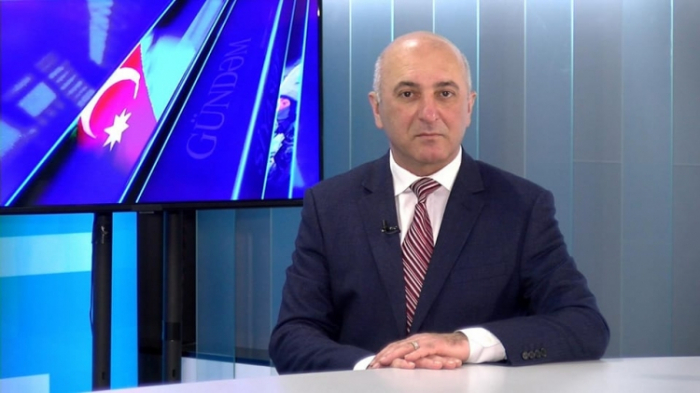
Military expert Adalat Verdiyev expressed his views on the situation, stating that one of Russia's primary security priorities is to prevent NATO weapons from approaching its borders. However, some countries have attempted to cross these red lines in various ways.
"Naturally, after Russia took the initiative in Ukraine, the steps it took to change its state borders with Lithuania and Finland in the Baltic Sea should be evaluated within this context. Previously, certain measures were taken to bring NATO forces closer to Russia's borders in Georgia and Ukraine, and today we observe the painful consequences of those actions in the region. If Armenia, which also attempted such a step, takes real actions in the future, it will be punished by Russia as well. In this situation, changes in the borders of Finland and Lithuania can indeed further expand the scope of the ongoing limited area conflict between Ukraine and Russia, potentially leading to a wider Third World War," Verdiyev said.
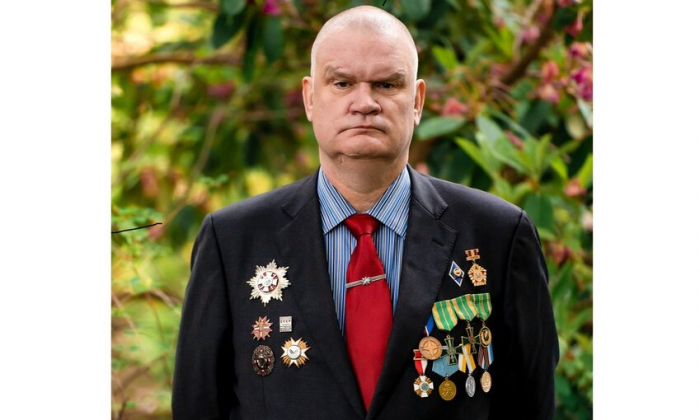
Latvian military expert Einars Graudins commented on the unilateral decision of the Russian Federation to change the maritime borders in the Baltic Sea, stating that Russia wants to alter the borders.
On 22 May, The Moscow Times reported that the Russian government had prepared a draft decision to unilaterally change the state maritime borders with Lithuania and Finland. This information was later refuted. It appears that only one source published it, and then it spread worldwide, leading to various predictions and analyses by different experts, including non-experts.
"Today, the geopolitical situation is such that there is an information competition, an information war between the Baltic countries and the Russian Federation, as well as other NATO member states. This is part of a proxy war between the Russian Federation and the West. Therefore, any statements by the Russian Federation regarding territorial changes are automatically received with sharp reactions worldwide. As they say, there is already a smell of war. Thus, the statement made by Russia today cannot be evaluated from a legal perspective, from the perspective of international law, or from previously concluded and still valid agreements," the expert noted.
He believes that the events are an element of a proxy war. Therefore, it requires a different assessment. The statement by the Russian Federation is not international law or politics but rather a provocative policy.
"Over time, we witness certain elements of the proxy war and information war in the form of news and statements. Russia is analyzing the reactions of Western countries, observing which red lines are acceptable and which are not. This is not unusual. In today's global political situation, this is entirely normal. This draft law was prepared by the Ministry of Defence of the Russian Federation. It is legal, isn't it? It unilaterally ensures the change of borders in the Baltic Sea with Finland, Estonia, and Lithuania. As of today, if you check, the draft law has already disappeared from the legal acts portal of the Russian government. It is no longer available. Journalists from Radio Liberty, particularly Mark Krutov, report that the document and its page no longer exist. This draft law's copy was visible in the archived version of the page as of 22 May for 1 hour and 58 minutes after lunch. The reason for the document's cancellation is unknown, and there is no official information about it. Previously, Kremlin press secretary Dmitry Peskov stated that the proposal by the Ministry of Defence of the Russian Federation used a very interesting expression," he pointed out.
Einars Graudins described the events as not only questionable but also humorous from the perspective of international law.
"Updating the state border coordinates in the Baltic Sea and then claiming that this update is not politically motivated is, in legal terms, a proxy information manoeuvre under international law. Relations between the West and the Russian Federation can indeed be described as a proxy information war. Of course, the leaders of the Baltic countries and all the countries mentioned such as Lithuania, Estonia, Latvia, and Finland are members of the North Atlantic Alliance. Naturally... We understand why this is being done, but our politicians are reacting to it. They respond immediately and with quite harsh statements because, from their perspective, these issues directly concern the national security of the Baltic states. However, from the perspective of international law and previously concluded agreements, there is no legal basis or preconditions for these actions. All these events are part of a proxy war and propaganda to test reactions and verify responses," the expert said.
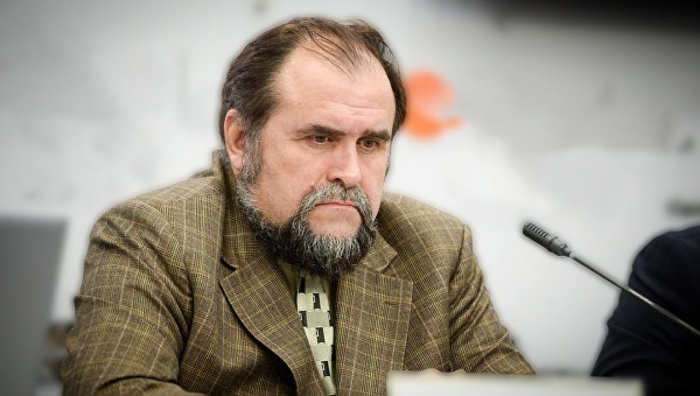
Ukrainian expert Alexander Okhrimenko has told News.Az that Russia wants war; therefore, the Russian government decided to move the border with Lithuania and Finland. This is a typical Kremlin provocation.
"The Kremlin wants to test NATO allies' readiness to defend themselves. This border change has no economic meaning but is crucial for the Russian navy. After Finland joined NATO, the Baltic Sea practically became a NATO-controlled sea, limiting Russian ships from going beyond Kronstadt without Finland's permission. Hence, the Russian government's decision is simply a provocation that could lead to a war between NATO and the Russian Federation. Furthermore, this decision was initially posted on the government's website and then removed. According to international law, the Russian Federation has no right to unilaterally change borders, including maritime borders. This requires negotiations between the Russian Federation, Finland, and Lithuania, but the Kremlin is simply seeking war. This provocation will be a significant test for NATO. Now it will be clear whether NATO is a force that can influence the Kremlin or if it has lost its relevance and is more of a club of interests than a true military alliance," the expert said.


Similar news