Afghanistan’s new role in Eurasia: Taliban, China, and Russia’s strategic bet


.png)
Editor's note: Faig Mahmudov is an Azerbaijan-based journalist. The article expresses the author's personal opinion and may not coincide with the view of News.Az.
Just recently, Russia lifted its ban on the activities of the Taliban movement within its territory, meaning the group will no longer be listed as a terrorist organization there. This development indicates Moscow's de facto recognition of the Taliban-led government in Afghanistan. The move comes amid rising expectations of greater influence in Afghanistan by several regional powers, particularly China.
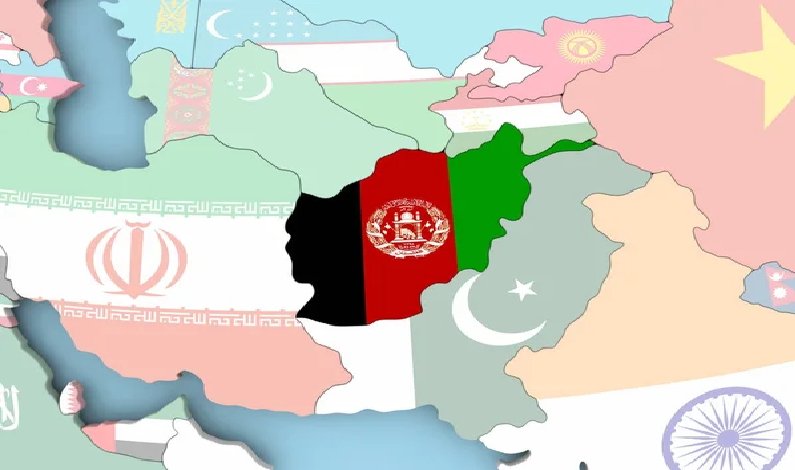
Let’s examine why Afghanistan, under Taliban rule, has become a focal point of interest for Russia. This issue should be assessed through both geopolitical and geoeconomic lenses. Despite being one of the world's least developed countries—with a GDP of only $14.58 billion USD in 2022 and a Human Development Index (HDI) ranking of 180 out of 191—Afghanistan occupies a strategically important position in China’s Belt and Road Initiative (BRI), effectively forming a critical segment of the envisioned China–Central Asia–West Asia Economic Corridor.
Source: Jamestown
Afghanistan's strategic relevance becomes clearer when considering what it can offer China. While some actors attempt to curb Beijing’s regional ambitions, others—such as Russia—see opportunities for cooperation and mutual gain, whether economic or political.
Following the U.S. withdrawal in August 2021, the Taliban faced the challenge of consolidating domestic power. As of 2023, the Taliban reportedly controls around 85–90% of the country, although resistance remains, particularly from the National Resistance Front in the north—mainly in Tajik and Uzbek-populated areas. There are also concerns about instability spilling over into neighboring states via loosely organized militant groups.
Key concerns involve Central Asia and China’s Xinjiang province. The U.S. left behind over $7 billion USD worth of military equipment, raising fears that these weapons could fuel regional unrest. Unregulated armed groups could be exploited by hostile actors, threatening stability in western China and in neighboring Central Asian countries such as Tajikistan, Uzbekistan, and Turkmenistan.

Source: Financial Times
To mitigate such risks, both China and Russia share an interest in promoting stability in Afghanistan under a centralized authority—namely, the current Taliban leadership. If the Taliban succeeds in consolidating control, including over areas formerly governed by factions of the Northern Alliance, it could provide a more predictable political environment, improving conditions for foreign investment and the implementation of long-term agreements.
Achieving this would require substantial financial backing. China appears poised to assume this role, as the Taliban have been engaging with Chinese infrastructure firms and offering access to Afghanistan’s estimated $1–3 trillion worth of untapped mineral resources—including lithium, rare earth elements, copper, and iron ore. Chinese state-owned enterprises are actively negotiating agreements to revive major projects such as the Mes Aynak copper mine.
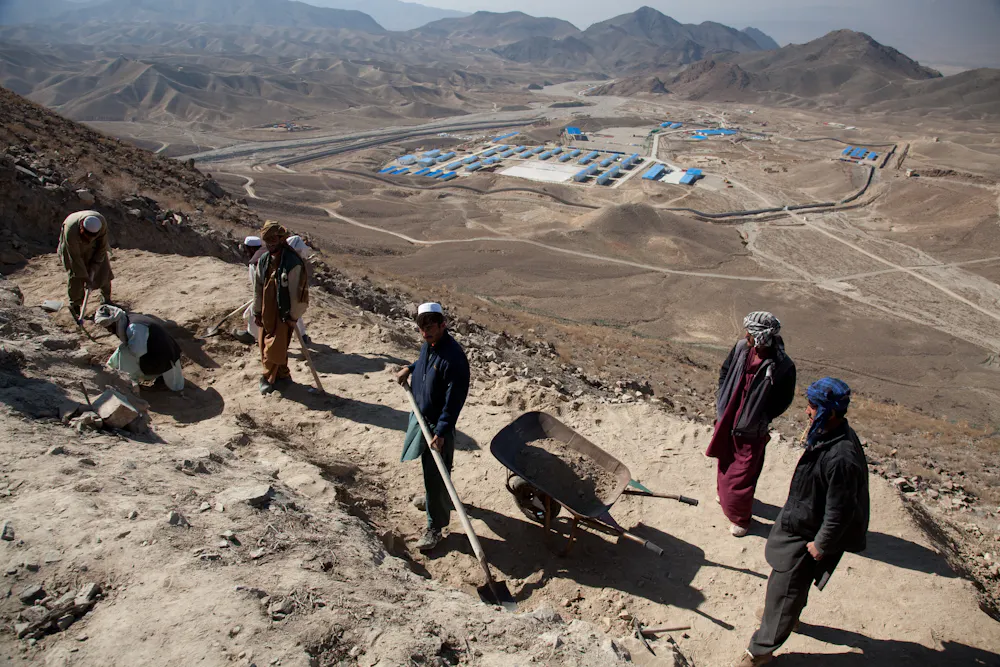
Source: The Conversation
Suppose the Taliban can ensure investment protection, uphold contractual commitments, and support infrastructure development. In that case, China may succeed in fostering economic progress in Afghanistan—something previous powers, including the British Empire, the Soviet Union, and the United States, failed to achieve through military means.
Despite the U.S. spending more than $2.3 trillion during its two-decade presence in Afghanistan, much of this investment was undermined by corruption, poor governance, and the high costs of military operations. The SIGAR (Special Inspector General for Afghanistan Reconstruction) report found that over 30% of U.S. aid was lost due to fraud, waste, and abuse. Furthermore, relatively few infrastructure projects proved capable of generating sustainable economic returns.

Source: Khaama Press
A different model may emerge if China channels investment into transportation, housing, energy, and healthcare—with the Taliban serving as a pragmatic, if controversial, partner. Unlike Western countries, China does not condition its support on democratic reforms or ideological alignment. For Beijing, the primary concerns are stability and continuity along international trade routes. As part of its $1 trillion Belt and Road Initiative, China is working to establish alternative transport corridors that bypass maritime chokepoints controlled by rival powers.
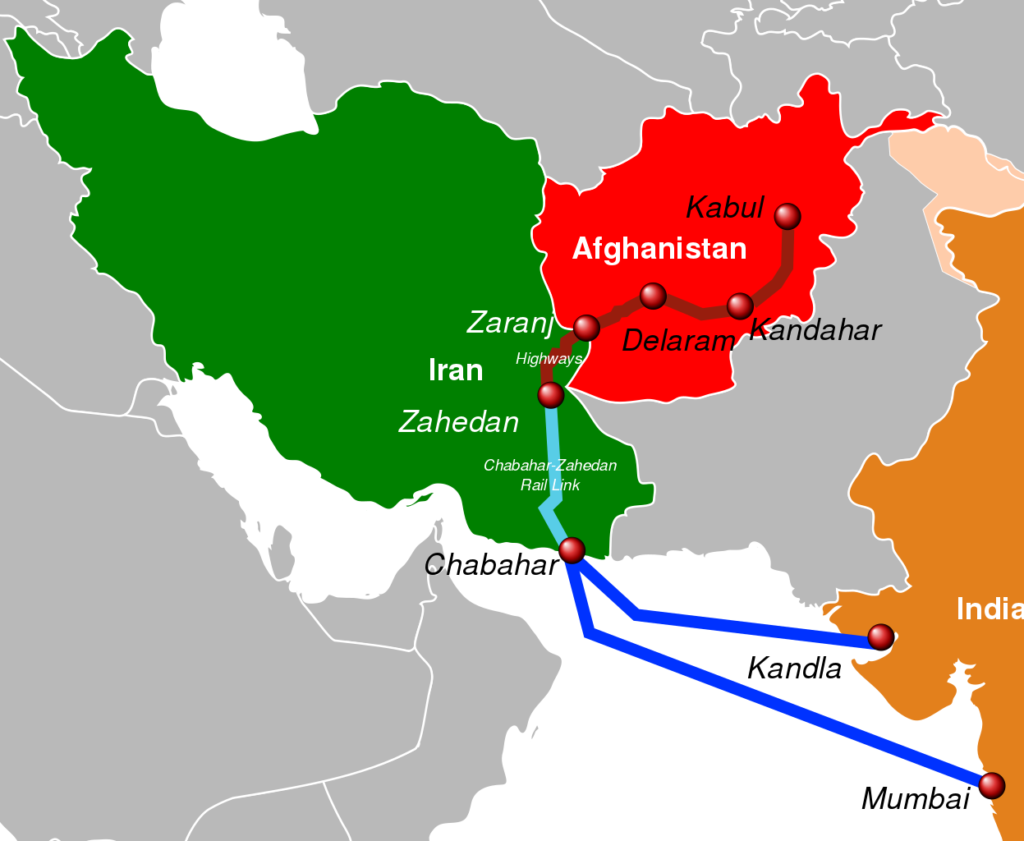
Given ongoing sanctions against Iran and Russia, China has recognized the strategic value of logistics corridors that are less exposed to foreign pressure. This has led to growing interest in the development of a Trans-Afghan Transport Corridor, connecting Iran’s Chabahar Port or Pakistan’s Gwadar Port to China’s Xinjiang region via Kabul.
Source: South Asia Investor Review
By deepening its presence in Afghanistan, China aims to complete a land-based corridor linking Central Asia to the Persian Gulf, thereby improving access to vital oil supplies. Over 50% of China’s oil imports—about 11 million barrels per day—come from the Middle East. Current overland routes, such as Tehran → Kashgar → Shanghai, are long and vulnerable to geopolitical disruptions. A corridor through Afghanistan could reduce travel time and transport costs, while enhancing energy security.
Moreover, many existing routes bypassing Afghanistan pass through unstable areas like Balochistan in Pakistan or the western parts of Xinjiang. A stable Afghanistan could provide a more secure and efficient alternative.
In conclusion, Afghanistan is evolving from a theater of endless conflict into a region of growing strategic value. Russia’s decision to engage with the Taliban mirrors China’s broader vision of constructing a continental web of connectivity stretching from East Asia to the Middle East. In this context, Afghanistan is no longer merely a conflict-ridden nation—it is emerging as a pivotal node in the future architecture of Eurasian integration.
(If you possess specialized knowledge and wish to contribute, please reach out to us at opinions@news.az).


Similar news