Alan Cafruny: Trump seeks to assert global dominance through Iran tariffs - INTERVIEW



U.S. President Donald Trump’s proposal to impose a 25% tariff on countries “doing business” with Iran effectively mirrors secondary sanctions under a different label. Though framed as tariffs, the measure would penalize third states for commercial ties with Tehran, extending U.S. coercive power beyond traditional financial sanctions.
The ambiguity surrounding what constitutes “doing business,” especially amid shadow fleets and sanctions evasion, highlights significant enforcement challenges. Strategically, the tariffs signal an effort to reassert control over global trade, but they also risk retaliation and domestic pushback. Given China’s and India’s economic exposure to Iran, the move appears as much about geopolitical leverage as it is about applying pressure on Tehran.
Against this backdrop, the News.Az analytical portal spoke with Alan Cafruny, the Henry Platt Bristol Professor of International Affairs at Hamilton College, to examine the strategic, economic, and geopolitical implications of the proposed U.S. tariffs and their potential impact on the global trading system.
- Is the proposed 25% tariff on countries trading with Iran effectively a form of secondary sanctions under a new name?

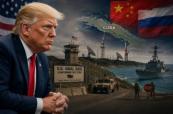
Photo: U.S. President Donald Trump
- Trump stated on Truth Social that a 25% tariff would be imposed “immediately” on all countries “doing business” with Iran. These would certainly constitute an effective form of secondary sanctions. However, although the statement was “final and conclusive”, it was not accompanied by detail and was issued prior to decisions about further steps to be taken. “Doing business” was not defined, a very important issue given the strong presence of “shadow fleets” facilitating sanctions but also tariff avoidance.
- Is Trump seeking to reassert U.S. control over the global trading system through tariffs rather than traditional sanctions?

Source: Reuters
- By enhancing the use of tariffs, which extend well beyond traditional sanctions in terms of the number of countries targeted, Trump has certainly sought to assert greater dominance of the world economy. However, unlike sanctions, tariffs can have serious negative effects on the country that imposes them. At the same time, when enacted against powerful countries, they invite retaliation. Thus, China responded to Trump’s threat to impose 100% tariffs by threatening to embargo rare earth minerals, compelling Trump to reduce tariffs to 35%.
China has condemned Trump’s tariffs on Iran, which, if imposed, would almost certainly provoke significant retaliation. At the same time, much of Wall Street is resistant to the use of tariffs and the U.S. Supreme Court may limit Trump’s use of them. Having recently declared war on the U.S. Federal Reserve (central bank) and thereby provoking resistance even from his Republican and financial base, Trump will be mindful of these factors.
- Is this a move against Iran or against China and India, which use Iran as a hub for circumventing U.S. influence?
Source: The Diplomat
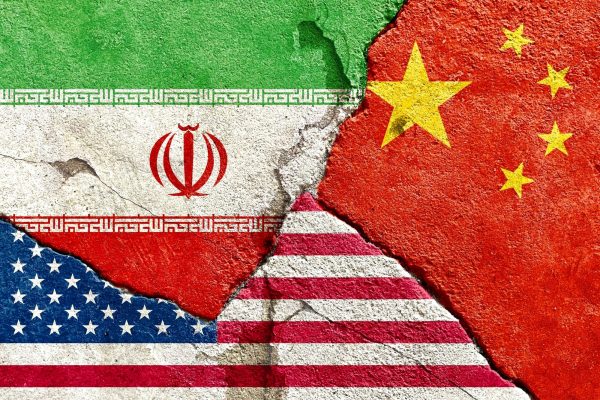
- China is by far Iran’s largest trading partner, importing not only 80% of Iran’s oil exports in 2025, but also many other commodities. If China were compelled to reduce imports, it would further devastate Iran’s economy, which has shrunk by almost 35% since Trump imposed sanctions in 2018 following the U.S. withdrawal from the JCPOA. However, not only does China possess significant trade power of its own, but also a great deal of China-Iran trade is conducted through shadow fleets.
Notwithstanding Trump’s recent seizure of a tanker flying the Russian flag, it is unlikely that he would risk wholesale seizures against either Russian or Chinese vessels. India is also an important trading partner of Iran, already facing 50% U.S. tariffs on aluminum, steel, a range of additional exports, and with less ability to retaliate than China.
- Is the United States shifting from financial sanctions to a new kind of trade war?
Yes, but as noted above, trade wars are far more complicated. During his first term, Trump famously proclaimed that "trade wars are good and easy to win." That has not always been the case, most notably with respect to China.
- Why is Iran now the central target of U.S. tariff policy?

Source: CNN
- The massive protest wave in Iran has greatly enhanced the regime’s vulnerability, already weakened by U.S. and Israeli bombings, as well as the sanctions. So there is no question that both the United States and Israel are seeking a further devastation of the Islamic Republic, including possibly, regime change. Tariffs will certainly do further damage to an economy already reeling from sanctions, massive inflation, and acute shortages of water.
Although Trump has stated that “help is on its way,” it is unlikely, although not impossible, that he will send ground troops into the country. However, reports indicate that there has been a significant surge of U.S. transport planes throughout the last month into U.S. bases throughout the Persian Gulf, suggesting the Trump administration will carry out first cyberattacks followed by missile strikes against what remains of Iran’s ballistic missile forces.


Similar news