Azerbaijan and Pakistan: A growing strategic partnership – INTERVIEW


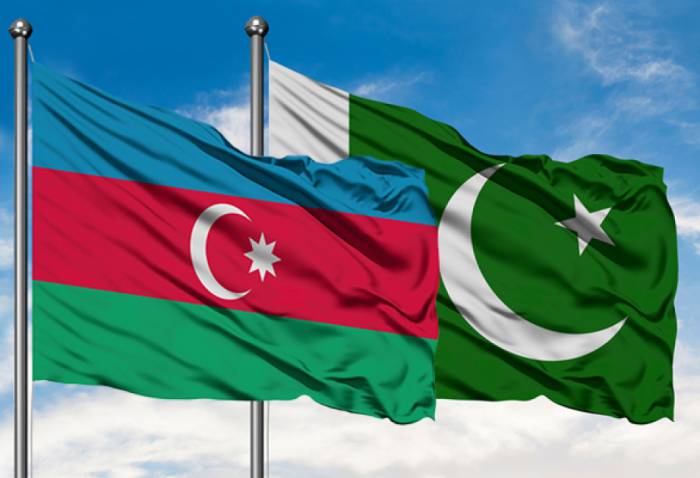
Recent clashes between Pakistan and Afghanistan along their border have heightened tensions, driven by differing views on border demarcation and ongoing militant activities. Pakistan-India relations remain strained due to disputes over Kashmir and cross-border terrorism, with occasional violence and accusations of hostility. China’s influence, especially through the China-Pakistan Economic Corridor (CPEC), adds another layer of complexity, strengthening ties between Pakistan and China while raising concerns in India and the West about shifting regional power dynamics. Meanwhile, Pakistan’s relationship with Azerbaijan continues to grow, marked by strengthened cooperation in defense, energy, and trade—particularly regarding energy security—aligning both countries’ strategic goals.
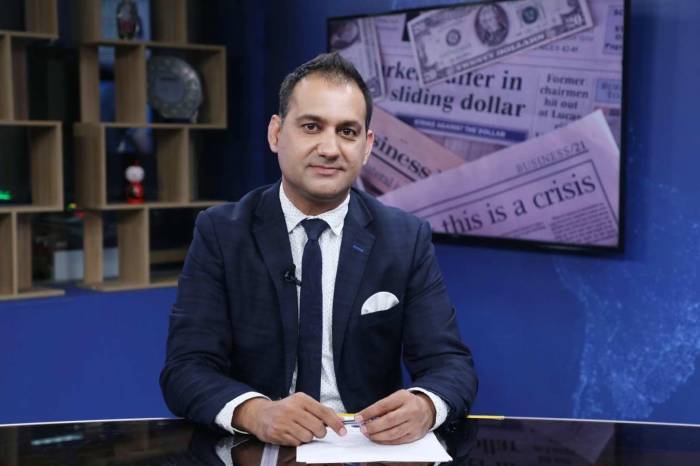
In an interview with News.Az, Dr. Yasir Masood, a prominent Pakistani political commentator, broadcast journalist, and strategic communication expert who frequently provides insights on international relations for global media outlets and think tanks discusses the historical context of Pakistan-Afghanistan tensions, the Pakistan-India conflict, China’s role in Pakistan’s strategic calculations, and the country’s strengthening ties with Azerbaijan.
- How would you characterize the bilateral relations between Azerbaijan and Pakistan? Where do you see the most noticeable progress, and what potential remains to be fully realized?
- Relations between Azerbaijan and Pakistan are robust, with both countries sharing common interests in defense, culture, and regional stability. There is significant potential for further collaboration, especially in defense cooperation and cultural exchange. Defense ties, in particular, could be expanded to a much greater extent.
Both nations also have relatively young populations, providing ample opportunities for deeper cooperation in education, trade, and technology. As the world shifts toward a multipolar order, the partnership between Azerbaijan and Pakistan is entering a new era of friendly collaboration. There is vast untapped potential for these two countries to strengthen their ties even further in the coming years.
- The next question is about the recent clashes between Pakistan and Afghanistan along their border. Could you explain the historical and political factors that have led to this crisis? What key factors have contributed to its escalation?
- To understand the current crisis, we must trace its roots back to the 1970s, particularly during the Cold War, between the Soviet Union and the United States. At that time, the Mujahideen were trained, mentored, and funded by the U.S. After the Cold War ended and following the 9/11 attacks, the situation changed. Many of these trained individuals were left with U.S. and NATO arsenals and eventually became involved in extremist activities, some of which were supported by countries like India.
Regarding Pakistan’s relationship with the Taliban, Pakistan supported their governance for several reasons. First, Pakistan was concerned about the Tehrik-i-Taliban Pakistan (TTP), a faction operating from Afghanistan, and hoped a Taliban government would control its activities. Second, India’s growing influence in Afghanistan was a concern, with Pakistan hoping that Taliban rule would help diminish this influence. Third, Pakistan believed that a stable Afghanistan would be in the best interests of the entire region, including China. However, Pakistan misread the situation, as the Taliban eventually evolved into a significant political entity.
Pakistan also made extensive efforts, such as brokering peace talks between the Taliban and the U.S. Nevertheless, despite providing evidence of TTP activities on Afghan soil, the Taliban has not acted decisively to curb the TTP, allowing it to continue its attacks. The situation worsened in 2024, with fatalities reaching the highest numbers since 2014.
- If the conflict between Pakistan and Afghanistan escalates further, could India exploit the situation for its own interests?
- India has already been capitalizing on the instability between Pakistan and Afghanistan. It has engaged in what we refer to as “fourth-generation warfare” and “fifth-generation warfare” in Pakistan. A historical example can be seen in Yugoslavia, where external actors fueled insurgencies to create instability. Similarly, India uses proxies to destabilize Pakistan, aiming to isolate it geopolitically, much like what happened during the Cold War and after 9/11.
Pakistan has made enormous sacrifices, losing around 80,000 lives, and its strategic projects, such as the China-Pakistan Economic Corridor (CPEC), are threatened by these proxy activities. India has invested heavily in Afghanistan, and before the Taliban took power, there was a strong alliance between the Afghan government and India.
However, this relationship shifted following the Taliban’s rise.
Today, India continues to exploit the situation by supporting groups like the TTP and the Balochistan Liberation Army (BLA). Its goals are to destabilize Pakistan, target Chinese interests, and undermine Pakistan’s reputation as a secure investment destination. Despite these efforts, Pakistan has shown resilience, supported by its allies—particularly China, which recognizes the importance of regional stability.
- In the event of deteriorating relations between Pakistan and India or the Taliban government, can Islamabad rely on support from Beijing?
- Yes, Pakistan can rely on Beijing’s support. The relationship between Pakistan and China is strong, anchored in shared strategic interests. China views Pakistan as a key partner in the Belt and Road Initiative (BRI), and both countries collaborate closely through the Shanghai Cooperation Organization (SCO). As a result, Beijing has a vested interest in maintaining Pakistan’s stability, especially because a deteriorating relationship between Afghanistan and Pakistan could undermine both countries’ security and economic interests.
Although China has not released official statements on this matter, it has consistently supported Pakistan, particularly in economic and security affairs. China also follows a policy of peaceful coexistence and recognizes the importance of stability in its neighboring countries, including Afghanistan and Pakistan.
- With Donald Trump returning to office on January 20, how might U.S. policy toward the region—particularly toward Pakistan and the Indo-Pakistan peace process—change?
- The U.S. has maintained a long-standing relationship with Pakistan, but the situation has become more complex, especially after the 20-year war in Afghanistan. While the U.S. supported Pakistan during the Cold War, it also fought against the Taliban, contributing to the current environment. Going forward, the U.S. may continue to support India through defense ties and the Quad Alliance, indicating that Pakistan might face a more hawkish approach under a Trump administration.
Trump’s policies could lead to greater U.S. support for India and increased diplomatic engagement in the region. Nevertheless, Pakistan must maintain a proactive diplomatic strategy, especially regarding its relationships with China and India, while simultaneously addressing threats posed by groups like the TTP and the BLA.


Similar news