Azerbaijan to help support Armenia’s food security


Seymur Mammadov, a special commentator for News.Az, is the director of the international expert club EurAsiaAz. The article reflects the author’s personal views and does not necessarily represent those of News.Az.
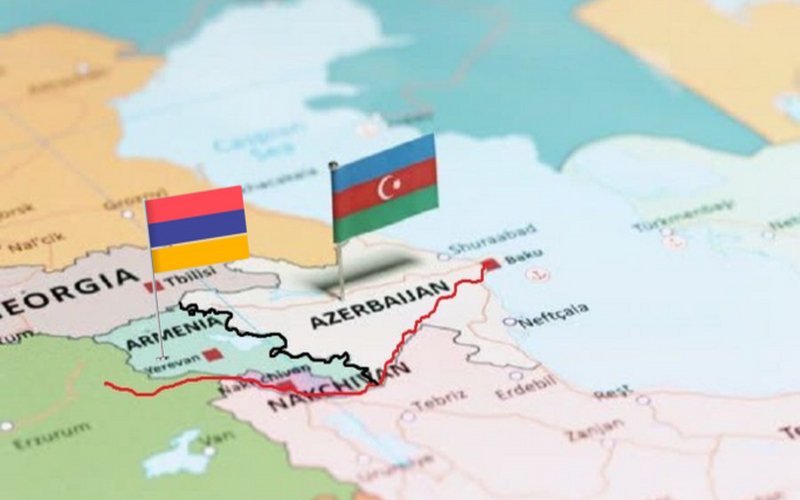
Azerbaijan’s decision to lift long-standing restrictions on cargo transit to Armenia is not just a political gesture, it is a move that could reshape the logic of regional relations in the South Caucasus.
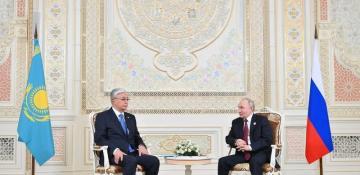
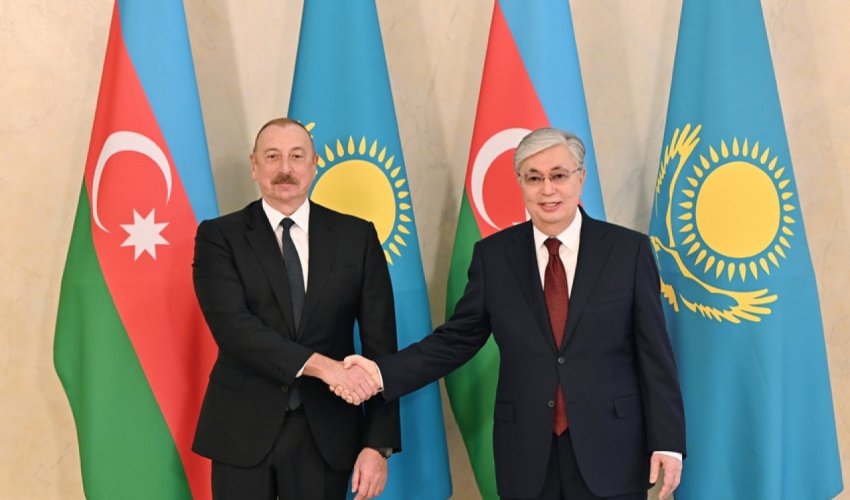
During his visit to Astana, President Ilham Aliyev announced that the first shipment of Kazakh grain is already on its way to Armenia through Azerbaijani territory. The news made waves across Baku, Yerevan, and beyond, signaling the emergence of a new regional dynamic grounded in pragmatic cooperation rather than isolation.
“Azerbaijan has lifted all restrictions on the transit of goods to Armenia that had existed since the time of occupation. The first such transit cargo is a shipment of Kazakh grain bound for Armenia. I believe this shows that peace between Azerbaijan and Armenia is now not only on paper but also in practice,” said Ilham Aliyev.
This statement marks the beginning of a new era. It illustrates that peace and stability in the region are no longer abstract ideas but tangible realities: visible in infrastructure, trade routes, and mutual commitments rather than diplomatic rhetoric alone.
Armenia joins the regional logistics map
Sourcee: News.Az
Armenian Minister of Economy Gevorg Papoyan confirmed that the first shipment of Kazakh wheat would soon arrive in Armenia.
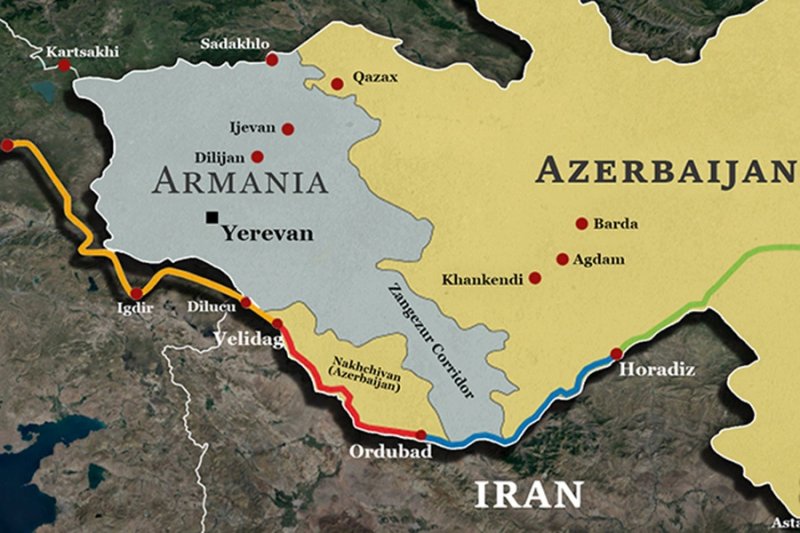
“The first batch of Kazakh grain will reach Armenia by rail via the Aktau–Baku line and then through Azerbaijan and Georgia. Peace has been established,” the minister wrote on social media.
The logistics of this route are remarkable. Trains loaded with Kazakh grain depart from Aktau, cross the Caspian Sea to Baku, continue along the Baku–Tbilisi–Kars railway to Georgia, and from there enter Armenia. For the first time in decades, Armenia is becoming part of an international transport corridor - the Middle Corridor linking Central Asia to Europe.
Symbolically, it is Azerbaijan that has enabled Armenia to reconnect to major trade routes. Politically, this signifies not only the removal of barriers but also Baku’s willingness to redefine regional relations through cooperation and mutual benefit rather than confrontation.
A corridor of pragmatism and peace

Source: Commonspace
The Armenian prime minister’s office welcomed the move. Press Secretary Nazeli Baghdasaryan described it as “an important step in opening regional communications, strengthening trust, and institutionalizing peace between the two countries in accordance with the Washington agreements.”
Even Yerevan’s recognition of Baku’s initiative reflects a growing understanding that geography and economics can be more powerful than political division.
For Armenia, this development holds far-reaching consequences. The country has long relied almost exclusively on Russian wheat - 99.9% of all its imports in 2023 came from Russia. Yet Moscow’s export quotas, internal bans, and logistical difficulties have turned that dependence into a strategic vulnerability. From February 15 to June 30, 2025, Russia imposed a quota of 10.6 million tons for exports outside the Eurasian Economic Union. Earlier, it had banned the export of durum wheat altogether, creating serious supply issues for Yerevan.
Last year, Armenia’s Security Council Secretary Armen Grigoryan even suggested that citizens switch from wheat to rice to avoid shortages, a statement that shocked the public.
“Wheat may be a strategic commodity, but at some point, we can transition to rice and adapt,” said Grigoryan, revealing how deeply Armenia’s food security depended on external factors.
The proposal was unrealistic. Rice has never been a staple of Armenian cuisine despite the country’s proximity to Iran, and attempts to import grain from Iran in the past such as during Russia’s 2010 wheat export ban raised questions about quality and reliability.
Kazakhstan: A new lifeline through Azerbaijan
Source: APA
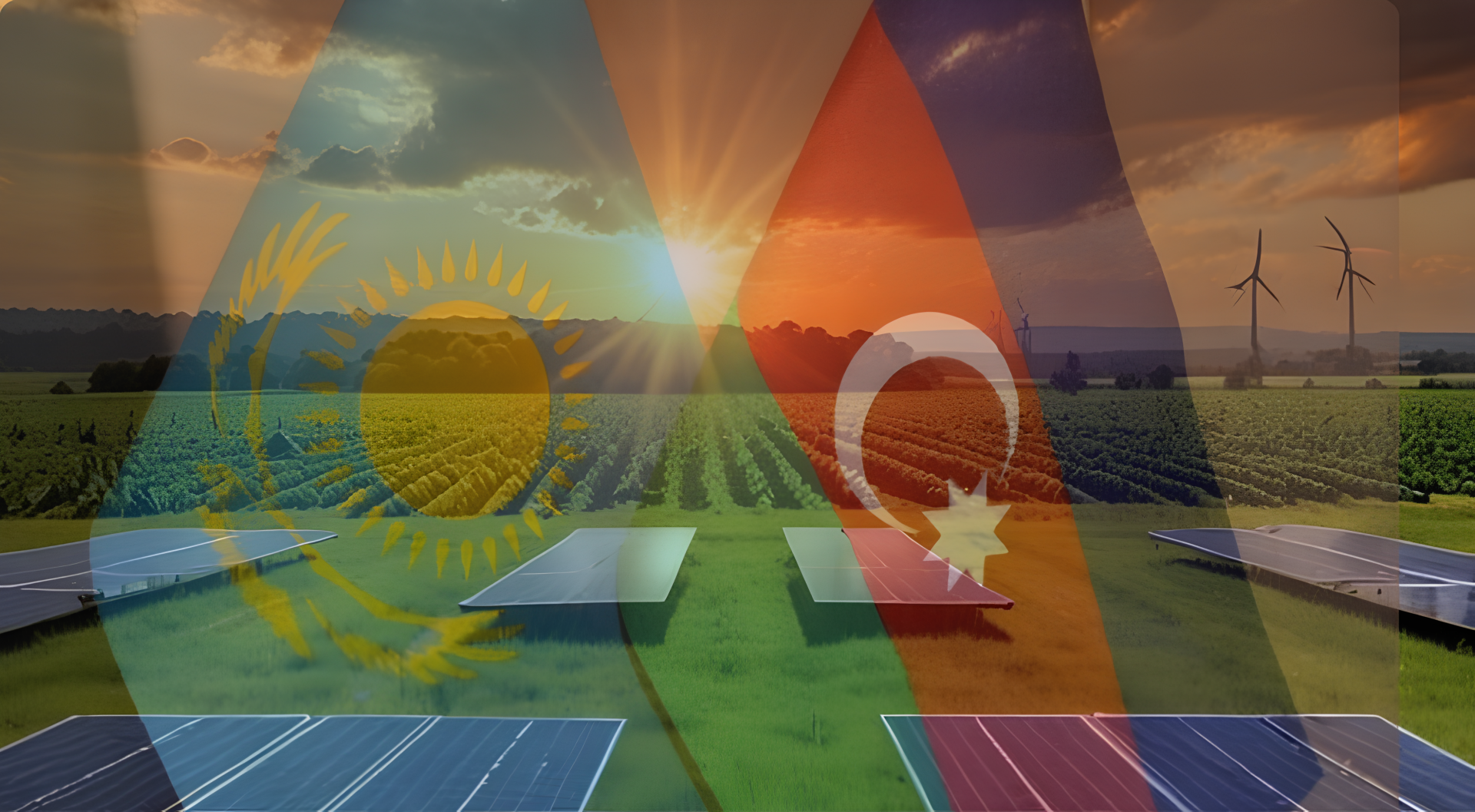
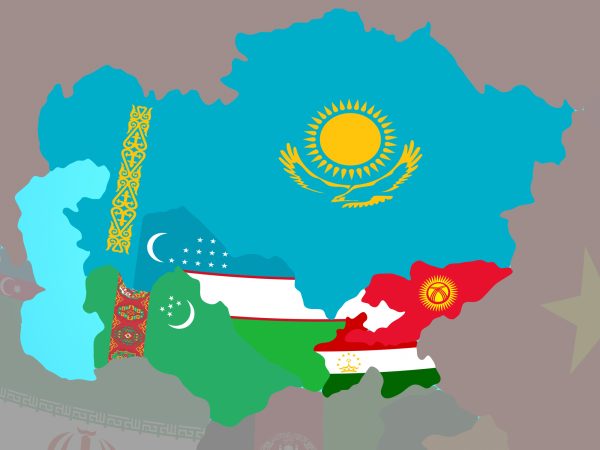
In contrast, Kazakhstan offers both quality and scale. As one of the world’s leading wheat exporters, it represents a natural and stable alternative for Armenia. Now, thanks to the reopening of transit through Azerbaijan, this alternative is no longer theoretical. The route via Baku and Georgia provides a direct, economically efficient corridor that reduces Armenia’s dependence on Russia and diversifies its food supply chain.
Aliyev’s decision as strategic statecraft
Source: AzerTAG
Ilham Aliyev’s decision to open Azerbaijan’s territory to Armenian-bound transit can certainly be read as a gesture of goodwill, but it is also an act of strategic foresight. Baku is positioning itself as the indispensable logistical bridge of the South Caucasus, the point where Central Asia’s resources meet Western markets. By allowing Armenian participation in this process, Azerbaijan underscores a key message: peace and cooperation bring real, measurable benefits.
For Armenia, this is an opportunity to acknowledge that isolation is not sustainable. The reopening of transport routes through Azerbaijani territory enables Yerevan to integrate more deeply into regional trade networks and adapt to a multipolar economic reality.
A message for the region
Source: The Diplomat
The first Kazakh grain train crossing Azerbaijani soil carries far more than agricultural cargo. It carries a message: peace in the South Caucasus can be built not through rhetoric, but through shared interests and interdependence.
Azerbaijan’s move demonstrates confidence and maturity - the posture of a country that can turn former frontlines into corridors of cooperation. For Armenia, it is a reminder that prosperity and stability lie not in isolation, but in engagement.
The era of blockades is slowly giving way to an era of open routes. And for the first time in decades, the South Caucasus may be moving toward a peace built not on words, but on railways.
(If you possess specialized knowledge and wish to contribute, please reach out to us at opinions@news.az).


Similar news