Araz Corridor: Azerbaijan and Iran build a new gateway between East and West


Editor's note: Seymur Mammadov, a special commentator for News.Az, is the director of the international expert club EurAsiaAz. The article reflects the author’s personal opinion and does not necessarily represent the views of News.Az.
The Araz Corridor, a long-awaited infrastructural project connecting Azerbaijan and Iran, is entering its decisive phase. By the end of this year, the Agbend–Kalale Bridge over the Araz River will be completed, and by the Nowruz holiday, all border and customs facilities on this stretch of the Azerbaijani-Iranian border will be ready. This milestone marks more than just the completion of another engineering structure — it symbolizes a new chapter in the regional connectivity of the South Caucasus.
For ordinary Azerbaijanis, it means that by spring they will have an alternative to air travel to the Nakhchivan Autonomous Republic. Families will once again be able to visit relatives and friends in Nakhchivan by car. In the longer term, the same route will be complemented by a railway, further strengthening the economic and human links between the western regions of Azerbaijan and the Nakhchivan Autonomous Republic.
Source: AzerTAG
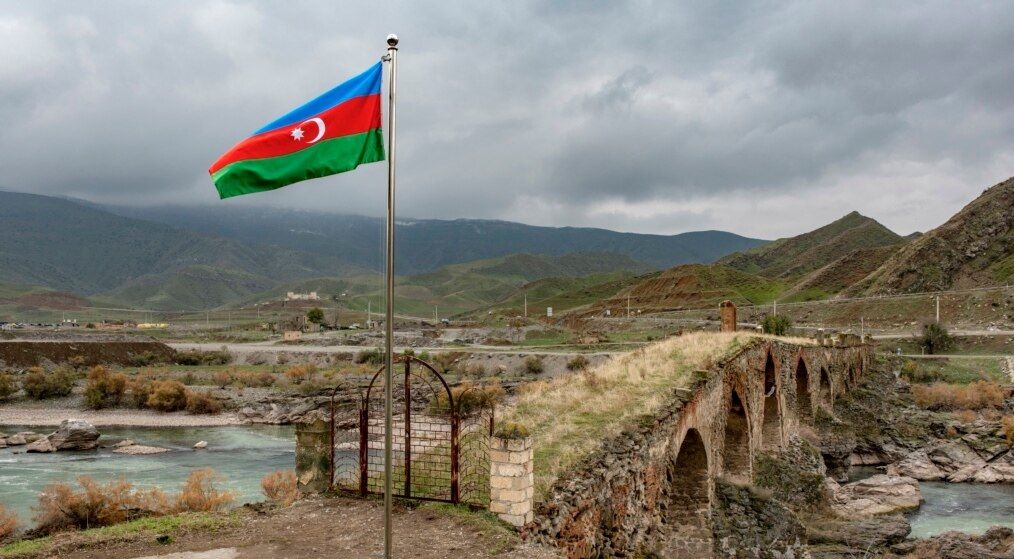
At present, Iran is finalizing its section of the bridge, while Azerbaijan completed its work some time ago. The bridge itself stretches 374 meters in length and 27.6 meters in width, featuring four traffic lanes, two safety lanes, and pedestrian paths of about three meters on each side. Tehran is also working to expand the road from the Agbend–Kalale Bridge to Julfa. Because of the challenging terrain, several smaller bridges and tunnels will be built. According to Iran’s Minister of Roads and Urban Development, Farzaneh Sadegh, this part of the project will be finished within one or two years.
At a recent trilateral meeting between Azerbaijan, Iran, and Russia, Azerbaijani Deputy Prime Minister Shahin Mustafayev described the Araz Corridor as a unique infrastructure project that will serve as a branch of the North–South, East–West, and Middle Corridors. The agreements reached so far between Baku and Tehran have created a solid foundation for international cooperation. Beyond the political and economic aspects, this project connects the two nations in tangible, people-to-people terms.
Source: Tasnimnews
Other complementary projects are moving forward as well. Work continues on the North–South International Transport Corridor, the construction of the Astara freight terminal, and a new bridge over the Astarachay River. The Agbend–Kalale road and bridge are equally significant for Iran, which stands to gain enormous benefits from joining this network. Becoming part of the East–West Corridor has been a long-held aspiration for Tehran. Now that dream is materializing, giving Iran access to global markets through future highways linking Agbend with Jabrayil, Aghdam, Yevlakh, Lachin, Kalbajar, Ganja, and Georgia.
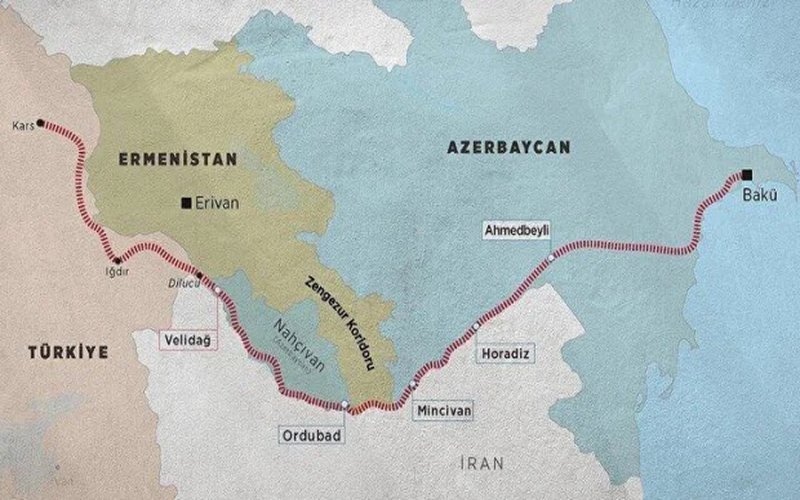
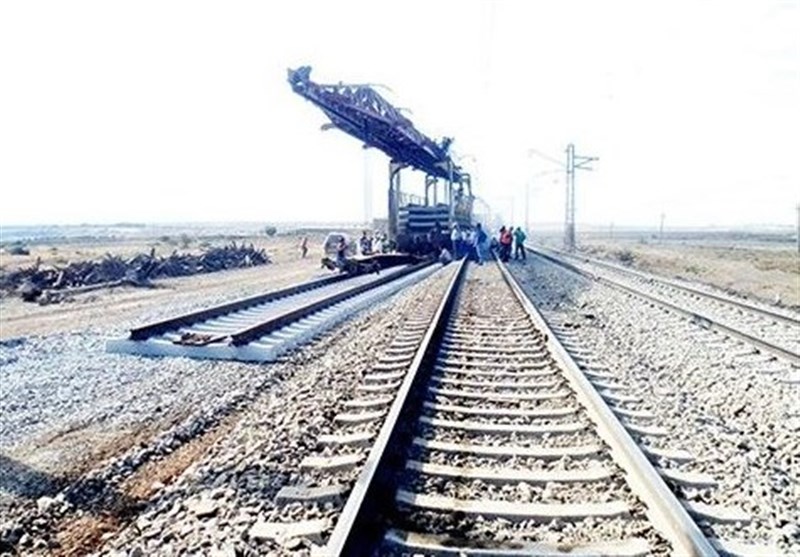
During the 15th session of the State Commission on Cooperation between Azerbaijan and Iran in economic, trade, and humanitarian fields, both governments signed a Memorandum of Understanding in Baku on establishing new communication links between the East Zangezur Economic Region and the Nakhchivan Autonomous Republic through Iranian territory. The agreement envisions the construction of a railway line roughly five kilometers south of the Armenian–Iranian border, a multi-lane highway, power lines, and digital communication infrastructure. In many ways, the Araz Corridor mirrors the so-called “Trump Route” — the label given to the Zangezur Corridor after the August 8 meeting in Washington — yet the Iranian route is not an alternative but a parallel complement with its own geopolitical logic and purpose.
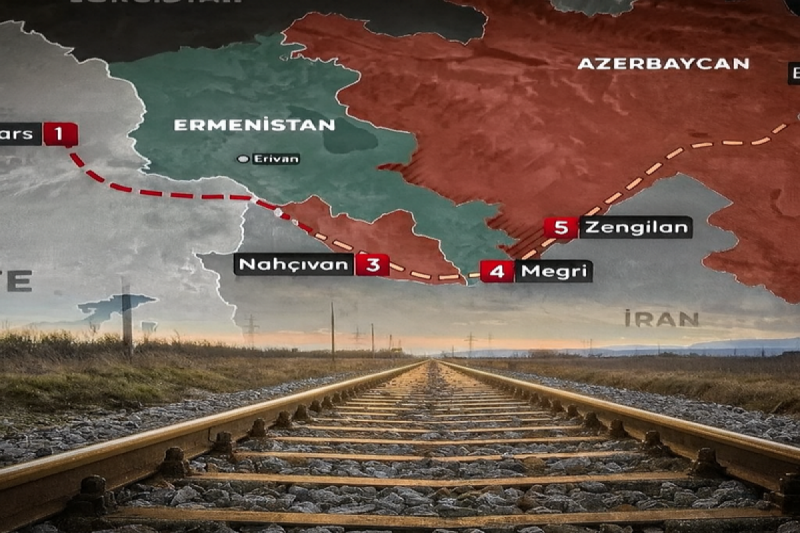
Photo: Caliber
Although the Araz project was agreed upon three years ago, genuine progress began only after the election of Iran’s new president, Masoud Pezeshkian. Previously, implementation had been delayed for various reasons. In January, Iran’s Deputy Minister for Security and Public Order, Ali Akbar Purjamshidian, publicly warned that no agency had the right to obstruct the project. “Any mistake in executing this key project could lead to serious consequences,” he stated, according to the Tasnim news agency. The official prioritized the acceleration of the Agbend–Kalale bridge, the Kalale border terminal, and the entire Araz Corridor.
Officials from Iran’s East Azerbaijan Province have long voiced frustration that bureaucratic neglect of the Araz Corridor risked isolating Iran from the regional transport system. They cautioned that if the Zangezur Corridor — now officially referred to as TPIPP — were completed first, Iran could be left outside the main transit routes of the region, as neighboring countries would have alternative paths through Armenian territory, diminishing the need for Iranian transit.
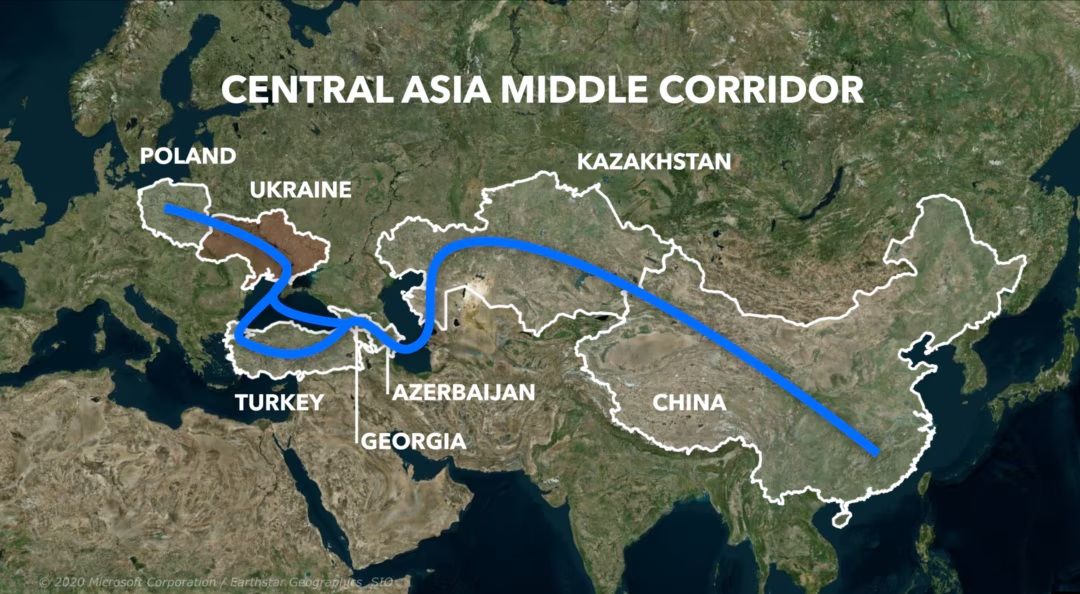
After Pezeshkian’s election, a noticeable shift occurred in Tehran’s narrative. Iranian media began emphasizing the strategic potential of the Araz Corridor amid intensifying competition for Eurasian transport routes. They highlighted that the project will become part of the Trans-Caspian International Transport Corridor, linking Russia, China, Central Asia, the Caucasus, Iran, and Türkiye with Eastern Europe and the United Kingdom. Once operational, the Araz transit corridor and the Kalale border terminal will not only boost exports but also stimulate regional economic activity.
Source: Trend
Furthermore, Iranian officials believe that the rapid construction of a 60-kilometer railway running parallel to the Iranian segment of the corridor could allow completion of the North–South rail network without finishing the problematic Rasht–Astara section. Integration of Iran’s railways into the post-Soviet transport network would bring significant economic advantages to the country and enhance its geopolitical relevance.
The legal and institutional framework for trilateral cooperation is already in place. In December 2024, Azerbaijan and Russia signed an agreement to strengthen transit cooperation along the North–South ITC. Earlier, in September 2022, Azerbaijan, Russia, and Iran adopted the Baku Declaration on the development of this corridor. Most recently, on October 13, 2025, government representatives from the three countries issued a communiqué creating a joint working group to prepare an action plan aimed at boosting cargo volumes to 15 million tons and ensuring a steady increase in freight flows.
The Araz Corridor thus stands as more than a logistics route. It is a strategic lifeline — an embodiment of pragmatic regionalism that reconnects the South Caucasus and the Persian Gulf, linking local economies with global supply chains. For Azerbaijan and Iran alike, it is a corridor of opportunity and trust, opening a pathway not only for trade and transport but also for renewed political dialogue and regional integration.
(If you possess specialized knowledge and wish to contribute, please reach out to us at opinions@news.az).


Similar news