Battle for America: Why the 2024 election could be a turning point



As the United States heads into its 2024 election cycle, the political stakes are higher than they have been in decades. Both the presidential race and control of Congress hang in the balance, and the intensity surrounding these elections reflects a deeply divided nation. For the Democrats and Republicans, this election is not just a contest of platforms or policies—it’s a battle for the ideological soul of the country. Each side sees the outcome as a referendum on the direction of American society, with the results likely to impact issues ranging from economic policy to individual rights.
Currently, the U.S. House of Representatives is under narrow Republican control, with 220 seats occupied by Republicans and 212 by Democrats, leaving three seats vacant. This slim margin has set the stage for a highly competitive congressional race where even minor shifts could alter the balance of power. For Democrats, the path to reclaiming the majority hinges on securing six additional seats, while Republicans must retain at least 220 seats to keep their hold on the chamber. The Republican strategy may involve consolidating support in districts they flipped in 2020, while Democrats are likely to focus on voter mobilization in urban and suburban areas, which typically lean left.The battle for Congress will be most intense in the 54 “battleground” districts, roughly 13.1% of all House seats. These districts are the ones where victory margins were tight in the last election and where voter preferences may be most fluid. The importance of these seats cannot be overstated, as they will be pivotal in determining the direction of national policy. Both parties are set to pour significant resources into these areas, mobilizing local influencers, organizing door-to-door campaigns, and flooding the airwaves with targeted ads aimed at swaying undecided voters.
Compounding the strategic challenges are recent redistricting shifts in key states. Due to court rulings, the congressional maps in Alabama, Georgia, Louisiana, New York, and North Carolina have been redrawn, creating new boundaries and potentially reshuffling the electorate in those districts. Redistricting can dramatically alter the competitive landscape, as some incumbents may now be campaigning in areas where they lack established voter relationships. For new challengers, these changes represent an opportunity to capture support in newly carved districts where longstanding partisan loyalties may be weaker.
In addition to the congressional races, the presidential election will see intense competition in several critical swing states. Pennsylvania, with 19 electoral votes, has been a central battleground in recent elections, swinging narrowly in favor of Biden in 2020. With its mix of urban, suburban, and rural voters, Pennsylvania exemplifies the nation’s political and cultural divides, making it a prime target for both parties. Georgia, which unexpectedly went Democratic in 2020 for the first time in nearly three decades, is another must-win for both parties. A significant African American electorate, combined with a younger, more diverse demographic, has transformed Georgia from a reliably Republican state into a fiercely contested battleground.
In the Midwest, Michigan has emerged as a high-stakes prize due to its industrial base and diverse working-class population. The state flipped for Trump in 2016, only to swing back to Biden in 2020. As a microcosm of America’s economic shifts and manufacturing concerns, Michigan’s voters remain deeply interested in issues like job creation, trade policy, and worker protections. Arizona, meanwhile, has seen its own demographic shifts, with increasing numbers of Latino voters and young professionals moving to the state, turning it into a hotly contested territory.
North Carolina, Wisconsin, and Nevada also rank as high-priority targets. North Carolina, while traditionally leaning Republican, has a rapidly changing demographic landscape, with urban areas growing quickly and a younger population moving into the workforce. Wisconsin, famous for its close races, has frequently swung between parties, embodying the volatility of the American electorate. Nevada, though offering only six electoral votes, carries outsized influence thanks to its diverse population and the slim margins that typically characterize its elections. Both parties view these states as essential to their strategy, and campaign efforts there will be relentless.
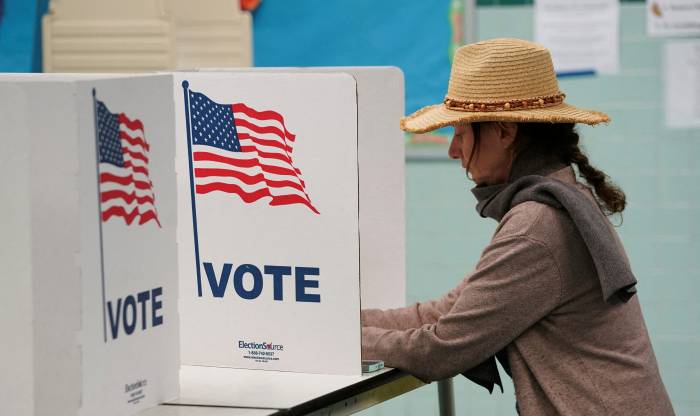
The stakes are also heightened by the presence of numerous open seats in the House, as 45 representatives have either retired or were unseated in primaries. For both parties, these vacant seats are golden opportunities to bring fresh faces into Congress. In the current political environment, where dissatisfaction with “business as usual” in Washington is common, both parties are likely to focus on recruiting new candidates who can appeal to an electorate eager for change. In some districts, these new candidates will be positioned as reformers, and they may emphasize policies aimed at addressing issues such as economic inequality, climate change, and healthcare reform.
Several key issues are likely to dominate the discourse as the campaigns unfold. The economy remains a top concern for most voters, with inflation, the cost of living, and job security featuring prominently in political messaging. Republicans will likely hammer home concerns about inflation and government spending, while Democrats may focus on wage growth, healthcare, and social safety nets. Immigration is another contentious topic, with both parties using it to mobilize their bases, particularly in border states like Arizona and Texas. Issues around voting rights and electoral integrity will also be central to campaign rhetoric, especially in light of recent debates over voting laws and election security. Climate policy, too, remains a significant point of contention, with younger voters, in particular, pressing for more aggressive action on environmental protection and renewable energy.
As election day approaches, the campaigns are expected to intensify, with a special focus on engaging young and first-time voters. This demographic, which often turns out in higher numbers for presidential elections than for midterms, could be decisive in close races, especially in swing states. Both parties are ramping up efforts to reach younger voters through social media, campus events, and issues-focused outreach, recognizing the crucial role this group could play in shaping the 2024 results.
In sum, the 2024 elections promise to be a defining moment for the United States. With control of Congress and the presidency at stake, the results could shift the direction of American policy for years to come. Each battleground state, every swing district, and each undecided voter will play a role in shaping the future of the nation.


Similar news