Black Sea Energy gains PMI status, unlocking EU support


Black Sea Energy, a regional energy corridor delivering Azerbaijan’s green power to Europe through an underwater Black Sea cable, has officially received PMI status from the European Commission, marking a significant milestone in the project’s development.
PCI/PMI (Project of Common European Interest/Project of Mutual Interest) status is highly significant, boosting the project’s attractiveness to investors, particularly those from Europe.
As a reminder, on March 10 this year, Azerbaijan, Georgia, Hungary, and Romania sent a letter to EU Energy Commissioner Dan Jørgensen requesting PMI status for the Black Sea Energy project. The decision to apply to the EU was made during a meeting of ministers and steering committees focused on creating a green energy corridor.
According to Azerbaijan’s Energy Minister Parviz Shahbazov, the meeting produced important results.
“A joint letter from Azerbaijan, Georgia, Romania, and Hungary to EU Energy Commissioner Dan Jørgensen was signed regarding the granting of PMI status to the project. The necessary steps were also agreed upon for including the project in the EU’s Ten-Year Network Development Plan (TYNDP), and for Bulgaria to join the project, including its fiber-optic cable component,” Shahbazov wrote on X.
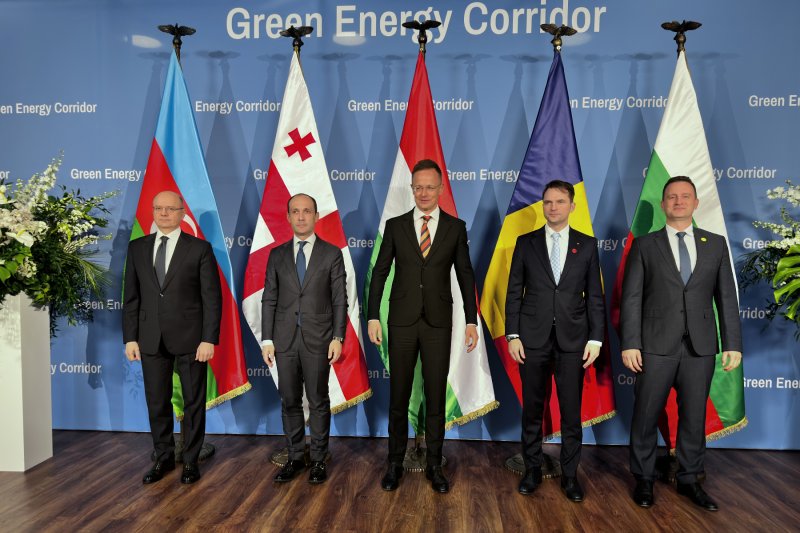 Photo: Azerbaijani Foreign Ministry
During the meeting, a document was also signed transferring authority and responsibility for the feasibility study to the joint venture GECO Power Company.
Only EU member states can formally apply for PMI status, and Hungary and Romania fulfilled this role.
PMI status brings a range of benefits to the project. It allows for accelerated administrative procedures, provides a dedicated legal framework, ensures cross-border regulatory compatibility, and opens the door to EU funding. Beyond these advantages, the designation increases the project’s prestige and transparency, drawing further attention from investors and stakeholders. By aligning with European energy legislation, the project can access specialized EU grant instruments that support initiatives of mutual interest aimed at enhancing connectivity.
The strategic partnership agreement for constructing Black Sea Energy was signed on December 17, 2022, in Bucharest by Azerbaijan, Georgia, Hungary, and Romania. The project envisions building a 1,195-kilometer submarine cable to transmit green electricity generated in Azerbaijan through Georgia and across the Black Sea to Romania, from where it will be transported to Hungary and the wider European market. Of the total cable length, 95 kilometers will be onshore and 1,100 kilometers underwater. Initially, the system is designed to export 4 GW of green energy.
The project’s estimated cost is €3.5 billion, with the European Commission ready to contribute €2.3 billion. Implementation is expected to take approximately three to four years.
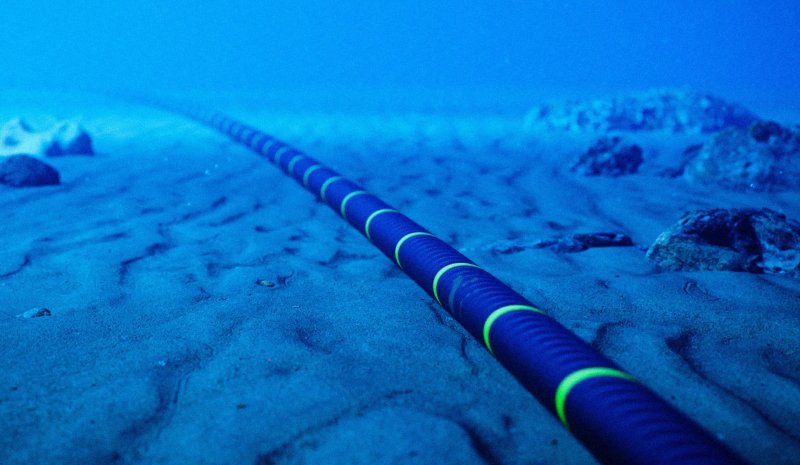 Photo: Shutterstock
In May 2024, energy operators from Azerbaijan, Romania, Georgia, and Hungary signed a memorandum establishing a joint venture to implement the Black Sea Energy project. In September of the same year, a shareholder agreement was finalized among energy operators from the four countries: Transelectrica (Romania), Georgian State Electrosystem (Georgia), Azerenerji (Azerbaijan), and MVM Energy (Hungary).
In October 2025, the Georgia Online agency, citing the European Commission’s press service, reported that the final list of projects designated as Projects of Common European Interest would be compiled by the end of 2025. Projects granted PMI status receive key benefits, including expedited permitting processes. If all requirements are met, the project will be eligible for co-financing through the Connecting Europe Facility (CEF) program via a competitive selection process.
Analysts note that Black Sea Energy is well positioned for financial support, as it is considered a flagship initiative of the Global Gateway program, which aims to strengthen energy ties between the EU and South Caucasus countries. Central Asia is also increasingly being integrated into the Global Gateway framework.
At the Silk Road International Forum in Tbilisi, Zviad Gachechiladze, a board member of the State Electricity System of Georgia, stated that project preparations had entered an active phase. Surveys of the Black Sea floor are underway to support geophysical and geotechnical studies that will precisely determine the cable’s route.
It is noteworthy that in October, the project was included in the eight-year development plan of the European Association of Energy System Operators for 2026–2036. Additionally, the project underwent an extensive feasibility review by the European Commission’s Directorate-General for Energy, which reaffirmed its importance, necessity, and potential.
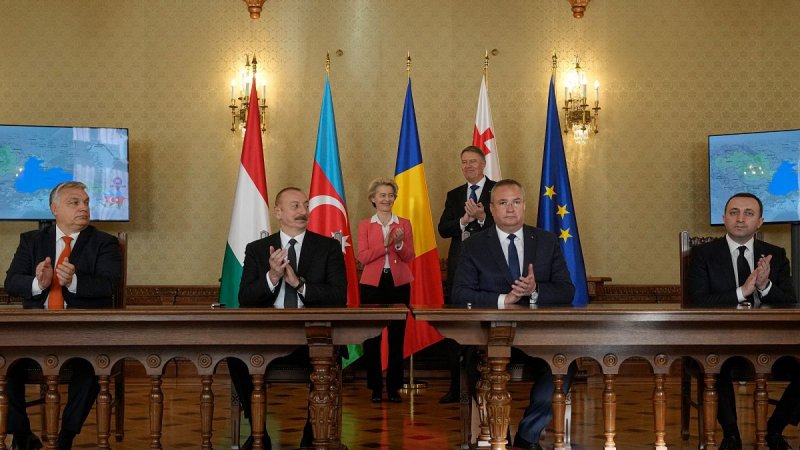 Photo: AP
Black Sea Energy was originally a Georgian initiative. Initial plans were developed in collaboration between the EU and Georgia, with Azerbaijan joining later. With Azerbaijan’s involvement, the project began expanding into Central Asia. In early July 2025, Azerbaijan, Kazakhstan, and Uzbekistan signed a document establishing the Yasil Dehliz Birliyi (Green Corridor Union) joint venture, which will implement the green energy corridor project across the Caspian Sea. The agreement, signed between Azerenerji, KEGOC, and the National Electric Grids of Uzbekistan, was formalized in a ceremony in Baku.
The project envisions connecting the power systems of the three countries and exporting electricity via a high-voltage cable along the Caspian Sea floor.
The recent EU–Central Asia summit in Tashkent also discussed the transit of green energy from Central Asia to Europe, underscoring the project’s growing strategic importance in regional energy connectivity.
By Tural Heybatov


Similar news