China refocuses on Central Asia, Caucasus route due to wars in Ukraine, Mideast - Australian expert


By Kerim Sultanov
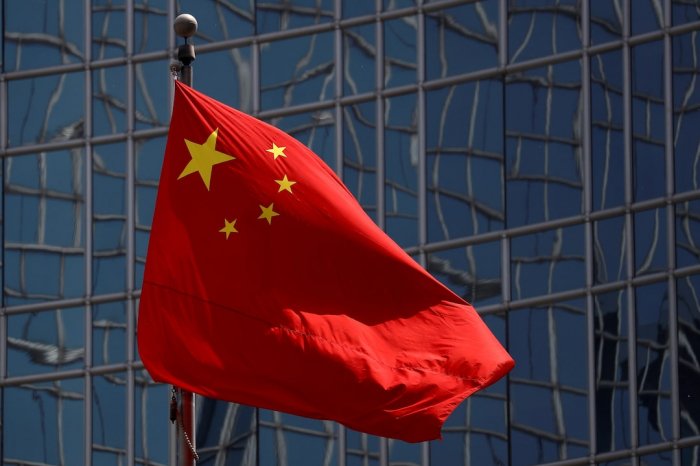
The war in Ukraine and problems in the Middle East will have a positive impact on Central Asian and South Caucasus economies in terms of global logistics and trade chains, the research director of the analytical company Future Risk, Australian expert Tristan Kenderdine has told News.Az in an interview.

He noted that following Russia’s invasion of Ukraine, the development of the Middle Corridor looks "very politically astute", adding that all members could benefit from their geoeconomic position between China and the European Union, pulling away from Russian influence.
"Finally something positive for Central Asia and the South Caucasus economies. China had already developed a political hedging strategy which avoided Russia and prioritized the Caspian Sea economies. China tends to do multiple things at once, and then, when one scenario plays out in its favour, to pile in to that arena," he said.
"In 2015, developing a rail corridor through Kazakhstan and Azerbaijan looked at least a little bit fanciful. Now after Russia’s invasion of Ukraine, the development of the Middle Corridor looks very politically astute. The Middle Corridor was never going to be the most economic route for China trade, but it could become politically valuable," the expert noted.
"Pulling China’s political-economic centre of gravity southwards also helps China’s intent to form land bridges with Iran. While disturbing geopolitically, it’s useful economically to states like Turkmenistan and Uzbekistan who miss out on Middle Corridor, and this, in turn, helps Middle Corridor states like Kazakhstan, Azerbaijan and Georgia. I have argued for a while that the China-Europe or China-Turkey trade system is not particularly economically useful for China, simply having land bridges to Iran and Turkey is much more politically valuable, but that for the states of Central Asia and the Caucasus, there are pockets of economic value to be found in participating. Basically, if China wants to lose money in the region, then states in the region should be positioning themselves to benefit," Kenderdine said.
Asked what proposals could help countries adapt to the new economic reality with split economic blocs, he said that Central Asian and Caucasus countries should improve connections with the European Union and stay connected to the outside world.
"For Central Asian and Caucasus countries, improve connections with the European Union and stay connected to the outside world, and better develop intra-regional mechanisms for benefiting from the emerging blocs. The Middle Corridor institution is a great example where Kazakhstan-Azerbaijan-Georgia-Turkey cooperation has created an institutional mechanism which can help all members to benefit from the geoeconomic position between China and the European Union, pulling away from Russian influence and benefiting from Russia’s economic retreat from relevance. So, more intra-regional cooperation mechanisms like this would help to position the individual countries in Central Asia and the South Caucasus. However, the historical tendencies to pull away from each other rather than work together will hurt this process," the expert said. "Low degrees of trust, combined with the very recent wars and possibility of future wars, particularly in the South Caucasus mean this economic integration process will go slowly if at all," he added.


Similar news